

AI CERTS
2 months ago
Coforge Forge-X Platform Brings Agentic AI To Enterprise Delivery
This article unpacks market context, platform mechanics, benefits, gaps, and next steps. Along the way, you will find certification tips to deepen AI delivery skills. By the end, readers can judge whether the Coforge Forge-X Platform fits strategic roadmaps. Moreover, we balance vendor claims with independent data and security warnings. Prepare for a concise yet comprehensive tour of agentic engineering at scale. Gartner predicts agentic AI will resolve 80 percent of routine service issues by 2029.
Similarly, IMARC estimates the AIOps market will hit 32.5 billion dollars this year. These figures signal strong momentum for automated software lifecycles. However, privacy advocates warn that autonomous agents widen attack surfaces. Practical governance therefore remains equally important as flashy features. Industry voices describe this shift as 'software industrialization 2.0'.
Agentic Market Context Shift
Digital teams confront relentless demand for faster value delivery. Meanwhile, legacy pipelines fracture under rising code velocity. Agentic approaches offer an answer by delegating tasks to autonomous AI workers. MIT and BCG found most executives now see agents as both tool and teammate.
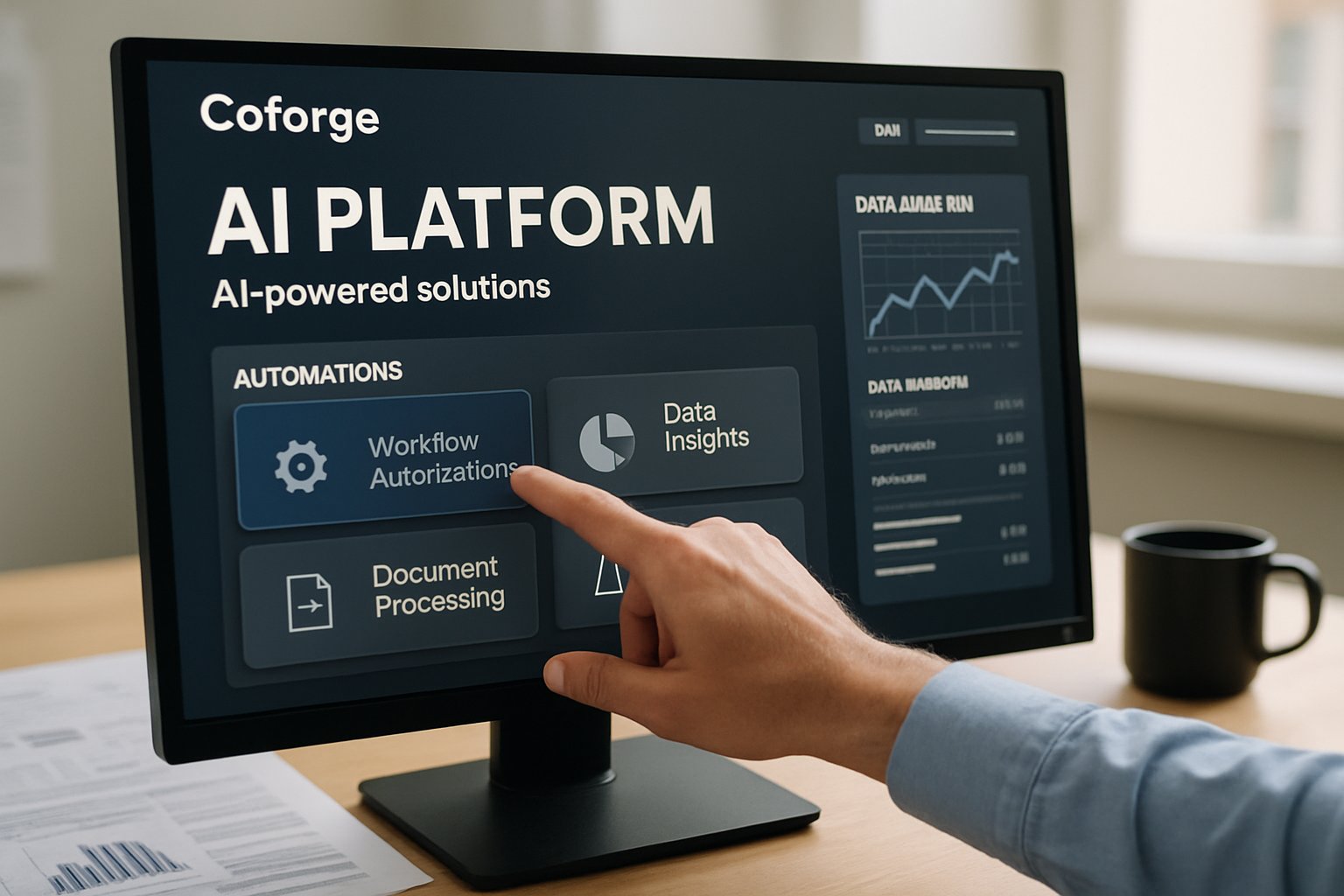
In contrast, Coforge positions the Coforge Forge-X Platform as an "AI-native" accelerator for complete SDLC and PDLC flows. Furthermore, Gartner expects agentic solutions to slash service costs by automating 80 percent of standard tickets. Therefore, competitive pressure is intense for vendors lacking similar engineering industrialization roadmaps. These shifts set the backdrop for the platform’s component design discussed next.
Market signals confirm soaring appetite for autonomous delivery aids. Consequently, platform capabilities must align with that demand. Inside Forge-X, key components illustrate how Coforge translated trends into software.
Inside Forge-X Key Components
The Coforge Forge-X Platform bundles four flagship modules under one orchestration layer. CodeInsightAI performs reverse and forward engineering on sprawling codebases and APIs. BlueSwan adds quality gates, generating AI-generated test cases and adaptive regression suites. NORTHSTAR powers CI/CD, observability, and cloud deployment pipelines across the entire SDLC. Finally, EvolveOps.AI drives autonomous remediation, fulfilling classic AIOps promises.
Moreover, the stack connects with Jira, LeanIX, Ardoq, and ServiceNow through open APIs. Consequently, existing PDLC artifacts remain accessible while agents enrich context. Coforge claims the arrangement replaces scattered scripts with cohesive industrialization patterns. However, integration depth will depend on customer configuration diligence. In contrast, proprietary tooling often locks data, blocking holistic insights.
- Gartner: 80% routine issues auto-resolved by 2029 via agentic AI.
- IMARC: AIOps market valued at 32.5 B USD in 2025.
- MIT/BCG: 57% executives piloting autonomous engineering agents this year.
- Deloitte: VC funding for AI startups crossed 5 B USD last quarter.
These components and integrations target accelerated cycle time and reduced toil. Above all, Coforge promises measurable gains in release frequency and resilience. Benefits versus risks deserve closer analysis next.
Benefits And Key Tradeoffs
Supporters argue the Coforge Forge-X Platform compresses lead times by automating routine engineering chores. Additionally, Coforge cites up to 30 percent cost savings in pilot estimates. Agents monitor metrics, generate fixes, and trigger NORTHSTAR pipelines without waiting for humans. Therefore, teams can refocus on creative backlog items instead of toil.
Nevertheless, agent autonomy raises governance and security flags. Privacy advocate Meredith Whittaker warns that expanded access may expose sensitive data. In contrast, Coforge says decision logs and human override remain enforced by design. Independent proofs are still pending beyond internal testing anecdotes.
In contrast, legacy script stacks need constant human babysitting. Therefore, platform-level automation frees scarce specialists for strategic refactoring projects.
Benefits appear meaningful, yet execution risks persist. Consequently, buyers compare Coforge promises with rival offerings and benchmarks. The next section maps that competitive terrain.
Competitive Landscape Snapshot Now
The Coforge Forge-X Platform enters a crowded field spanning CI/CD, AIOps, and agent frameworks. Dynatrace, Datadog, and Splunk champion observability with embedded machine learning. Meanwhile, Harness, GitLab, and CloudBees dominate pipeline automation niches. OpenAI and Google supply foundational agent toolkits that integrators may combine with legacy scripts.
Coforge differentiates by offering an opinionated stack plus services for end-to-end industrialization. Moreover, its Jira and ServiceNow connectors promise smoother adoption within entrenched engineering environments. However, multi-vendor estates can neutralize some platform advantages if APIs clash.
Analysts forecast further convergence among these categories as vendors chase full-stack credibility. Consequently, differentiators may shift from features to commercial flexibility and customer proof points.
Competitive options guarantee enterprises will scrutinize pricing, openness, and support models. Implementation details therefore take center stage. We examine unanswered questions next.
Implementation Questions Still Remain
Prospects evaluating the Coforge Forge-X Platform should probe architecture specifics before signing. Which base models drive autonomous reasoning? Where are tokens processed, and how is context stored? Additionally, buyers must request rollback paths when agents misbehave.
Pricing clarity also remains thin. Coforge lists outcome-based options yet omits detailed tiers and support SLAs. Moreover, customers will demand measurable SDLC metrics such as deployment frequency and mean time to recovery. Independent benchmarks would greatly strengthen credibility. Benchmarking suites like T6D will help normalize claims across vendors.
Professionals can deepen evaluation skills through the AI Engineer™ certification. Certification coursework covers agentic design patterns, governance controls, and industrialization metrics.
Addressing these questions will define successful rollouts. Consequently, strategic guidance follows in the final section.
Strategic Takeaways For Leaders
Technology leaders considering the Coforge Forge-X Platform should adopt a phased reference-architecture approach. Begin with low-risk domains, measure outcomes, and adjust guardrails. Additionally, align agent scopes with existing SDLC approval checkpoints to maintain compliance. Meanwhile, nurture cross-functional skills that blend engineering, security, and operations viewpoints. Regular retrospectives will capture lessons and update internal playbooks accordingly.
Moreover, budget planning must weigh license costs against projected toil reduction. Deloitte suggests early pilots allocate 20 percent of savings to continuous improvement funds. Consequently, organizations can sustain momentum while refining PDLC governance.
Leaders who balance ambition with rigor can extract real advantages. The conclusion distills these insights and revisits the Coforge Forge-X Platform promise.
Forge-X lands during a pivotal shift toward autonomous delivery. It bundles agentic assistants, CI/CD pipelines, and AIOps engines under one roof. Our analysis shows compelling speed and cost upside coupled with non-trivial security, data, and integration challenges. Nevertheless, early adopters who govern wisely can outpace slower rivals. Therefore, weigh maturity, metrics, and openness when evaluating solutions. If the Coforge Forge-X Platform aligns with strategic objectives, begin a contained pilot and measure ruthlessly. Meanwhile, strengthen expertise with the linked AI Engineer™ certification to stay ahead of evolving standards. Future updates may integrate domain LLMs and stricter guardrails. Your next release cycle could be the proving ground.


