

AI CERTS
5 months ago
Resolve AI Unicorn secures $125M Series A to automate SRE ops
Resolve AI Unicorn now sits at the heart of that conversation. Founded by ex-Splunk leaders Spiros Xanthos and Mayank Agarwal, the startup builds agentic AI that lives inside stacks. Consequently, engineers hope to cut mean time to resolve and slash pager fatigue. Meanwhile, investors see a wedge into the expanding AIOps sector. Verified Market Research pegs that market near $12 billion today, with double-digit CAGR ahead.
In contrast, traditional observability tools still rely on human triage. Therefore, a shift toward self-healing infrastructure appears inevitable. This article unpacks the Series-A deal, technology claims, revenue debate, and implications for SRE and DevOps leaders.
Series A Funding Milestone
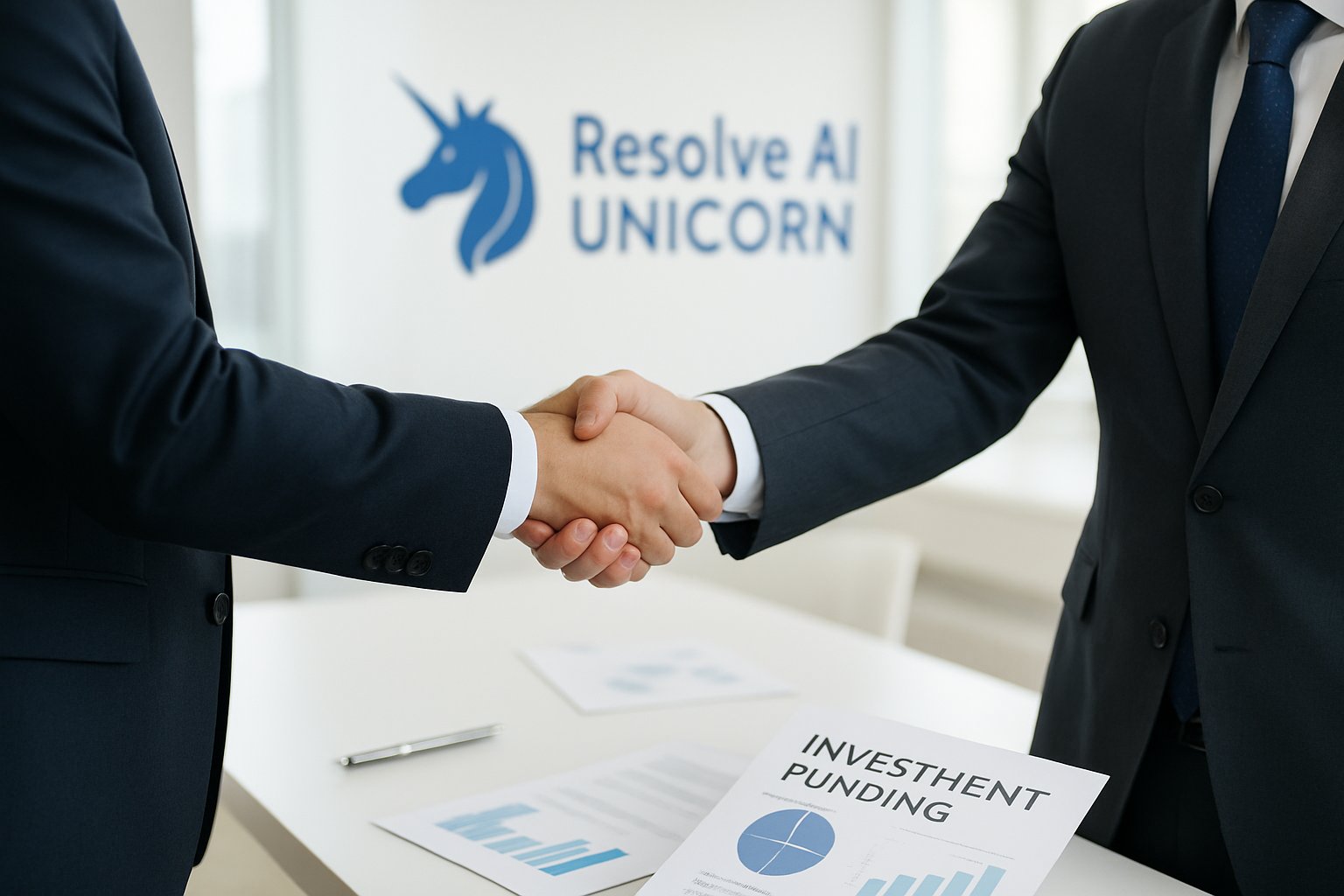
Lightspeed Venture Partners led the Series-A cheque with support from Greylock, Unusual Ventures, Artisanal, and A*. Resolve said the $125 million round closed at a flat $1 billion valuation. Furthermore, the company noted that no tranche pricing existed, countering external speculation. TechCrunch, however, cited two sources suggesting blended structures. Resolve AI Unicorn disputed those claims in a written statement. Consequently, total disclosed funding now exceeds $150 million when the 2024 seed is included.
That cadence sets a blistering pace for infrastructure startups. Moreover, the raise arrived just sixteen months after the firm exited stealth. Industry observers compare the velocity with Datadog’s early years. In contrast, most enterprise software players wait several years before similar capitalization. Investors argue that demand for automated operations justifies aggressive capital. The funding climate for AI infrastructure remains competitive yet concentrated. These financial signals underscore market confidence. Nevertheless, capital alone does not guarantee adoption. The following sections examine whether technology and traction support the valuation.
Market Forces Driving Adoption
Macro trends are fueling adoption of autonomous operations. Cloud estates keep growing, while talent gaps persist. Consequently, organizations need faster incident response without scaling headcount. Research from Verified Market Research values the AIOps market at $11.77 billion in 2024. Moreover, analysts forecast over 22 percent CAGR through 2030. DevOps teams therefore face mounting pressure to maintain reliability against rising complexity.
Resolve AI Unicorn positions its agents as a direct response. Unlike legacy alerting, agentic systems propose or execute fixes. In contrast, traditional runbooks demand manual effort. Funding momentum across the category signals investor belief in this shift. Gartner even predicts mainstream SRE automation by 2028. SRE practitioners describe constant alert noise as their top pain point.
- Market size: $11.77B in 2024, per VMR.
- Projected growth: 22% CAGR through 2030.
- Driver: Scarce operations talent and 24/7 consumer expectations.
These figures demonstrate robust demand. Consequently, automation vendors see a vast runway ahead. Against that backdrop, technology architecture matters most.
Product And Technology Insights
Agentic AI Approach Explained
The Resolve platform embeds multi-agent models inside customer environments. Each agent ingests telemetry, code, and infrastructure context. Subsequently, the system forms a real-time knowledge graph. That graph allows rapid root-cause hypotheses. Moreover, policy guards require human approval for risky actions. Resolve AI Unicorn claims double-digit MTTR reductions during pilots. Coinbase and DoorDash appear on the public customer roster. SRE leads at those companies highlighted faster alert triage during a closed webinar.
Additionally, the product integrates with Slack, GitHub, and major clouds. DevOps engineers can review every action through an audit trail, boosting reliability governance. Meanwhile, the startup trains customer-specific models to avoid generic suggestions. This approach differs from copilot extensions that end at code generation. However, safety remains paramount, as incorrect remediations can degrade reliability. Therefore, staged rollouts and rollback hooks ship by default.
These architecture choices support ambitious goals. Nevertheless, commercial traction depends on measurable revenue growth. The next section examines that financial picture.
Revenue And Valuation Debate
The $1 billion valuation raised eyebrows across venture circles. TechCrunch reported estimated annual recurring revenue near $4 million. However, Resolve declined to confirm that figure. Lightspeed insists the pricing reflects long-term upside, not trailing revenue. Moreover, the firm emphasized founder credibility and early reference customers. Resolve AI Unicorn maintains that one hundred percent of equity cleared at the stated price. Consequently, tranche rumors remain unverified.
Early-stage multiples above 200x ARR appear aggressive yet not unprecedented during platform shifts. Furthermore, investors highlighted that enterprise SRE budgets often grow faster than revenue models suggest. The Series-A disclosure arrived with limited cap-table detail. Funding terms aside, new capital will expand sales, security, and research. DevOps buyers should monitor whether promised reliability gains convert to lower downtime costs.
Valuation debates will persist until revenue scales. Nevertheless, the capital injection accelerates product maturity. Heightened deployment also intensifies operational risk, explored next.
Risk And Governance Concerns
No automation is flawless. Incorrect scripts may amplify incidents rather than resolve them. Consequently, governance frameworks sit at the center of adoption. Resolve ships approval workflows, immutable logs, and safe-mode toggles. Additionally, customers can restrict agent privileges by environment tier. Industry experts advise continuous model evaluation to mitigate drift. They also recommend pairing automated fixes with canary releases to protect uptime. Operations managers must measure false positives alongside MTTR gains.
In contrast, traditional runbooks rarely quantify such risk tradeoffs. Resolve AI Unicorn acknowledges the challenge and publishes quarterly risk updates. Moreover, the company directs prospects to independent certifications. Professionals can enhance their expertise with the AI Network Security™ certification. That external validation supports secure deployments. However, enterprise buyers still bear ultimate accountability.
Risk controls can tame uncertainty when applied rigorously. Consequently, due diligence should precede any production rollout. Assuming controls are met, what does the roadmap look like for practitioners?
Outlook For Engineering Teams
Demands on modern stacks keep rising, yet headcount remains flat. Therefore, leaders must do more with automation. Resolve AI Unicorn plans to open broader APIs and predictive capacity modules this year. Furthermore, the company expects to double research headcount using fresh funding. DevOps groups can pilot the agents within a single service before scaling.
Meanwhile, SRE dashboards will expose success metrics such as incidents auto-resolved and time saved. Early adopters report smoother on-call rotations and stronger reliability scores. Moreover, integration ease matters; Resolve claims sub-day onboarding for Kubernetes and AWS. Series-A resources should accelerate documentation and partner channels. Finally, analysts anticipate consolidation where observability, incident response, and automation converge.
Teams that embrace responsible automation may gain competitive uptime advantages. Consequently, careful experimentation now could pay long-term dividends. The following conclusion distills core lessons and next steps.
Resolve AI Unicorn’s $125 million Series-A underscores a pivotal moment for production AI. The startup marries observability expertise with agentic innovation to target pressing SRE and DevOps pain points. However, revenue maturity and governance rigor will ultimately dictate success. Nevertheless, early customer logos and strong funding suggest meaningful momentum.
Additionally, a booming AIOps market provides fertile ground. Therefore, technology leaders should evaluate pilot opportunities, gather hard metrics, and demand transparent safeguards. For deeper skills, consider industry certifications that strengthen AI reliability practices. Explore the linked program and stay informed as autonomous operations advance. Act today to ensure your organization benefits from safer, smarter incident response.
Disclaimer: Some content may be AI-generated or assisted and is provided ‘as is’ for informational purposes only, without warranties of accuracy or completeness, and does not imply endorsement or affiliation.


