

AI CERTs
2 months ago
Regulators grapple with Telegram Deepfake Surge
Few topics in online safety feel as urgent as the rapid Telegram Deepfake Surge shaking global platforms today.
Meanwhile, watchdogs counted hundreds of Telegram channels and bots distributing non-consensual nude imagery at unprecedented speed.
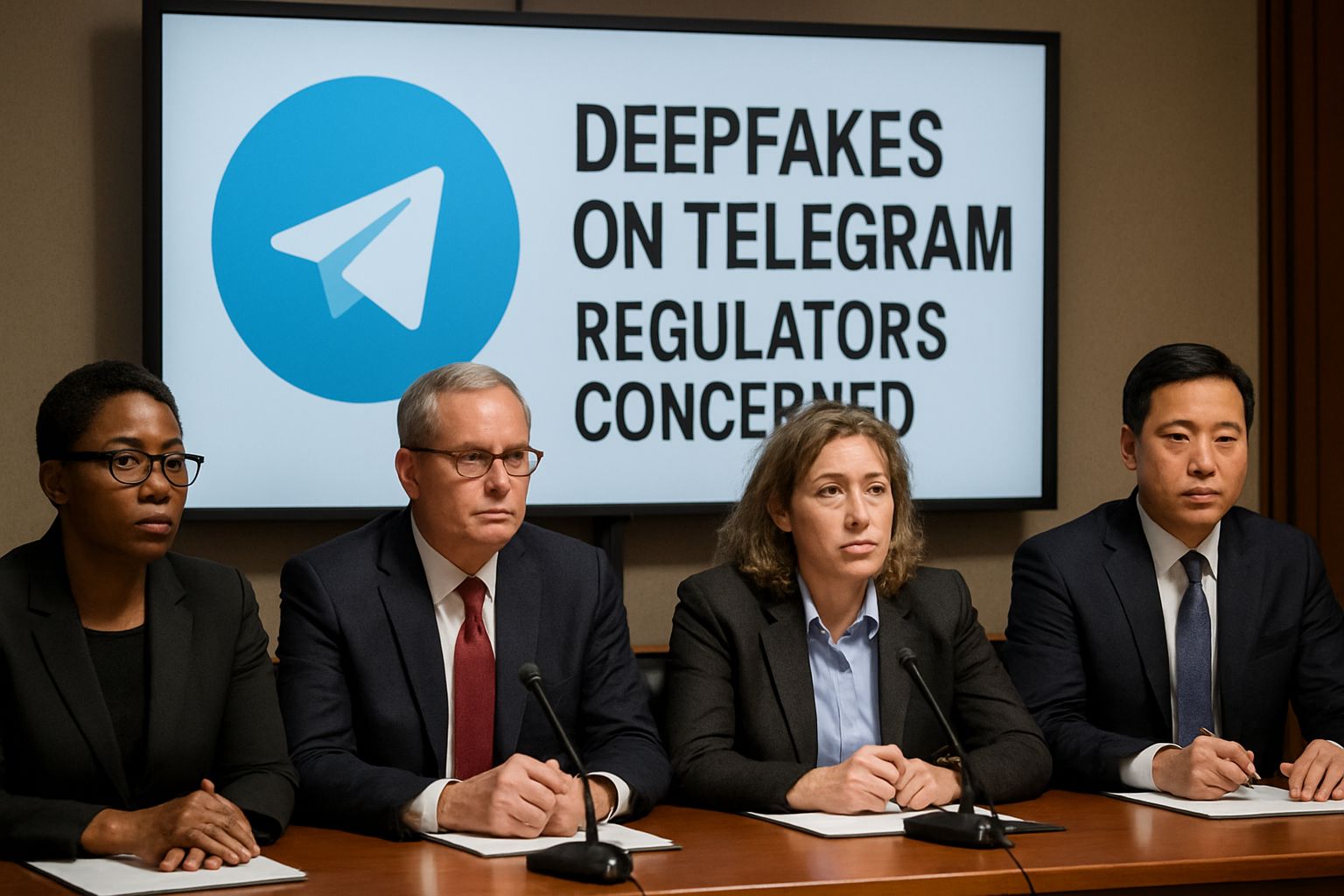
The data points toward millions of users and billions of views, signaling an escalating wave of digital abuse.
The Guardian, Tech Transparency Project, and WIRED each trace the ecosystem's explosive growth across 2024 and 2025.
Consequently, regulators from Seoul to London have opened probes targeting both Telegram and mobile app stores.
Stakeholders now scramble to balance innovation, privacy, and safety while victims demand faster redress.
This article unpacks the actors, mechanics, and policy responses driving the crisis.
Moreover, it offers concrete steps that security teams, policymakers, and developers can implement immediately.
Readers will also find certification pathways, including an AI security credential, to reinforce professional readiness.
Global Shockwave Unfolds Now
Guardian analysts identified at least 150 public channels pushing synthetic nudes to worldwide audiences.
Furthermore, Telegram confirmed removing 952,000 pieces of offending content during 2025, yet researchers call the figure insufficient.
- 150 Telegram channels share deepfake nudes across continents.
- 952,000 items removed in 2025, according to Telegram.
- Over 4 million monthly users engaged with nudify bots in 2024 snapshots.
- One study logged 3 million channel subscribers supporting those bots.
These numbers demonstrate a fast-moving Telegram Deepfake Surge threatening user trust.
Nevertheless, tooling innovations continue accelerating, leading directly into the next section.
Tools Fuel Rapid Expansion
Nudify apps and Telegram bots together form the production backbone for synthetic explicit content.
This toolchain shortens creation cycles, creating a constant wave of fresh digital imagery.
Tech Transparency Project counted 102 nudify apps with more than 705 million downloads and about $117 million in revenue.
Henry Ajder observed, “We’re talking about an orders-of-magnitude increase in creators and viewers.”
As Ajder notes, scale has grown by orders of magnitude, reinforcing the Telegram Deepfake Surge across platforms.
Consequently, distribution barriers fall, ushering in the next discussion on harm.
Victim Impact Deepens Alarm
Child-safety NGO Thorn surveyed U.S. teens and found one in eight knows a non-consensual deepfake victim.
Additionally, one in seventeen teens reported personal victimization, underscoring severe psychological abuse.
Emma Pickering of Refuge warns that synthetic imagery can trigger humiliation, fear, and shame.
Moreover, experts argue reputational damage often persists even after content removal, deepening digital trauma.
These findings reveal human costs fueling public outrage and the broader Telegram Deepfake Surge.
Therefore, attention now shifts toward platform accountability.
Moderation Struggles Loopholes Persist
Telegram states deepfake pornography violates its terms yet relies on reactive takedowns.
In contrast, removed bots frequently reappear under slightly altered names, exploiting moderation gaps.
Apple and Google did pull some nudify apps following disclosure, but many remained available weeks later.
Consequently, enforcement lags empower creators to monetize abuse through subscriptions and tokens.
Ongoing gaps sustain the Telegram Deepfake Surge despite isolated removals.
Subsequently, lawmakers are intensifying policy interventions.
Regulators Intensify Policy Pressure
South Korea launched investigations into Telegram over non-consensual deepfakes in 2024 and 2025.
Meanwhile, the United Kingdom created new offences targeting synthetic intimate imagery under the Online Safety Act.
Ofcom also opened a probe into X’s Grok after explicit outputs surfaced.
Moreover, U.S. activists campaign for harmonized federal rules to close jurisdictional loopholes.
Policy momentum places the Telegram Deepfake Surge under growing scrutiny worldwide.
Nevertheless, technical and educational defenses must accompany legal reforms.
Technical And Human Defenses
Model watermarking, perceptual hashing, and provenance metadata can deter unauthorized distribution of non-consensual imagery.
Furthermore, coordinated app-store audits combined with rapid response teams improve victim support.
Professionals can enhance their expertise with the AI Security Level 2™ certification.
Additionally, survivor-centered reporting pathways empower users to flag abuse quickly.
Strategic Steps Forward Now
• Deploy automated detection on encrypted platforms without undermining user privacy.
• Mandate transparency reports detailing takedown volumes and response times.
• Fund educational programs teaching youth about synthetic imagery risks.
• Coordinate cross-border investigations targeting monetized bot networks.
These steps mitigate harms and slow the ongoing Telegram Deepfake Surge.
Consequently, stakeholders can create safer digital environments for everyone.
The analysis shows that sustained collaboration remains vital as technology evolves.
Conclusion
Global data confirm an alarming Telegram Deepfake Surge disrupting trust, privacy, and safety.
However, coordinated regulation, smarter moderation, and robust technical safeguards can blunt this wave of non-consensual abuse.
Moreover, professionals who pursue advanced credentials gain the skills needed to design resilient digital defenses.
Start strengthening your organization today by exploring the AI Security Level 2™ certification and related resources.


