

AI CERTS
6 months ago
Gas Boom Highlights AI Energy Demand And Grid Challenges
Fatih Birol summarized the moment: “AI is one of the biggest stories in the energy world today.” That story now pivots on whether new gas plants become enablers or anchors for digital growth. The stakes extend from Texas substations to corporate climate pledges. Therefore, executives can no longer separate compute expansion from energy strategy.
Drivers Behind Rising Demand
The first driver remains relentless model scaling. Generative systems require dense clusters of GPUs that operate around the clock. Moreover, hyperscalers increasingly build specialised campuses to host those clusters. Deloitte forecasts show electricity use from AI-optimised sites reaching 123 GW by 2035. In contrast, the global figure stood near 46 GW in 2024.
IEA scenarios put annual consumption near 1,000 TWh by 2030. Such figures exceed Japan’s current usage. Consequently, regional planners fear peak loads that stress the grid. Many analysts now treat AI Energy Demand as the single biggest new variable in load forecasts.
These numbers reveal three central points. However, risks emerge alongside opportunity.
- Global data-center electricity could rise 118% within five years.
- Projected on-site generation proposals reached 252 GW in the United States alone.
- Lifetime CO₂ from all proposed gas plants may hit 53.2 billion tonnes.
The data show unprecedented scale. Nevertheless, planning decisions made today will echo for decades. Thus, developers face hard trade-offs as demand accelerates.
These findings clarify why new capacity is under consideration. Furthermore, they set the stage for examining gas project momentum.
Gas Projects Accelerate Globally
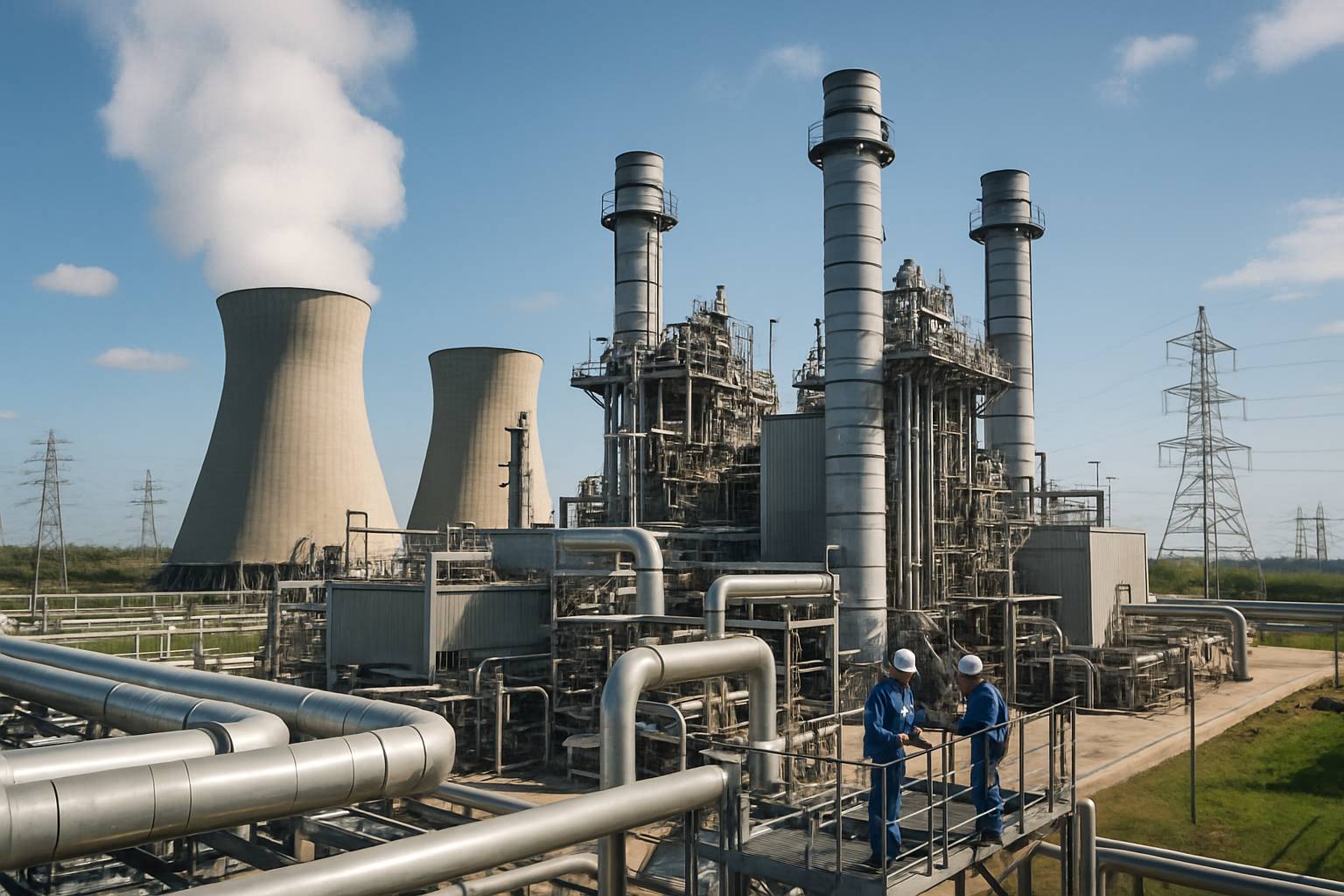
Global Energy Monitor found 1,047 GW of gas projects in development by late 2025. Moreover, the United States tripled its pipeline within a year. Texas alone accounts for roughly 70 GW of that queue. Industry sources cite multi-year interconnection delays for renewables. Therefore, companies pivot to on-site turbines that can start within 24 months.
Smaller engine clusters, often 10–20 MW each, dominate orders. GE Vernova, Wärtsilä, and Caterpillar all report growing backlogs. Additionally, pipeline firms position for expanded gas throughput. The Financial Times notes investors targeting turbine suppliers as direct beneficiaries of AI Energy Demand.
Jenny Martos from GEM counters that locking in new fossil infrastructure endangers climate goals. Nevertheless, utilities argue dispatchable assets secure reliability when wind output lulls. The tension defines policy debates from Washington to Brussels.
Market momentum illustrates developer enthusiasm. However, rising construction ties bring financial exposure that industry leaders must weigh carefully.
Those investment patterns highlight the actors reshaping the sector. Consequently, understanding who wins or loses becomes vital.
Industry Players Repositioning Fast
Hyperscalers dominate procurement decisions. Microsoft, Amazon, Google, and Meta now negotiate bundled deals that include land, water, and generation rights. Furthermore, private equity groups package projects with long-term offtake contracts. Traditional utilities like Calpine acquire sites near existing pipelines to shorten build schedules.
Equipment suppliers adapt production lines to modular units that suit phased data-center growth. Meanwhile, midstream firms such as Kinder Morgan pitch firm delivery services. These shifts demonstrate how AI Energy Demand reorganises corporate strategy across the energy value chain.
Professionals can enhance their expertise with the AI Cloud Specialist™ certification. Consequently, teams gain common vocabulary when navigating complex purchase agreements.
Stakeholders cluster into three categories:
- Demand creators – hyperscalers and colocation providers.
- Supply builders – utilities, developers, and engine manufacturers.
- Financial enablers – private equity, infrastructure funds, and lenders.
Each group manages distinct risk profiles. Nevertheless, contracts often shift exposures onto ratepayers through capacity payments.
These alignments reveal commercial logic behind the gas surge. However, environmental implications remain hotly contested.
Debate Over Emissions Risks
Climate advocates warn that fresh gas investments contradict net-zero timelines. GEM estimates U.S. lifetime emissions could reach 12.1 billion tonnes if planned plants run full term. Furthermore, methane leakage adds warming potential beyond CO₂ totals.
Supporters counter that dispatchable facilities prevent brownouts when the grid is stressed. They argue stranded-asset fears are overblown because AI Energy Demand appears durable. In contrast, critics cite efficiency gains and hardware advances that may flatten loads.
Policy makers weigh emission caps, carbon pricing, and tax incentives for cleaner alternatives. Moreover, some jurisdictions now require hydrogen-ready turbines. Nevertheless, compliance pathways remain uncertain.
The emissions debate underscores strategic uncertainty. Consequently, companies seek flexible designs that can transition to low-carbon fuels.
These disputes highlight sustainability challenges. Therefore, engineering constraints deserve parallel attention.
Technology And Supply Bottlenecks
Large combined-cycle plants once ruled utility planning. However, lead times now stretch past four years because of supply chain congestion. Smaller reciprocating engines bypass many delays. Additionally, modular units match the phased rollout schedules common to AI Energy Demand projects.
Turbine producers note alloy shortages and shipping congestion. Meanwhile, transformer backlogs hamper grid upgrades. Consequently, on-site generation appears attractive despite higher fuel costs. Battery storage prices fall steadily, yet multi-hour systems still struggle with sustained evening peaks.
Bloom Energy markets solid-oxide fuel cells as an alternative. Nevertheless, many buyers hesitate until volume pricing improves. Therefore, gas engines retain an immediate edge.
Technical bottlenecks influence procurement. However, scenario modelling offers broader perspective for long-term planning.
These constraints frame near-term choices. Subsequently, strategic outlooks inform policy and investment maps.
Scenario Outlook And Strategy
IEA modelling provides three salient cases. The Base Case doubles electricity use by 2030 with gas providing most incremental supply. The High-Efficiency scenario trims demand 20% through better chips and cooling. Meanwhile, the Lift-Off scenario accelerates renewables and storage, cutting gas reliance by half.
Strategists should stress-test portfolios against all three. Moreover, Gartner urges enterprises to adopt real-time energy dashboards for every data-center hall. Such monitoring enables demand shifting when grid conditions tighten.
Cost sensitivity analysis shows fuel volatility can raise operating costs by 30% over contract life. Therefore, hedging strategies become essential. AI Energy Demand forces finance teams to model energy as a primary input, not a utility line item.
Scenario planning sharpens decision quality. Nevertheless, execution discipline remains critical.
These outlooks enable proactive governance. Consequently, attention shifts to summarising actionable insights.
Conclusion And Next Steps
The gas surge illustrates how AI Energy Demand reshapes both technology and policy. Moreover, capacity proposals signal investor belief that dispatchable assets still matter. Climate advocates caution that emissions and stranded costs could undermine long-term value. Meanwhile, equipment bottlenecks push buyers toward modular engines despite higher fuel exposure.
Consequently, leaders must integrate energy risk into every data-center expansion. Professionals should consider specialised training to navigate evolving options. Therefore, explore the linked certification to deepen expertise and drive informed strategy.
Disclaimer: Some content may be AI-generated or assisted and is provided ‘as is’ for informational purposes only, without warranties of accuracy or completeness, and does not imply endorsement or affiliation.


