

AI CERTS
2 months ago
Music Copyright Legal Showdown: Anthropic Faces $3B Piracy Suit
Industry watchers compare the action with earlier book claims that forced a costly settlement. Meanwhile, creators and investors seek clarity on how training intersects with intellectual property. This article unpacks the allegations, damages math, strategic implications, and expected timeline. Additionally, it links practical compliance lessons for teams working with generative models. Throughout, we use the Music Copyright Legal lens to frame risks and opportunities afoot.
Core Case Overview Details
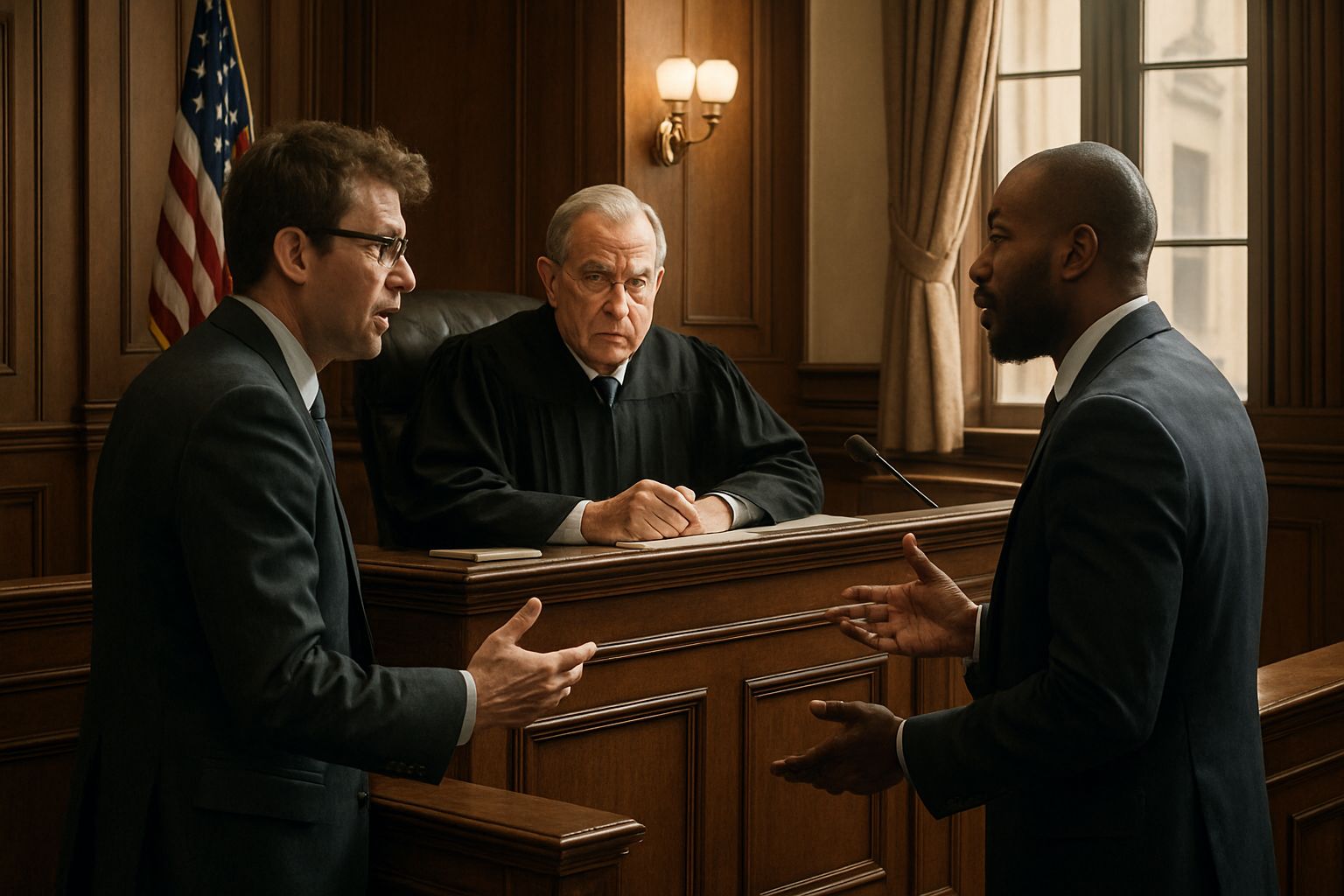
Universal Music, Concord, and ABKCO filed their complaint in the Northern District of California. Judge Susan van Keulen now presides over case number 5:2026-cv-00880. Plaintiffs allege Anthropic downloaded torrents of sheet music, lyrics, and compositions without authorization.
Moreover, internal logs reportedly reference shadow libraries like Books3 and LibGen. Publishers claim these files seeded Claude model training and underpinned commercial feature launches. In contrast, Anthropic has yet to comment publicly on the fresh allegations.
The lawsuit seeks relief that could exceed $3 billion, making it historically significant.
- Plaintiffs: Universal affiliates, Concord Music Group, ABKCO, others.
- Defendants: Anthropic PBC, co-founders Dario Amodei and Benjamin Mann.
- Court: U.S. District Court, Northern District of California.
These facts outline the dispute’s foundation. However, understanding the financial stakes requires examining statutory damages theory. The following section breaks down that calculation.
Statutory Damages Math Explained
US Copyright law permits statutory damages up to $150,000 per willfully infringed work. Consequently, multiplying that cap by 20,000 songs yields a theoretical $3 billion exposure in the Music Copyright Legal arena. Publishers highlight this arithmetic to pressure the defendant toward settlement leverage.
- Maximum statutory rate: $150,000.
- Alleged infringed works: 20,000.
- Potential cap: $3,000,000,000.
Nevertheless, courts rarely award the maximum for every title. Judge Alsup’s previous rulings stress proportionality, considering acquisition intent and subsequent use. Therefore, actual damages could fall far below the headline figure, yet still prove material.
These numbers contextualize the publishers’ aggressive posture. Next, we review precedent shaping negotiation bandwidth.
Key Prior Legal Precedents
Judge William Alsup’s June 23, 2025 order dominated earlier author litigation against Anthropic. He found LLM training transformative and potentially fair use. However, he separated acquisition of pirated copies, labeling that activity presumptively infringing.
Subsequently, the company agreed to a $1.5 billion settlement with 480,000 writers. Universal and peers cite that Music Copyright Legal outcome while framing the new music dispute. In contrast, they argue musicians deserve higher ratios because songs drive short-form generation.
Moreover, courts have penalized willful piracy of master recordings in previous Napster follow-on cases. Those rulings demonstrate judicial appetite for robust deterrence.
These precedents guide both settlement expectations and litigation strategies. Nevertheless, industry impact reaches beyond courtroom arguments, as the next section explains.
Wider Industry Impact Analysis
Generative AI companies now scramble to audit data pipelines. Moreover, investors demand proof of licensed sources before releasing additional capital. Accounting teams model worst-case statutory payouts into valuation spreadsheets.
Music labels push collective licensing hubs similar to ASCAP, hoping to monetize datasets cleanly. Meanwhile, startups fear that unresolved Music Copyright Legal disputes could chill model research. Universal executives publicly warn that unlicensed training equals commercial theft.
Key Compliance Lessons Learned
Firms must catalog datasets, document provenance, and purge infringing copies immediately. Additionally, teams should embed license checks into MLOps pipelines before experimentation begins. Professionals can enhance their expertise with the AI+ Legal Strategist™ certification.
Consequently, preemptive governance cuts litigation risk and streamlines investor due diligence. These lessons emphasize proactive licensing discipline. Next, we explore how the firm might respond internally and in court.
Expected Defense Strategy Signals
Anthropic will likely file a motion to dismiss certain counts. However, the company may repeat arguments that training constitutes transformative fair use. Counsel could also challenge willfulness by disputing the intent behind dataset acquisition.
Furthermore, defense teams routinely question statutory calculations as speculative and excessive. They can cite prior book settlement ratios to argue proportionality. Nevertheless, the publishers’ lawsuit personalizes risk by naming Anthropic founders individually.
Legal scholars expect discovery fights over server logs, hashes, and retention policies. Consequently, every uncovered torrent record could undermine fair-use claims and reinforce piracy narratives.
These possible moves frame early courtroom chess. The concluding section outlines the procedural timeline ahead.
Projected Legal Next Steps
Defendants must answer the complaint within standard federal deadlines, likely late February. Subsequently, Judge van Keulen will set an initial case management conference. Parties then exchange disclosures detailing song lists, licensing records, and alleged infringing files.
Moreover, plaintiffs may request a preliminary injunction to bar further dataset use. If granted, such relief would pressure settlement before extended discovery expenses mount. In contrast, a denial could embolden the defendant to litigate aggressively.
Meanwhile, settlement talks could emerge if discovery reveals damaging communication threads. Therefore, observers anticipate an active spring docket with headline hearings by midsummer.
These milestones define the near horizon. Ultimately, Music Copyright Legal outcomes here may recalibrate data governance across AI.
This high-profile lawsuit spotlights unprecedented friction between generative innovation and legacy rights. Consequently, investors, engineers, and artists all track the Music Copyright Legal chessboard closely. Publishers leverage statutory caps, while defense teams counter with fair-use narratives and acquisition nuance. Universal’s aggressive posture signals a belief that uncompensated data equals outright copyright theft.
Meanwhile, every new AI funding round now includes a dedicated copyright diligence clause. Professionals can navigate this turbulence by deepening regulatory fluency. Therefore, completing the AI+ Legal Strategist™ program strengthens real-world compliance leadership. Looking ahead, court rulings born from Music Copyright Legal skirmishes will define acceptable dataset sourcing.
Eventually, standardized licenses may transform litigation fear into scalable cooperation. Act now, study the evolving Music Copyright Legal landscape, and future-proof your AI strategy. Stay informed and share this briefing with colleagues confronting similar Music Copyright Legal challenges.


