

AI CERTS
2 months ago
Positron Bets on Data Processing Hardware for Video AI
Meanwhile, Positron, a Nevada startup, claims its memory-centric Chips break that constraint. Founded in 2023, the company focuses solely on inference rather than training complexity. Moreover, recent fundraising suggests investors believe the architecture can outclass established accelerators. TechCrunch reports over $300 million raised across three rounds within eighteen months.
Therefore, many industry observers now ask whether the startup will rewrite inference economics. This article dissects the claims, context, and implications for future Data Processing Hardware deployments. Additionally, we highlight skills professionals need to capitalize on this unfolding shift. Read on for data, skepticism, and practical next steps. Subsequently, you will see actionable certification routes.
Market Demand Rapidly Accelerates
Global AI inference revenue could hit $106 billion next year, according to MarketsandMarkets. Consequently, hyperscalers crave silicon that maximizes throughput without exploding electricity bills. In contrast, many facilities already face grid constraints, especially during peak video streaming hours.
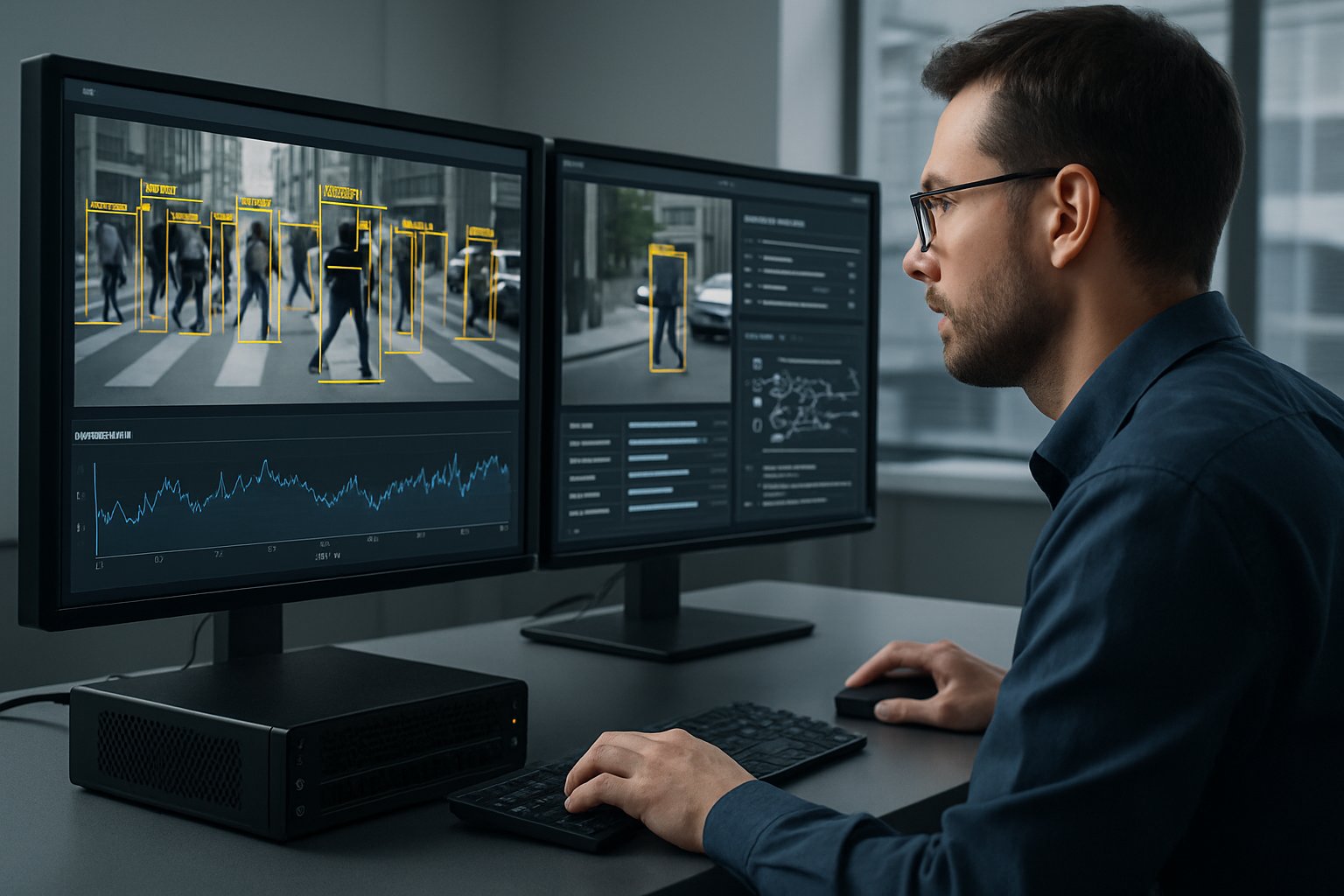
Data Processing Hardware remains the largest operational expense inside model serving clusters. Therefore, even modest efficiency gains translate into multi-million-dollar savings annually. Investors, noticing this leverage, poured unprecedented capital into startups promising higher memory utilization.
Furthermore, governments push for supply-chain resilience, creating openings for U.S. made accelerators. These intertwined forces set the stage for the startup’s entrance. Subsequently, we examine how their Chips aim to meet escalating demand.
Market projections show sustained double-digit growth in inference spending. However, cost pressure intensifies, pushing buyers toward alternative Data Processing Hardware designs. Consequently, attention shifts to the capital backing these challengers.
Positron Funding Journey Explained
The company closed three rounds within eighteen months, culminating in a $230 million Series B. Moreover, the Qatar Investment Authority joined earlier backers like DFJ Growth and Valor Equity. Raised capital now exceeds $300 million, underwriting ambitious Data Processing Hardware roadmaps.
CEO Mitesh Agrawal argues that investors value the startup’s focus on inference economics, not speculative training. Dylan Patel, analyst at SemiAnalysis, adds that memory bandwidth remains the real limiter, not sheer compute. Consequently, financiers bet that a memory-first Processing design will command premium margins.
However, fundraising alone does not guarantee market traction; buyers demand validated benchmarks. Nevertheless, Cloudflare has started testing Atlas cards inside selected edge locations. Early deployments with Parasail and SnapServe provide additional, albeit limited, proof points.
The war chest enables accelerated tape-outs and larger pilot programs. Yet capital must convert into customer value before incumbents feel material pressure. Next, we dissect the technical design underlying these expectations.
Memory-Centric Design Advantages Detailed
Traditional GPUs often utilize only 10–30% of available memory bandwidth during inference. Positron claims its architecture sustains more than 90% utilization across language and video models. Furthermore, Atlas reportedly delivers 280 tokens per second with Llama 3.1 8B while drawing 2,000 W. In contrast, an eight-GPU DGX H200 posts 180 tokens per second at 5,900 W.
Key Performance Claim Highlights
- 3× tokens-per-watt versus leading Chips in published vendor data.
- Up to 66% lower power for identical video inference workloads.
- 93% memory bandwidth utilization on synthetic and production Processing tests.
Moreover, the roadmap mentions an Asimov ASIC housing two terabytes of on-package Memory. Such capacity could host multitrillion-parameter models without sharding across racks.
Verification Still Pending Benchmarks
Independent labs have not yet replicated these figures under controlled settings. Tom’s Hardware cautions that FPGA prototypes rarely match final silicon efficiency. Therefore, prudent buyers treat current numbers as directional, not definitive.
Positron’s design philosophy prioritizes data movement over raw flop counts. Consequently, success relies on proving consistent gains in diverse Data Processing Hardware environments. We now examine how competitive dynamics respond.
Competitive Landscape Shifts Today
Nvidia dominates inference today with H100 and emerging H200 GPUs. However, hyperscalers are diversifying, deploying Google TPU variants, AWS Inferentia Chips, and alternative Data Processing Hardware. Startups like Cerebras and Furiosa also court content platforms.
The Nevada firm positions itself as complementary rather than confrontational. Moreover, its U.S. manufacturing narrative aligns with upcoming CHIPS Act incentives. In contrast, incumbents rely heavily on overseas packaging for high bandwidth memory.
Consequently, buyers might allocate distinct workloads to specialized accelerators. Latency-sensitive video Processing could favor Positron, while batch translation stays on GPUs. Nevertheless, incumbent software ecosystems remain mature and sticky.
Competitive pressure is creating healthy experimentation across data centers. Yet differentiation demands a clear roadmap and transparent milestones. Therefore, we analyze the firm’s path forward.
Roadmap And Pending Questions
Atlas cards ship today using FPGA fabric paired with HBM stacks. Subsequently, Asimov aims for a 2026 tape-out on a 4-nanometer node. Titan systems would network multiple ASICs with 16 Tb/s interconnect bandwidth.
However, transitioning from prototype to volume silicon entails manufacturing risk. Packaging two terabytes of memory per die could strain supply chains. Moreover, advanced substrate capacity remains limited, even with U.S. fabs online.
Independent benchmarks, customer testimonials, and open whitepapers remain outstanding deliverables. Consequently, prospective adopters should request transparent test logs. Professionals can enhance their expertise with the AI Data Robotics™ certification to evaluate emerging Data Processing Hardware objectively.
Clear milestones will determine whether investor optimism proves justified. Next, we discuss workforce implications and upskilling options.
Upskilling For New Era
Engineers fluent in memory hierarchies and low-level scheduling will command premium salaries. Additionally, DevOps teams must profile power at rack granularity to optimize inference clusters. Meanwhile, procurement leads need literacy in tokens-per-watt metrics.
Therefore, many organizations plan targeted training around advanced Data Processing Hardware evaluation. Structured programs, including the linked certification, cover latency modeling, video codec interplay, and firmware tuning.
- HBM topology analysis and debugging
- Kernel fusion techniques for video workloads
- Cost modeling across diverse Chips vendors
Moreover, cross-functional education reduces reliance on single vendor roadmaps. In contrast, siloed teams risk overprovisioning or missing performance targets.
Upskilled staff accelerate adoption while minimizing deployment surprises. Consequently, talent investment complements technical innovation.
Final Thoughts
Positron offers a bold memory-first alternative within the expanding Data Processing Hardware universe. Nevertheless, vendor claims require neutral validation before large-scale rollouts. Independent benchmarks, transparent power metrics, and published whitepapers will determine staying power. Moreover, competitive pressure ensures rapid innovation that benefits buyers.
Organizations should monitor pilot results, deepen internal benchmarking skills, and pursue structured learning pathways. Consequently, professionals who master workload characterization and cost modeling will guide strategic silicon choices. Explore the recommended certification today and position your team for the next wave of efficient inference.


