

AI CERTS
2 months ago
STT GDC Sale Signals Infrastructure Network Scaling Momentum
Consequently, market watchers view the transaction as a milestone for Infrastructure Network Scaling. Analysts expect the new owners to accelerate capacity, serve AI workloads, and challenge regional incumbents. However, significant regulatory and execution variables remain. This article unpacks the deal, strategic logic, financial metrics, and future implications for corporate buyers and customers. Each section meets strict newsroom and SEO guidelines for technical readers.
Inside the Deal Snapshot
KKR and Singtel will pay S$6.6 billion for the 82% equity still owned by ST Telemedia. The purchase implies an enterprise value of S$13.8 billion, positioning STT GDC among Asia’s most valuable colocation operators. Following completion, ownership will approximate 75% for KKR and 25% for Singtel after preference share conversion.
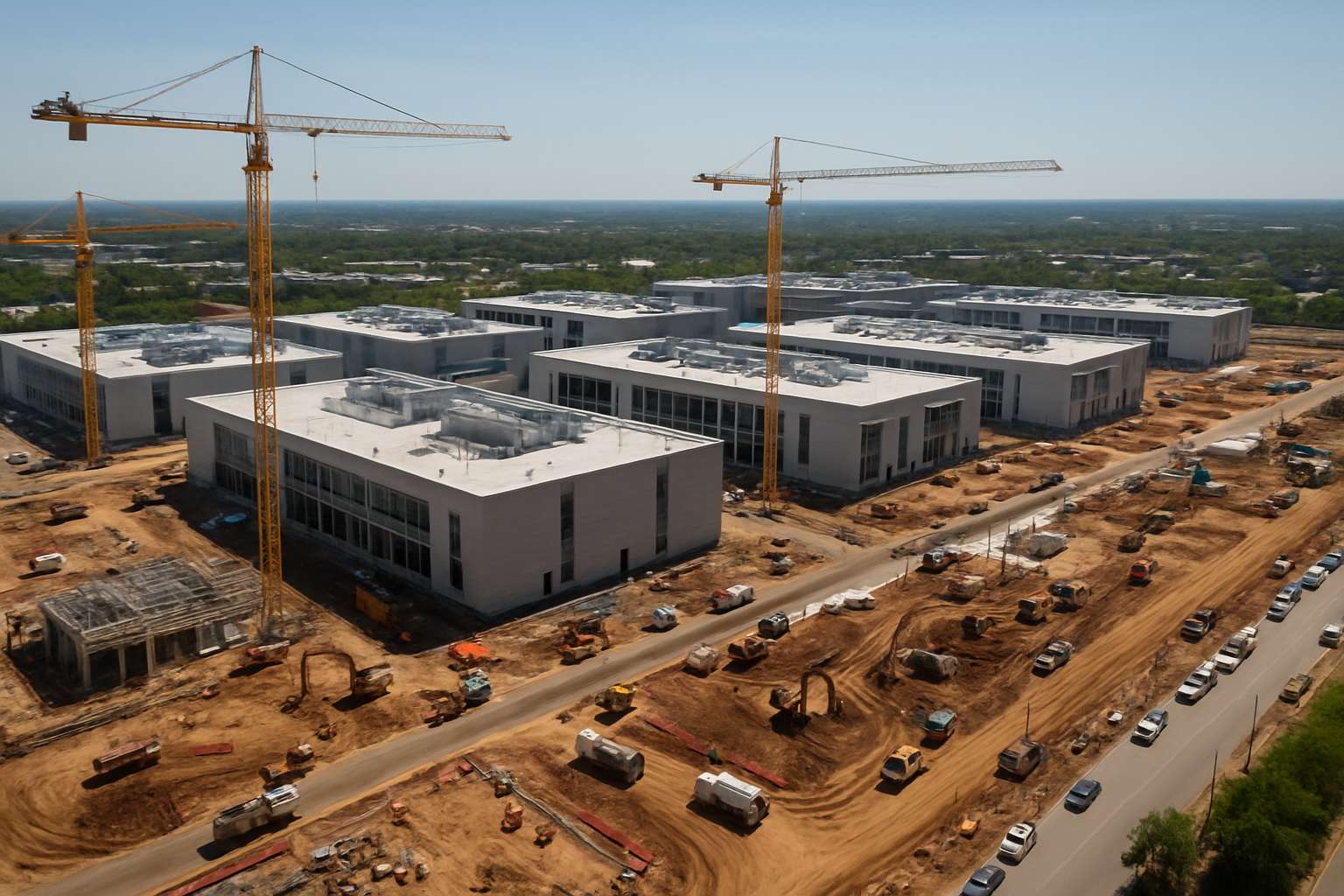
Citi acts as lead financial adviser and provides acquisition financing, underscoring continued credit appetite for digital infrastructure. Meanwhile, closing is targeted for early second half 2026, pending customary regulatory approvals across twelve markets. Therefore, many observers label the timeline realistic yet ambitious for large-scale Infrastructure Network Scaling across several jurisdictions.
The snapshot reveals record valuation and aggressive closing ambitions. Capital depth and partner alignment bolster confidence in the bid. The following section explains the strategic rationale.
Strategic Rationale Core Drivers
Digital transformation and AI workloads are straining available megawatt capacity in Asia. Consequently, hyperscalers demand faster delivery of high-density halls that support GPU clusters. STT GDC today operates 2.3 GW of capacity and holds a pipeline above 1.7 GW. The consortium believes full control will accelerate Infrastructure Network Scaling to meet that backlog.
Moreover, Singtel sees strong alignment with its “Singtel28” initiative to monetise regional assets. KKR adds proprietary capital, execution expertise, and a global customer network that boosts enterprise cross-selling. In contrast, ST Telemedia preferred recycling capital after nurturing the platform for a decade.
Ownership consolidation unlocks speed, governance clarity, and coordinated capex deployment. Therefore, Infrastructure Network Scaling becomes both goal and enabler for hyperscale growth. Market context further illustrates the urgency.
Broader Market Context Analysis
Asia Pacific data sovereignty rules and the AI boom drive sustained datacenter colocation demand. Furthermore, grid capacity constraints in Singapore and Tokyo push workloads toward secondary metros. Reuters notes that recent AirTrunk and Nxera sales fetched double-digit EBITDA multiples similar to STT GDC’s valuation.
Investors, consequently, reward operators that secure land, power, and permits early. Such positioning directly supports Infrastructure Network Scaling strategies across the region. Nevertheless, competition among global funds remains intense, raising entry costs.
The macro picture underscores robust pricing for scarce assets. Capital chasing limited power accelerates bidding wars. Potential risks emerge despite the enthusiasm.
Risks And Execution Hurdles
Major approvals are required in Singapore, India, Australia, and several European jurisdictions. Consequently, national security reviews could delay closing or impose ownership conditions. Power procurement also poses uncertainty, especially as utilities weigh carbon targets.
Moreover, capex inflation pressures datacenter budgets, compounding delivery timelines. Sustainability mandates further complicate Infrastructure Network Scaling when renewable sources remain scarce. KKR’s track record mitigates some concerns, yet leverage still amplifies downside.
Execution variables could erode projected returns. Prudent risk management thus becomes essential. Financial metrics offer additional perspective.
Key Financial Metrics Evaluation
The implied enterprise value equals roughly 15-17 times estimated 2025 datacenter EBITDA, according to analyst models. Additionally, prior S$1.75 billion preference shares provide an equity cushion at conversion. Net leverage details remain undisclosed, leaving bankers to model interest coverage scenarios.
Headline numbers worth tracking include:
- EV: S$13.8 billion, or US$10.9 billion.
- Equity cheque: S$6.6 billion for the 82% stake.
- Design capacity: 2.3 GW across 12 markets.
- Development pipeline: More than 1.7 GW.
Therefore, Infrastructure Network Scaling hinges on transforming that pipeline into revenue-producing racks quickly.
Valuation looks rich yet defensible if utilisation ramps. Regulatory clarity now becomes the next determinant. The roadmap is outlined below.
Regulatory Roadmap Detailed Ahead
STT GDC operates in markets with differing foreign ownership and data localisation rules. In Singapore, the Infocomm Media Development Authority will scrutinise power allocations and potential spectrum needs. Meanwhile, Australia’s FIRB focuses on critical infrastructure safeguards.
European regulators may assess antitrust overlaps due to KKR’s other infrastructure holdings. Consequently, consortium lawyers prepare remedies such as ring-fencing sensitive workloads. Effective navigation of these processes is pivotal for Infrastructure Network Scaling milestones.
Approval complexity shapes closing certainty. Stakeholders therefore monitor filings closely. Attention now shifts to post-close priorities.
Next Steps For Stakeholders
Upon close, the consortium plans rapid construction across India, Indonesia, and Western Europe. Moreover, management will court hyperscalers needing multi-gigawatt campuses. Singtel intends to integrate network services, creating stickier enterprise bundles.
KKR could pursue bolt-on acquisitions to deepen geographic density and accelerate Infrastructure Network Scaling. Analysts also anticipate eventual exit options, including IPOs or partial stake sales. Professionals can enhance expertise with the AI Network Security™ certification.
Execution speed, customer wins, and capital discipline will dictate value creation. Stakeholders should benchmark quarterly progress against announced capacity targets.
STT GDC’s landmark acquisition underscores how capital, scale, and regulation intersect in modern digital infrastructure. The consortium secured a prized platform yet must deliver gigawatts on schedule. Consequently, Infrastructure Network Scaling will remain the central narrative to watch. Investors, policymakers, and enterprise buyers alike will study each milestone for market signals. Meanwhile, professionals should stay informed on technical, financial, and governance trends shaping data ecosystems. Explore additional analysis and upgrade your skills through industry certifications to stay ahead in this fast-evolving arena.


