

AI CERTs
3 hours ago
Murata boosts Data Center Infrastructure power efficiency
Global AI workloads push power systems to their limits. Consequently, operators review every watt inside modern racks. Murata now offers a new path toward efficient Data Center Infrastructure. The company’s technical guide, released in February, explains advanced Power Delivery Networks for AI servers. Additionally, fresh hardware including 5.5 kW GaN modules backs the narrative with measurable results. Meanwhile, analysts warn electricity demand from data centers could double by 2030, according to the IEA. Therefore, optimizing rack-level conversion becomes a strategic imperative for cloud and enterprise teams. Murata’s approach blends high-density front-end supplies, 50 V distribution, and component co-design for Energy Stability. Furthermore, the vendor claims peak efficiencies above 97 percent in Open Rack v3 shelves. This article distills the research, product facts, and market context into a practical Server Guide. Readers will gain actionable insight on risks, benefits, and next steps.
AI Rack Power Shift
Murata positions its 5.5 kW front-end as the backbone of AI rack conversion. In contrast, legacy 12 V bus designs suffer higher I²R losses across copper cabling. Consequently, 50 V distribution within Open Rack v3 trims resistive losses and simplifies cabling gauges. The 1U unit uses ROHM EcoGaN HEMTs to reach 97.5 percent peak efficiency. This improvement elevates Data Center Infrastructure efficiency at module, shelf, and room scales. Moreover, Murata’s new Server Guide emphasises matching cabling, bus bars, and monitoring firmware. These moves collectively push rack densities toward 33 kW per 1OU shelf with N+1 redundancy.
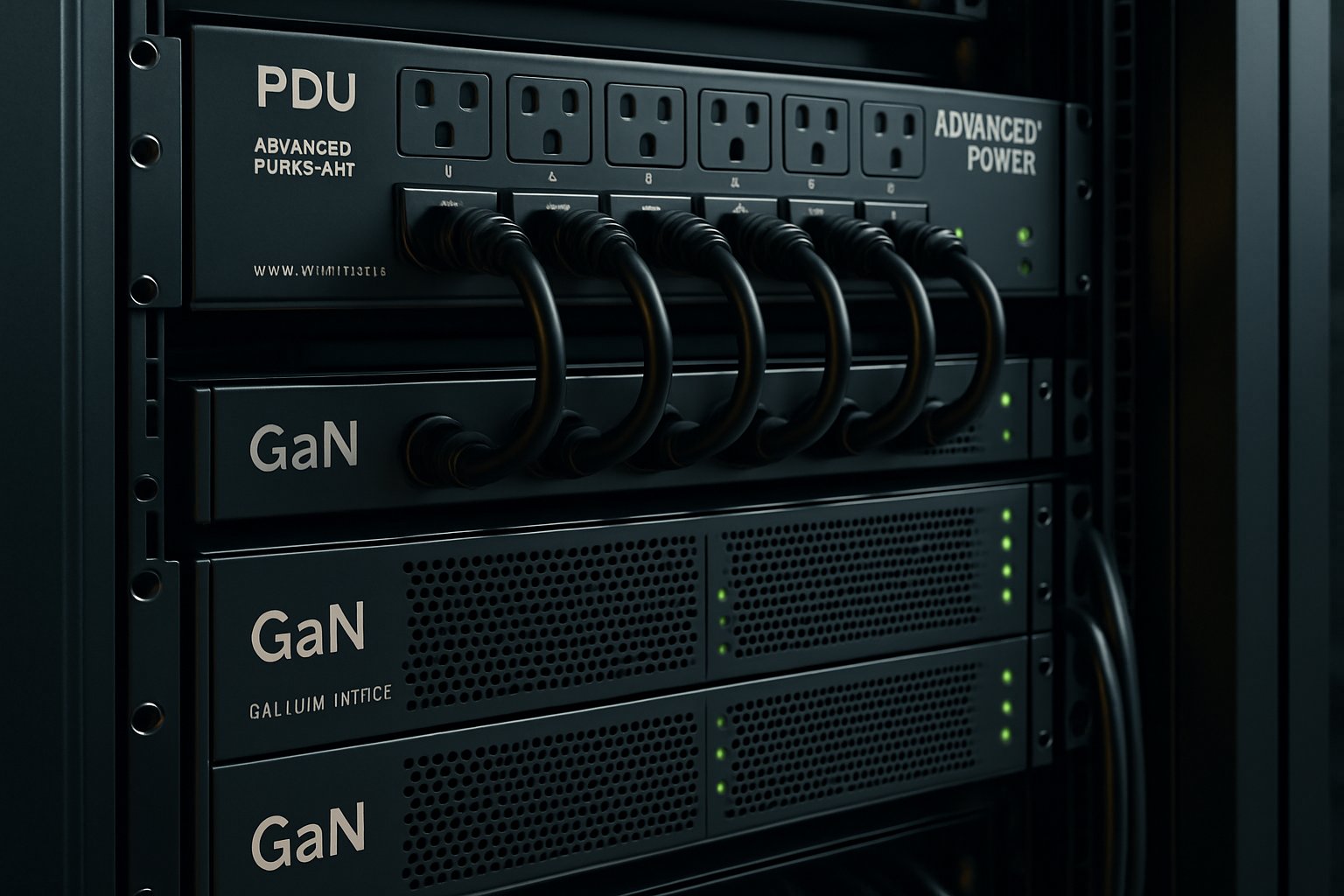
In summary, GaN front-ends and 50 V buses reduce losses and raise rack density. These gains translate to lower operational costs for hyperscalers. Meanwhile, market energy trends amplify the importance of such savings.
Market Energy Drivers Rise
The International Energy Agency pegs 2024 data-center electricity at 415 TWh. Subsequently, its base case sees consumption hitting 945 TWh by 2030. AI accelerators account for the fastest growth segment within Data Center Infrastructure energy budgets. Therefore, incremental efficiency gains at every power stage scale into meaningful regional grid relief. Murata executives underline this urgency, calling Power Delivery Networks stability a critical business issue. Meanwhile, utilities in several U.S. states already flag capacity constraints near hyperscale campuses. These projections set the scene for aggressive innovation in rack-level energy solutions.
In summary, electricity forecasts demand immediate efficiency action. Data Center Infrastructure savings directly support grid resilience. Consequently, hardware specifics deserve closer examination.
Murata Hardware Details Unveiled
Murata’s hardware portfolio spans PSU modules, shelves, and passives. Specifically, the D1U67T family delivers 5.5 kW at roughly 50 V DC. These units slot easily into existing Data Center Infrastructure without mechanical modifications. Moreover, the MWOCES-211 shelf hosts six such supplies, totaling 33 kW or 27.5 kW N+1. Additionally, internal architectures prioritize low-impedance Power Delivery Networks to minimize transient droop. Consequently, operators gain granular insight into Energy Stability under dynamic AI loads. Murata’s Server Guide offers recommended sensor thresholds and firmware update intervals. These hardware features collectively support open-compute interoperability and rapid field replacement.
In summary, Murata delivers hot-swappable shelves with real-time telemetry. Component integration simplifies qualification processes and shortens build cycles. Therefore, understanding efficiency metrics is the next logical step.
Efficiency Gains Explained Clearly
GaN HEMTs switch faster than silicon counterparts, enabling higher conversion frequency. Consequently, magnetics shrink and conduction losses drop inside the 1U envelope. Murata cites 97 percent shelf efficiency, compared with ~92 percent for earlier generations.
- Lower rack heat lowers cooling costs across Data Center Infrastructure.
- High density frees floor space for additional AI clusters.
- Real-time PMBus analytics improve runtime resilience.
Moreover, reduced conversion stages support longer battery ride-through during utility disturbances. These benefits align with hyperscaler carbon intensity goals. Therefore, adopting Murata shelves can accelerate payback periods under rising electricity tariffs. The section summarises quantitative advantages while setting context for remaining challenges. Consequently, facility managers observe lower PUE across upgraded Data Center Infrastructure.
In summary, GaN and 50 V distribution slash electrical and cooling overhead. Payback periods improve even under volatile tariff scenarios. Nevertheless, engineers must weigh associated risks.
Risks And Caveats Ahead
Nevertheless, GaN reliability at elevated temperatures remains under investigation by academics and vendors. In contrast, mature silicon MOSFETs offer decades of field data. Thermal hotspots inside compact 1U chassis demand meticulous airflow or immersion paths. Furthermore, grid constraints may delay deployment even when hardware is ready. Vendor peak numbers seldom reflect partial-load realities inside live Data Center Infrastructure. Independent labs should validate Power Delivery Networks behaviour under harmonic distortion and brownouts. These risks highlight due-diligence tasks before volume rollout.
In summary, GaN reliability and grid constraints introduce non-trivial uncertainties. Independent validation mitigates unforeseen downtime and warranty disputes. Subsequently, best practice frameworks guide smoother deployments.
Implementation Best Practices Now
Murata’s guide offers practical design checkpoints for integrators. First, engineers should model transient response across VRM, PCB, and cable inductances. Subsequently, selecting suitable MLCC banks maintains Energy Stability during accelerator bursts. Operators can follow this three-step Server Guide when deploying shelves:
- Assess facility airflow and future immersion plans.
- Validate firmware alarms through staged load testing.
- Plan spare inventory to mitigate GaN supply chain risk.
Additionally, professionals enhance expertise through the AI Security Compliance™ certification. This structured approach reduces surprises during early production runs. Consequently, project teams enter Data Center Infrastructure operations with clear performance baselines.
In summary, disciplined modeling, testing, and certification elevate success rates. Clear inventory strategies further protect project timelines. Next, we explore emerging roadmap signals.
Future Outlook Trends Emerging
IEA forecasts suggest AI server energy growth near thirty percent annually through 2030. Therefore, efficiency roadmaps will likely prioritize higher-voltage 800 V DC distribution. Murata already explores such paths within forthcoming research prototypes. Moreover, broader Data Center Infrastructure may embrace native HVDC battery strings to cut conversions. Suppliers also examine liquid cooling integration to safeguard Energy Stability at megawatt densities. These developments indicate sustained innovation and competitive differentiation among PSU vendors. Meanwhile, standards bodies update interoperability guidelines to reflect elevated voltage classes.
In summary, higher voltages and liquid cooling will redefine rack power over the decade. Vendors like Murata appear poised for that evolution. Consequently, decision-makers should synthesise these insights before purchasing.
Conclusion And CTA
Murata’s GaN shelves showcase tangible progress toward leaner AI power architectures. Furthermore, the company’s Server Guide supplies actionable steps for engineers seeking rapid deployment. Independent testing and thermal diligence remain essential before scale-out. Nevertheless, high-density supplies, robust Power Delivery Networks, and vigilant monitoring strengthen Energy Stability. In contrast, ignoring grid realities could erode expected savings inside Data Center Infrastructure. Therefore, stakeholders should evaluate Murata, verify performance, and plan future voltage transitions. Act now by reviewing Murata’s guide and pursuing the linked certification to lead next-generation deployments.


