

AI CERTs
5 months ago
Tao’s Kickoff Elevates AI for Science Research at UCLA Summit
On February 10, 2026, UCLA's IPAM will host a landmark summit. The event, titled “AI for Science: Kickoff 2026,” marks the public launch of the SAIR Foundation. Meanwhile, global researchers will tune in through an open livestream. Attendees expect deep debate on how AI accelerates Scientific Discovery while preserving rigorous methods. Consequently, industry giants and Nobel, Turing, and Fields laureates share a rare stage. This article previews the program, context, and stakes for AI for Science Research. Furthermore, we examine opportunities, risks, and next steps for laboratories worldwide. The analysis uses official SAIR material, academic literature, and industry data. By the end, readers will grasp why 2026 could redefine research workflows. Therefore, prepare for concise insights you can apply immediately.
Kickoff Event Overview Details
February 10 will see SAIR debut at UCLA’s Institute for Pure and Applied Mathematics. Hosted jointly with IPAM, the one-day program spans 8:00 a.m. to 6:30 p.m. Pacific time. In-person seats remain invitation-only; however, online registration stays open worldwide. Global viewers can access the official YouTube livestream linked in the press release. Moreover, SAIR intends to archive recordings for later reference and transcript requests. The schedule features keynotes, technical panels, and breakout discussions across mathematics, physics, and computing. Consequently, participants expect a high density of actionable insight. Organizers highlight balanced representation from academia, industry, and policy. These logistics set the stage for substantive dialogue. In contrast, many conferences focus on product launches rather than methodological depth. Media coverage brands the gathering as the year's premier AI for Science Research summit.
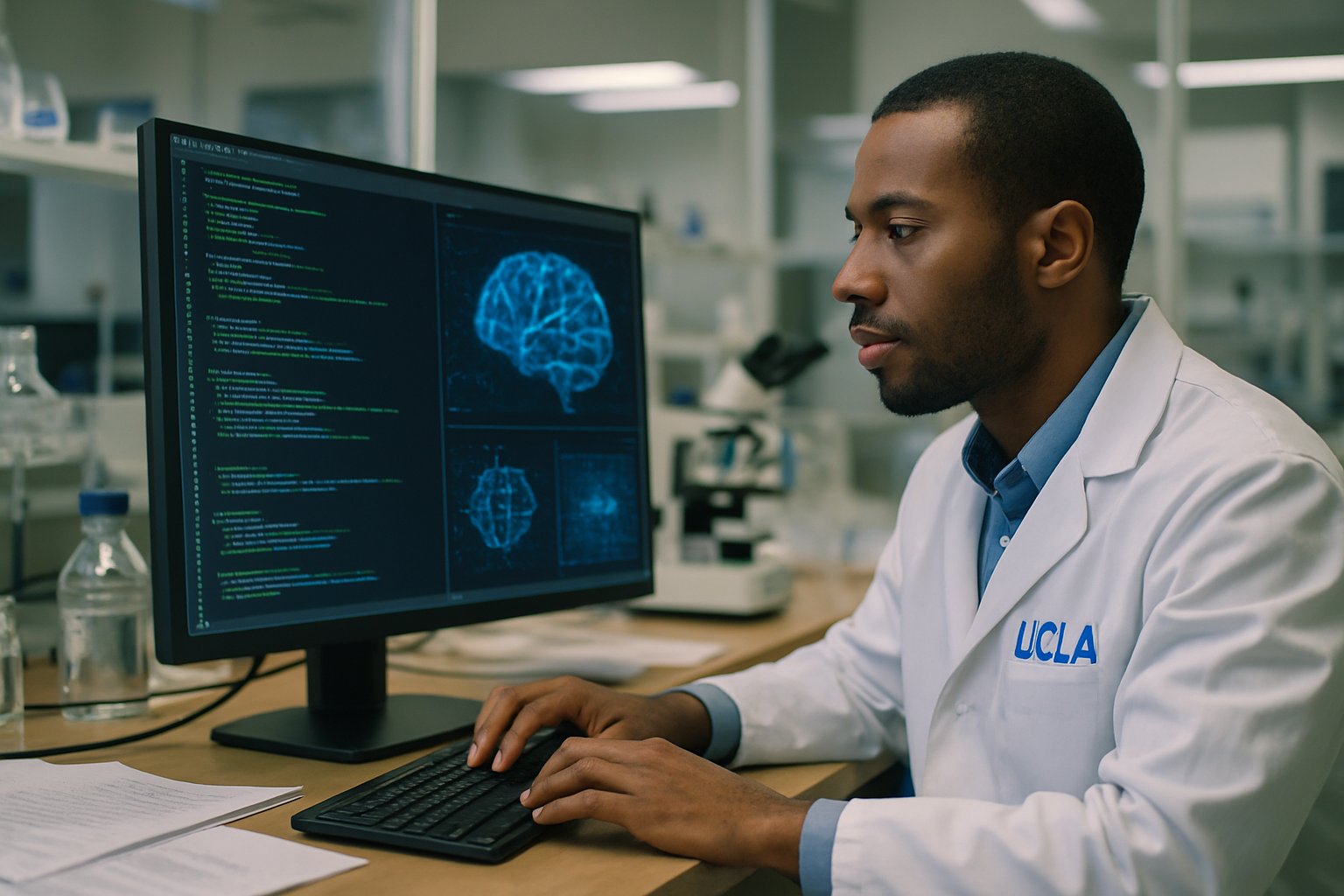
The kickoff offers broad access and clear structure. Therefore, attention can shift to the mission behind the gathering. Let us examine that strategic vision next.
AI for Science Vision
SAIR Foundation frames its purpose around dual imperatives: accelerating discovery and applying scientific rigor to AI itself. Additionally, founders argue that open infrastructure will democratize advanced tooling. They plan fellowships, shared datasets, and reproducibility protocols to close current gaps. Consequently, the initiative positions AI for Science Research as a collaborative, verifiable discipline. Terence Tao underscores this ethos in his keynote abstract on machine assistance in mathematics. He cites formal proof assistants, large language models, and shared repositories as maturing pillars. Moreover, recent literature shows a fifteen-fold publication surge across Nature-index journals since 2015. Yet those papers still represent under three percent of total output, revealing early-stage adoption. Therefore, SAIR’s infrastructure proposals aim to push that proportion much higher. Meanwhile, falling inference costs make large-scale simulations more feasible for mid-sized labs. These economic trends strengthen the foundation’s timing. In contrast, past attempts lacked affordable compute and open standards. Critically, AI for Science Research requires cross-disciplinary vocabulary, a point highlighted in SAIR podcasts.
SAIR Foundation articulates a mission of speed and rigor. Consequently, the strategic blueprint raises expectations for sustainable Scientific Discovery. Next, attention turns to who will champion that blueprint onstage.
High-Profile Speakers Lineup Preview
The roster blends laureates, AI pioneers, and corporate leaders. Notably, Terence Tao opens with “Machine Assistance and the Future of Research Mathematics.” Richard Sutton, a Turing laureate, will address reinforcement learning foundations. Meanwhile, Nobel physicist Barry Barish examines AI-driven instrumentation in big-science experiments. Panels then feature researchers from UCLA, Berkeley, Penn, Cornell, and industry giants. Additionally, Sebastien Bubeck and Hoifung Poon will unpack frontier language model alignment. Andrea Bertozzi and Deanna Needell will discuss data-driven partial differential equations. Consequently, attendees gain perspectives across mathematics, chemistry, biology, and engineering. Industry voices from NVIDIA, OpenAI, and Microsoft will highlight scalable infrastructure and responsible deployment. Nevertheless, the program reserves space for open Q&A, allowing critical interrogation of commercial claims. These contributors collectively shape the roadmap for next-generation AI for Science Research platforms.
Speaker diversity ensures both theoretical and applied depth. In contrast, single-domain meetings often miss such interdisciplinary synthesis. However, partnerships will determine whether ideas translate beyond the auditorium.
Industry Partnerships Role Explained
Corporate labs provide compute, tooling, and scaled datasets essential for frontier experimentation. Moreover, Stanford’s AI Index links falling inference costs to increased private investment. Such trends give SAIR Foundation leverage when negotiating open access agreements. However, proprietary incentives could threaten transparency if left unchecked. Consequently, SAIR plans governance frameworks that mandate reproducibility, audit trails, and equitable compute grants. Professionals can deepen governance expertise with the AI-Legal Strategist™ certification. That course covers policy, intellectual-property, and audit principles relevant to AI for Science Research.
Balanced partnerships unlock scale yet demand safeguards. Therefore, governance literacy becomes non-negotiable for Scientific Discovery teams. Risk and reward now appear two sides of one coin.
Opportunities And Emerging Risks
AI for Science Research systems promise dramatic acceleration across hypothesis generation, simulation, and data curation. Furthermore, machine assistance can remove repetitive burdens, freeing researchers for creative reasoning. Terence Tao notes that formal proof assistants already verify complex theorems collaboratively with humans. Moreover, protein-structure predictors now guide experimental biologists toward higher-value wet-lab assays. Economic studies show compute prices falling roughly thirty percent year over year.
Key opportunities include:
- Rapid literature triage using large language models
- Automated experiment scheduling and robotics integration
- Cross-modal simulation linking chemistry, climate, and materials data
However, several risks accompany these benefits. Opaque model reasoning can produce spurious conclusions without robust verification. In contrast, traditional methods, though slower, offer clearer provenance. Data silos and proprietary APIs could widen inequity between wealthy institutes and emerging regions. Consequently, SAIR Foundation proposes compute grants and open benchmarks to reduce barriers. Overclaim risk remains another challenge when marketing overshoots experimental validation. Nevertheless, rigorous peer review and transparent datasets can counter hype cycles.
Opportunities promise speed, breadth, and deeper insight. Therefore, deliberate governance must address transparency, access, and validation. Researchers now ask how to engage effectively.
Next Steps For Researchers
Laboratories seeking a foothold should begin with targeted pilot projects rather than wholesale workflow replacement. Firstly, audit existing data pipelines for reproducibility gaps and metadata compliance. Secondly, evaluate open-source proof assistants or simulation frameworks that align with domain needs. Moreover, engage with SAIR Foundation fellowships to access shared compute credits. Terence Tao encourages early adoption of collaborative proof dashboards to train graduate cohorts.
Practical next actions include:
- Subscribe to SAIR event recordings and future seminars
- Join open benchmark challenges for AI for Science Research model verification
- Pursue the AI-Legal Strategist™ credential for governance readiness
Consequently, organizations build capacity incrementally while maintaining scientific integrity.
Stepwise adoption reduces cost and cognitive overload. In contrast, sweeping overhauls often stall due to cultural resistance. A measured path therefore positions teams for sustainable AI for Science Research.
SAIR’s kickoff signals a pivotal inflection for global research culture. Furthermore, diverse laureates and technologists have committed to measurable openness and rigor. Consequently, AI for Science Research now stands poised to enter mainstream laboratories. Nevertheless, success will depend on governance literacy, transparent tooling, and sustained collaboration. Researchers should adopt incremental pilots and pursue recognized credentials. Explore the AI-Legal Strategist™ certification to future-proof your next project.
Disclaimer: Some content may be AI-generated or assisted and is provided ‘as is’ for informational purposes only, without warranties of accuracy or completeness, and does not imply endorsement or affiliation.


