

AI CERTs
4 hours ago
Dassault and NVIDIA Advance Industrial Virtual Twins at Scale
Houston hosted a pivotal reveal on 3 February 2026. During 3DEXPERIENCE World, Dassault Systèmes and NVIDIA announced a multi-year alliance. The agreement aims to scale Industrial Virtual Twins across global industries. Furthermore, executives framed the deal as a leap toward physics-aware artificial intelligence. Pascal Daloz described Science Validated Models that anchor AI in real-world laws. Meanwhile, Jensen Huang labeled the initiative "physical AI" and the next frontier. Consequently, enterprises now anticipate unified design, simulation, and operation loops. Early adopters fear steep infrastructure demands yet welcome richer decision support. This report unpacks the announcement, market context, technology stack, and practical steps.
Detailed Partnership Announcement Facts
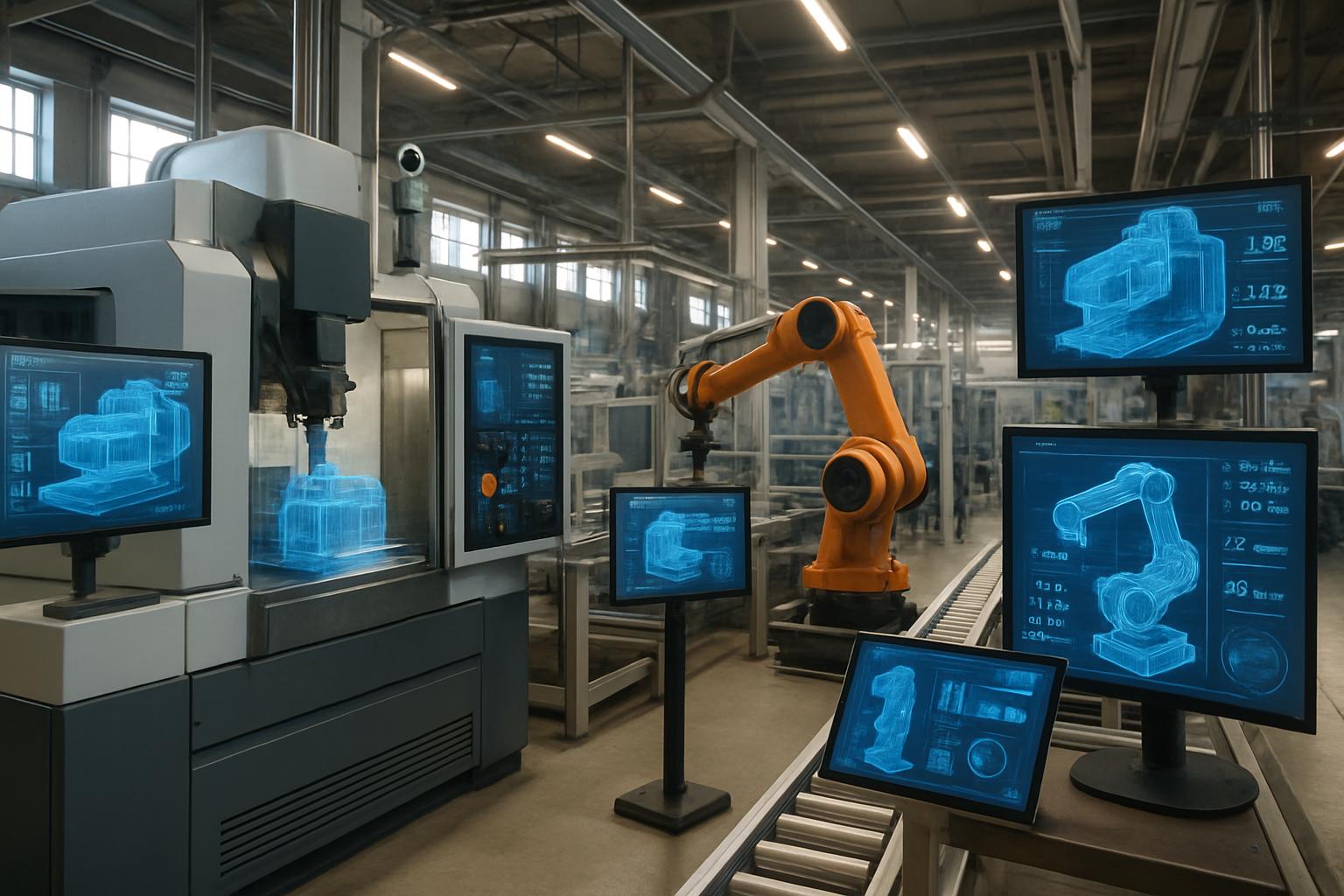
The partnership deepens a 25-year relationship between the two innovators. Moreover, it unifies Dassault's 3DEXPERIENCE platform with NVIDIA Omniverse libraries. Initial deliverables include Industry World Models and Virtual Companions for engineers. Consequently, Industrial Virtual Twins will run on OUTSCALE sovereign clouds powered by NVIDIA GPUs. BioNeMo, CUDA-X, and multiphysics engines integrate through model-based systems engineering templates. Additionally, OUTSCALE will deploy AI factories across three continents to respect data residency policies. Executives promised early pilot access for Lucid, OMRON, Bel Group, and NIAR customers. First production milestones are scheduled within 12 months, according to internal roadmaps. The announcement signals practical momentum beyond marketing slides. However, real value depends on performance at pilot scale.
Digital Twin Market Context
Analysts forecast explosive growth for digital twin platforms. MarketsandMarkets projects USD 110.1 billion revenue by 2028, growing 61.3% annually. In contrast, Fortune Business Insights estimates between USD 137 and 259 billion by 2032. Such variance reflects divergent scopes, yet the upward trajectory remains unquestioned. Moreover, Industrial Virtual Twins could capture a significant slice of that expansion. Survey data shows 45% of enterprises need up to 24 months for each deployment stage. Nevertheless, 88% reported creating at least one twin within two years, indicating accelerating maturity. Key adoption factors include:
- Capital access for high-performance compute clusters
- Availability of Science Validated Models aligned to domain regulators
- Integration with established 3DEXPERIENCE workflows
- Organizational readiness for data governance and security
- Rising demand for Industrial Virtual Twins in automotive and aerospace
These statistics reveal robust demand tempered by resource constraints. Therefore, understanding architecture choices becomes essential, which the next section details.
Technical Architecture Explained Clearly
Dassault provides validated physics kernels through SIMULIA, DELMIA, and BIOVIA suites. Meanwhile, NVIDIA supplies accelerated computation, USD scene graphs, and Omniverse runtime services. Consequently, Science Validated Models feed directly into GPU-optimized solvers for rapid iteration. Integration hinges on the 3DEXPERIENCE Unified Model, which orchestrates data lineage across tools. Omniverse DSX blueprints define reference racks, networking, and orchestration for AI factories. Rubin schemas cover security, logging, and multi-tenant isolation for sovereign clouds. Virtual Companions sit atop this stack, acting as agentic assistants that trigger simulations. Furthermore, Industrial Virtual Twins can be streamed to immersive clients via USD and RTX. Latency targets under 100 milliseconds keep interactive design loops fluid. Subsequently, engineers evaluate behavior changes in near real time. The architecture marries domain fidelity with compute acceleration. Next, we examine specific applications benefiting from this union.
Key Industrial Use Cases
Material and molecule discovery emerges as a flagship example. BioNeMo combines generative biology with Science Validated Models to propose candidate compounds. Consequently, Bel Group expects shorter formulation cycles and reduced lab waste. Design and engineering teams exploit SIMULIA with CUDA-X to predict stress responses instantly. Additionally, Lucid Motors uses Industrial Virtual Twins to refine vehicle aerodynamics before wind-tunnel tests. Factory automation gains surface through OMRON, which validates multi-robot coordination inside 3DEXPERIENCE. Virtual Companions monitor sensor streams and recommend parameter tweaks for yield gains. Meanwhile, NIAR focuses on certification, pairing twins with regulatory evidence repositories. Across scenarios, expected savings include lower prototype counts and faster compliance submissions. Nevertheless, benefits scale only when data, physics, and governance align. These examples prove sector diversity is achievable. However, organizations must weigh parallel challenges, discussed next.
Benefits And Current Challenges
The partnership promises compelling gains across cost, speed, and sustainability. Moreover, Industrial Virtual Twins enable early error detection, reducing late-stage redesign. Energy savings arise because virtual testing replaces some carbon-heavy prototypes. Virtual Companions further trim engineering hours by automating routine analysis. Consider the following quantified advantages:
- 60% reduction in prototype builds, according to internal Lucid benchmarks
- Up to 30% faster line commissioning when Science Validated Models guide robotics calibration
- Potential 15% energy reduction in data centers with optimized GPU scheduling
Nevertheless, gigawatt-class AI factories raise power and capital questions. Tom’s Hardware notes some DSX sites rival small power plants. Data sovereignty remains another hurdle despite OUTSCALE encryption controls. Furthermore, integrating legacy PLM systems demands specialized skills and change management. Prospective adopters must balance ambition with pragmatic risk mitigation. Therefore, structured implementation guidance becomes paramount.
Practical Implementation Guidance Steps
Successful rollouts start with a narrowly scoped pilot. Firstly, select a measurable pain point such as equipment downtime. Next, assemble cross-functional teams spanning IT, OT, and domain experts. Meanwhile, ingest high-quality sensor data into the 3DEXPERIENCE backbone for lineage tracking. Configure Omniverse DSX stacks using reference profiles that fit power budgets. Subsequently, integrate Virtual Companions to orchestrate simulation runs and surface insights. That baseline lets Industrial Virtual Twins evolve without disrupting operations. Professionals can enhance their expertise with the AI Marketing™ certification. Consequently, teams develop shared vocabulary for ROI storytelling and executive buy-in. A disciplined roadmap prevents scope creep and preserves momentum. Moreover, such discipline informs the wider strategic outlook addressed below.
Strategic Outlook And Actions
Industrial AI now pivots from isolated pilots toward enterprise platforms. Dassault and NVIDIA position their alliance as the foundation for pervasive Industrial Virtual Twins. Market data supports the thesis, yet power and governance questions linger. Nevertheless, validated physics engines and Virtual Companions provide credible trust mechanisms. Organizations that prototype now will shape emerging standards and ecosystems. Furthermore, early movers can secure competitive advantages through faster learning loops. Industrial Virtual Twins demand clear objectives, robust change management, and skilled talent. Therefore, consider structured training pathways to close capability gaps. Start by reviewing this article, sharing insights internally, and pursuing relevant certifications. Act today to convert vision into measurable value.


