

AI CERTs
4 hours ago
Amazon’s MCP Move Reinvents Advertising Automation
At the IAB Annual Leadership Meeting, Amazon unveiled a beta server that lets AI agents converse directly with its ad stack. The move places Advertising on a collision course with autonomous software. Consequently, marketers may soon brief a model, not a media buyer, when they launch campaigns.
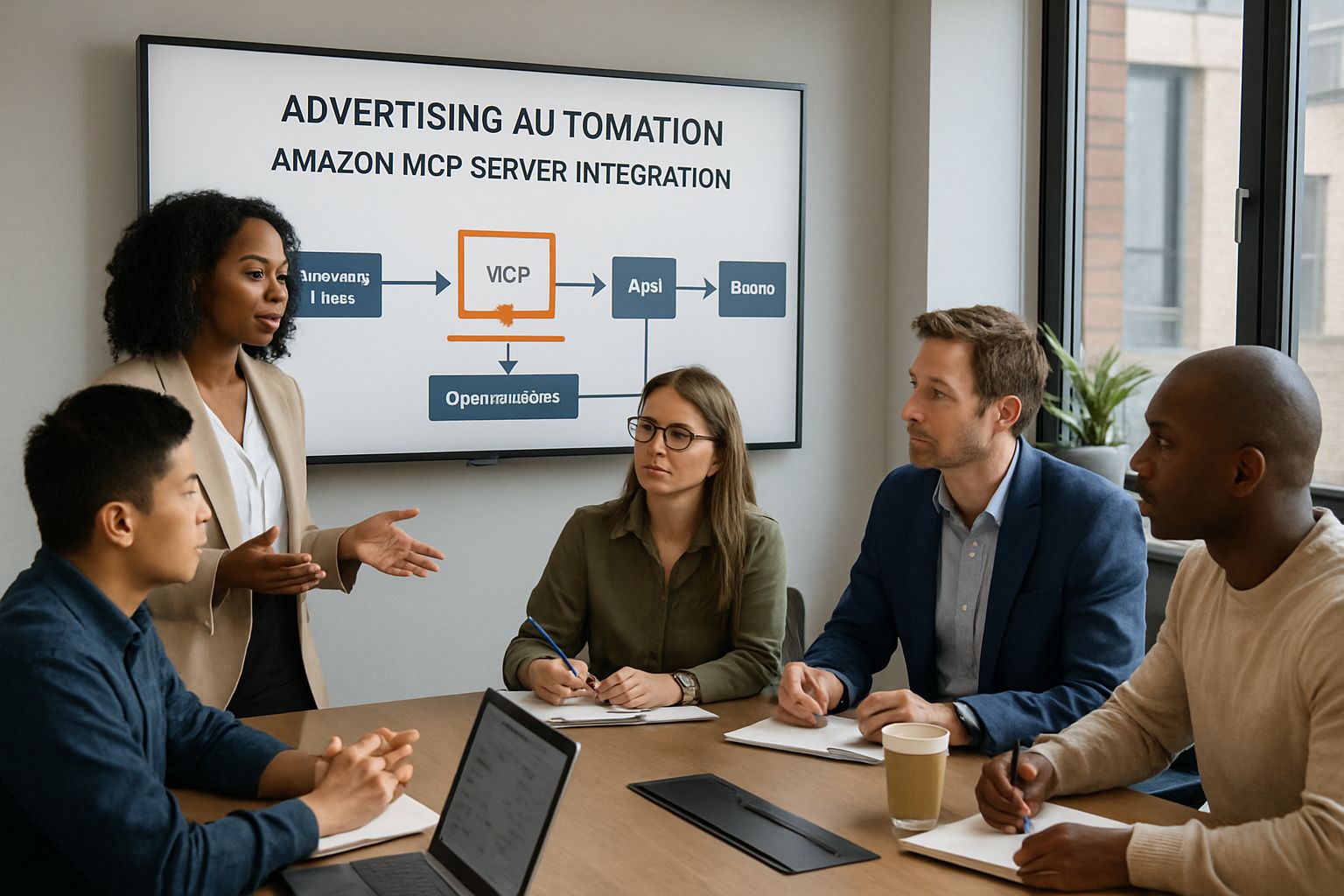
Amazon’s “Amazon Ads MCP Server” translates natural language into structured API calls. Therefore, one standardized integration replaces countless bespoke connectors. Moreover, compatible agents include Claude, ChatGPT, Gemini, and Amazon Q. The change illustrates how agentic platforms and Ad Automation are converging inside retail media.
Agentic Shift Arrives Now
Until recently, advertisers stitched together scripts, SDKs, and dashboards. Meanwhile, large language models matured into agents capable of chaining actions. Amazon’s server meets those agents halfway. It exposes “tools” that package multi-step tasks like budget rebalancing or creative refreshes.
Paula Despins, VP of Ads Measurement, described the server as a “translator” that reduces engineering friction. Furthermore, Anthropic’s Model Context Protocol (MCP) underpins the bridge. MCP offers one schema for tools, resources, and prompts. Consequently, agents can reuse connectors across multiple platforms without rewrites.
These advances elevate automation beyond simple rules. However, they also amplify responsibilities for governance and oversight.
Inside Amazon MCP Server
The beta exposes tool endpoints such as create_campaign and pull_report. Additionally, it supports account scoping, international expansion, and billing queries. One prompt might instruct an agent to duplicate the best-performing Sponsored Products campaign into Germany, adjust bids by 15%, then export a report.
Amazon hosts the server, not the models. Therefore, enterprises keep flexibility in model choice while retaining data control. In contrast, previous integrations forced developers to map each API call manually.
Key architectural features include:
- Translation layer that maps MCP tools to Amazon Ads endpoints.
- Versioning that shields agents from breaking API changes.
- Observability hooks for logging and audit trails.
For marketers, the upshot is faster Ad Automation with fewer maintenance cycles. Advertising teams can prototype workflows in days rather than weeks.
Streamlined connectivity accelerates deployment. Nevertheless, implementation details still matter for scale and resilience.
Key Benefits And Tradeoffs
Amazon’s announcement brings tangible advantages. First, one integration reduces technical debt. Moreover, standardized tools shorten onboarding for new partners. Second, multi-step operations compress into single prompts, saving operational hours. Third, interoperable design lets brands test multiple agents without recoding pipelines.
However, tradeoffs persist. Over-automation can mask errors until budgets vanish. Therefore, human approvals and automated rollback rules remain essential. Additionally, external systems such as inventory or creative platforms may not yet expose MCP tools, limiting full-funnel orchestration.
Advertisers gain speed yet must safeguard quality. These tensions will define the next phase of enterprise Ad Automation.
Benefits entice rapid adoption. Still, unresolved gaps demand cautious planning before broad rollout.
Security Risks Require Vigilance
Academic research flags emerging attack vectors. Tool poisoning, prompt injection, and remote code execution have surfaced in open-source MCP servers. Consequently, Amazon urges partners to apply least-privilege scopes and rigorous testing.
Moreover, the server will likely evolve safety layers such as RBAC, audited tool registries, and anomaly detection. Security certifications can bolster preparedness. Professionals can enhance their expertise with the AI Security Compliance™ certification.
Risk mitigation frameworks must mature alongside capabilities. Nevertheless, early adopters can lead by embedding defense-in-depth from day one.
Robust safeguards protect investments. Subsequently, confidence grows for wider autonomous Advertising deployments.
Ecosystem And Industry Context
Amazon’s move aligns with sector momentum. Adobe, LiveRamp, and multiple DSPs have embraced MCP-compatible interfaces. Furthermore, AWS AgentCore and marketplace hubs now list dozens of MCP tools.
Industry analysts tie the trend to financial realities. Amazon reported 24% ad revenue growth in Q3 2025, reaching $17.7 billion. Consequently, efficiency gains through agents promise margin expansion.
Standardization also supports multi-cloud strategies. Advertisers may orchestrate campaigns across Amazon, Google, and retail partners from one control plane. Therefore, competitive parity depends on equal agentic reach.
The ecosystem tilts toward open protocols. Nevertheless, vendor differentiation will persist in analytics depth, creative tooling, and service quality.
Market convergence accelerates innovation. However, rigorous evaluation remains vital when selecting agent frameworks.
Implementation Tips For Teams
Successful pilots share repeatable patterns. First, map existing workflows against available MCP tools. Secondly, establish staged environments with limited spend caps. Moreover, embed approval checkpoints before write operations.
Third, monitor latency and cost metrics. Consequently, teams spot anomalies early. Fourth, maintain documentation for agent prompts and tool versions to aid audits.
Finally, train staff on safety best practices. The linked AI Security Compliance™ program offers structured guidance. Smarter processes transform experimentation into resilient production.
Disciplined implementation unlocks speed without sacrificing control. In contrast, ad-hoc setups often falter under scale.
Outlook And Next Steps
Amazon disclosed no pricing or SLA specifics yet. Additionally, the roadmap for “resources” and “prompts” within MCP remains pending. Observers expect those primitives to surface later in 2026.
Meanwhile, standards bodies like the IAB may codify governance models. Furthermore, advanced analytics will likely merge with agentic execution, allowing real-time optimization across channels.
Advertisers that master the tooling first may capture share gains. However, the talent gap in secure agent engineering persists. Certifications and partnerships will bridge skills shortages.
Strategic planning today positions brands for tomorrow’s autonomous Advertising landscape. Ongoing vigilance will separate leaders from laggards.
Near-term uncertainty should not deter exploration. Consequently, measured experimentation will inform future best practices.
Conclusion
Amazon’s MCP Server marks a pivotal evolution in Advertising. The beta empowers agents to execute campaigns through conversational prompts, delivering rapid Ad Automation gains. Nevertheless, security, oversight, and cross-system alignment demand equal attention. Moreover, industry momentum suggests that open protocols will define future media buying. Forward-thinking teams should pilot the server, adopt safety frameworks, and pursue skills growth. Therefore, explore the AI Security Compliance™ certification today and secure your competitive edge.


