

AI CERTs
4 hours ago
AI Memory Supercycle Sends Chipmaker Stocks Soaring
For years, memory prices fluctuated with commodity cycles. However, unprecedented AI infrastructure spending has flipped that script. Consequently, chipmaker Stocks have entered a rally few analysts predicted last winter. TrendForce now describes a looming "memory supercycle" powered by data-center demand for bandwidth-hungry accelerators. Meanwhile, global DRAM inventories sit near three-week lows, matching the 2018 crunch. Micron, Samsung, and SK Hynix all report aggressive order books through 2026. Moreover, suppliers are redirecting capacity toward premium HBM Memory and DDR5, starving consumer lines. Investors watching pricing indices see contract prices jumping by double digits each quarter. This article dissects the shortage, evaluates competing forecasts, and highlights signals professionals should track next.
AI Demand Reshapes Market
AI workloads scale logarithmically with model size. Therefore, hyperscalers crave vast memory bandwidth to keep GPUs fed. Nvidia’s latest accelerators pair multiple stacks of HBM Memory with every compute die.
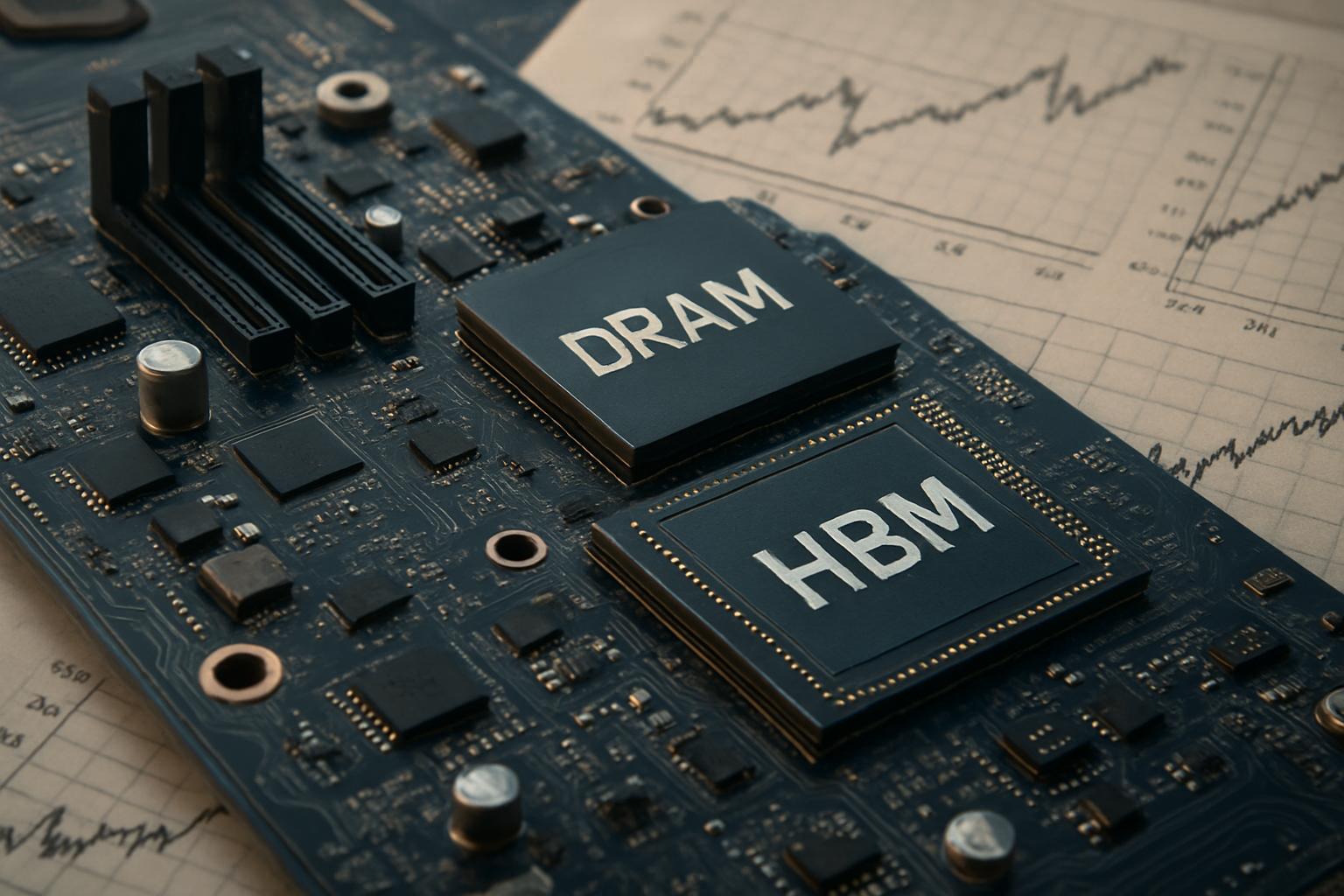
Consequently, server DRAM and HBM wafers command premium allocation. Producers shifted line priorities toward those profitable segments during late 2024. Consequently, memory Stocks reflect that premium.
Demand side forces therefore remain firmly upward. Next, supply dynamics reveal why shortages persist.
Supply Shifts And Shortage
Producers learned harsh lessons from past gluts. Accordingly, Micron’s USD 24 billion Singapore build follows a staggered schedule. Samsung and SK Hynix pursue similar phased ramps to avoid sudden oversupply.
Meanwhile, foundry and advanced packaging tools remain bottlenecked for HBM Memory stacking. ASML and TSMC report extended delivery timelines for high-NA EUV and 2.5D interposers.
These measured moves reassure equity desks that Stocks should enjoy pricing power for several quarters.
Supply discipline limits immediate relief for customers. Portfolio managers therefore maintain overweight positions in leading Stocks. However, price action offers clearer evidence of tightness.
Price Surge Lifts Stocks
Spot DRAM prices climbed roughly 40 % between May and November 2025. Industry sources told Reuters that certain Samsung contracts jumped 60 % in the same window.
Furthermore, TrendForce now forecasts sequential double-digit increases through mid-2026. Micron Stocks gained more than 200 % during 2025, mirroring gains in Korean peers.
- Global DRAM inventories fell to 3.3 weeks, TrendForce Q3 2025.
- JEDEC released HBM4, boosting capacity 100 % over HBM3e.
- Samsung lifted select memory contract prices by up to 60 %.
- Micron announced phased 24 billion USD Singapore expansion.
The data validate the supercycle thesis driving memory Stocks higher for many investors. Yet valuation debates grow louder, prompting a closer look at demand durability.
Supercycle HBM Memory Drivers
Bullish analysts argue AI deployments create a structural floor for premium memory margins. Moreover, every accelerator generation enlarges total HBM Memory needed per rack.
Cloud providers push for HBM4 adoption to shrink accelerator count per workload. Consequently, suppliers can charge higher ASPs while maintaining similar wafer volumes.
Professionals can deepen expertise through the AI+ Healthcare™ certification. The course examines data-center architectures, including memory bandwidth trade-offs.
Structural tailwinds therefore strengthen the bull thesis. Yet historical patterns warn that exuberance can reverse quickly.
Risks And Bear Case
Skeptics note memory remains inherently cyclical. Additionally, hyperscalers could slow spending if utilization drops.
New fabs scheduled for 2027 may flood the market. In contrast, handset and PC makers already protest rising bills.
Consequently, Stocks might retrace if capacity overshoots or demand normalizes. These warnings underscore the importance of tracking supply expansions. The next section outlines practical monitoring signals.
Monitoring Key Indicators Ahead
Quarterly earnings remain the fastest way to gauge contract pricing. Therefore, analysts parse revenue mix for HBM versus commodity parts.
Price dashboards from TrendForce and DRAMeXchange publish weekly index changes. Moreover, equipment orders at ASML and Applied Materials foreshadow capacity timing.
- Earnings calls: watch HBM revenue mix
- Inventory weeks: under four weeks signals shortage
- Capex announcements: track tool lead times
Investors comparing these signals to share performance can assess whether Stocks still price in perfection. Armed with that data, professionals make informed allocation moves.
Conclusion And Future Outlook
AI’s unrelenting hunger for bandwidth has pushed memory economics into unfamiliar terrain. Therefore, suppliers enjoy rare pricing power and investors savor multi-year visibility. Nevertheless, history shows that every supercycle eventually collides with over-investment and shifting demand. Prudent teams will watch inventory weeks, capex cadence, and hyperscaler budgets before adding more Stocks. Meanwhile, product designers should track HBM roadmap milestones to anticipate bill-of-materials impacts. Professionals seeking strategic insight can leverage certified learning paths to stay competitive. Act now, deepen expertise, and position for the next memory inflection.


