

AI CERTs
4 months ago
Semiconductors Boom: Broadcom and TSMC Lead Custom AI Chip Wave
Global demand for advanced AI compute is rewriting the economics of Semiconductors. Consequently, hyperscalers now favour custom accelerators over general-purpose GPUs to cut power, cost, and latency. This pivot has elevated Broadcom and TSMC into pivotal partners for AI-first clouds. Moreover, analysts predict the wave will stretch into 2029 as rack deployments scale globally. The story intertwines chip design, fabrication, and advanced packaging with Supply Chain resilience questions. Therefore, industry professionals need clear data on revenue momentum, capacity moves, and strategic risks. This article unpacks recent developments, provides balanced analysis, and highlights certification routes for upskilling. Meanwhile, every section keeps sentences concise to enhance technical readability. Let us explore how custom silicon is reshaping data centres and corporate roadmaps.
Custom AI Chip Momentum
In contrast, XPUs integrate algorithm insights directly into silicon for higher performance per watt. Consequently, cloud operators can slash inference costs and improve energy efficiency. Broadcom positions these devices between GPUs and fixed-function ASICs, branding the family simply as XPUs. The company couples accelerators with Ethernet switching to simplify rack networking.
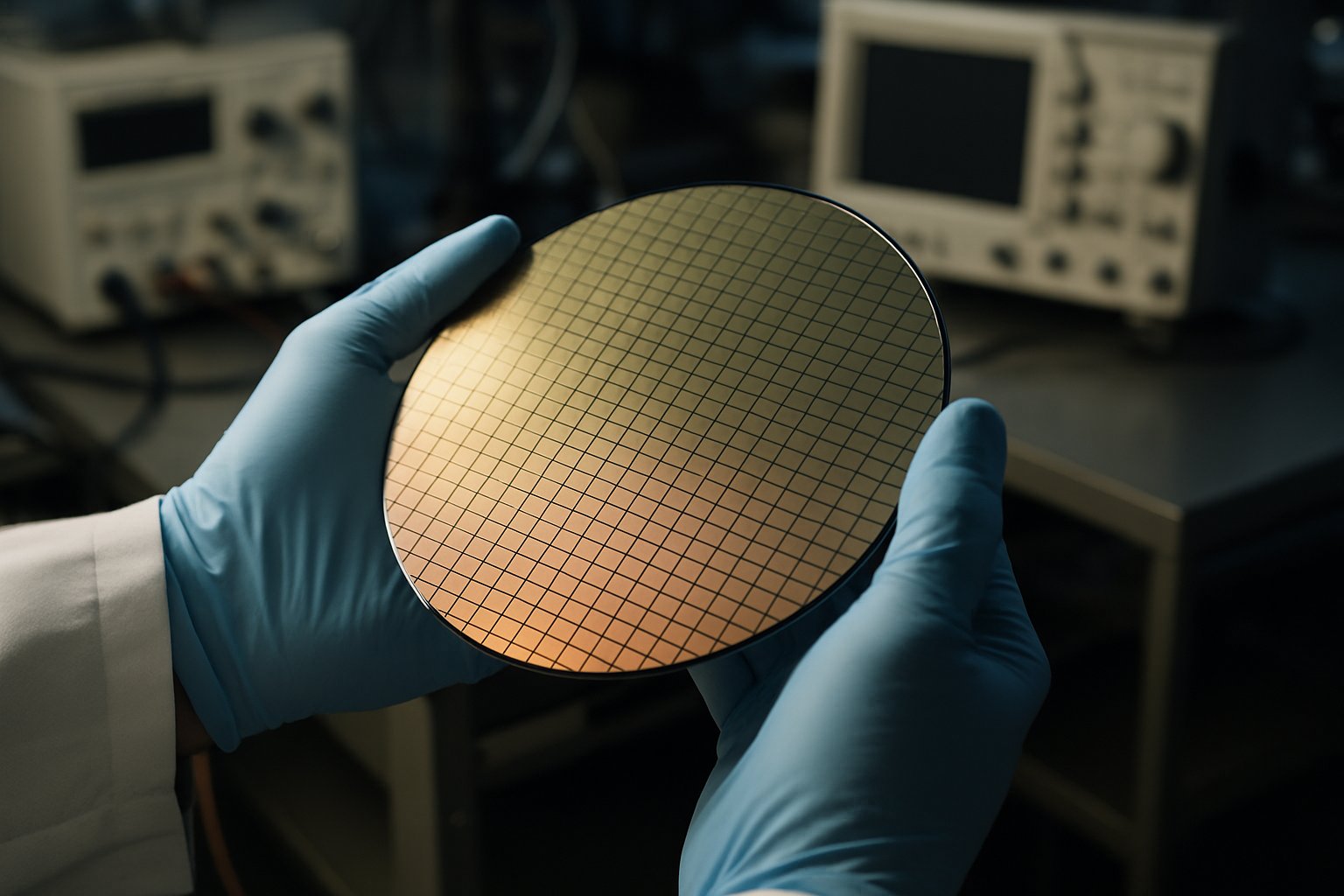
OpenAI underlined the appeal by announcing a 10-gigawatt deployment roadmap with Broadcom last October. Sam Altman stated the collaboration is critical for unlocking AI’s full potential. Furthermore, Broadcom will design, build, and deliver complete racks, reducing Supply Chain complexity for OpenAI. Such end-to-end integration signals a structural demand shift favouring custom Semiconductors.
Custom XPUs promise efficiency and strategic independence. Consequently, Broadcom’s revenue trajectory illustrates the commercial upside now.
Broadcom AI Revenue Surge
Broadcom’s financials reveal how quickly custom silicon converts to cash. Moreover, Q3 FY2025 AI semiconductor revenue reached $5.2 billion, up 63% year on year. Hock Tan confirmed a fourth “qualified” XPU customer with production orders exceeding $10 billion.
- Q3 FY2025 revenue: $15.952 billion
- AI segment share: roughly one-third of total sales
- Backlog: more than $10 billion in XPU racks
- Forecast: stronger 2026 shipments and higher margins
Additionally, management disclosed rising CoWoS bookings to secure packaging slots. Consequently, analysts expect Broadcom’s Semiconductors contribution to surpass networking revenues by 2027. These numbers showcase robust demand despite uncertain macro indicators.
Broadcom’s order book demonstrates long-term hyperscaler commitment. Nevertheless, fabrication capacity remains the next critical variable.
TSMC Advanced Capacity Gamble
TSMC closed 2025 with record revenue of US $33.7 billion during Q4 alone. Furthermore, advanced nodes below 7 nm delivered 77% of wafer sales. The foundry now guides 2026 capital expenditure between $52 billion and $56 billion.
CoWoS packaging capacity will rise sharply to feed XPU demand. In contrast, CEO C.C. Wei warned that misjudging volumes could leave the company with costly idle tools. Nevertheless, Semiconductors leadership at 3 nm and incoming 2 nm keeps customers locked in. Meanwhile, Supply Chain observers track EUV tool lead times, power access, and skilled labour availability.
TSMC is betting that AI accelerators will sustain utilisation across new fabs. Consequently, packaging and memory partners must match the aggressive schedule.
Ecosystem Shifts Now Emerging
Google, Meta, Microsoft, Amazon, and Anthropic all nurture internal ASIC programmes. Moreover, many rely on Broadcom for design services while reserving TSMC capacity. Consequently, a layered Supply Chain now supports diverse silicon, challenging Nvidia’s GPU hegemony.
Nvidia still dominates training workloads; however, custom Semiconductors increasingly handle inference at scale. Additionally, Ethernet-based rack designs from Broadcom promise smoother integration with existing data-centre fabrics. Professionals can enhance their expertise with the AI Researcher™ certification.
A diversified hardware stack broadens innovation paths. Subsequently, competition should improve price performance for enterprise customers.
Challenges And Market Risks
Capacity bottlenecks top the risk list. Moreover, CoWoS lines and HBM supply remain tight through 2027. Software inertia adds friction because CUDA ecosystems stay dominant. Consequently, migration to bespoke accelerators demands new compilers, libraries, and developer skills.
Geopolitical tension over Taiwan compounds uncertainty for the global Supply Chain. In contrast, onshoring initiatives in the United States and Japan trail TSMC’s scale by years. Therefore, any demand dip could expose oversupply, pressuring Semiconductors margins.
These headwinds remind investors to weigh execution challenges carefully. Nevertheless, strategic planning can mitigate many vulnerabilities.
Strategic Industry Takeaways Ahead
First, custom silicon is no longer experimental; it is shipping in volume. Secondly, integrated rack solutions reduce deployment friction. Furthermore, packaging technology now drives competitive advantage as much as transistor size.
Market participants should monitor three indicators:
- Backlog growth versus realised revenue
- TSMC capex alignment with customer roadmaps
- Supply Chain resilience across memory and packaging
Moreover, continued education remains vital because architectures evolve quickly. Consequently, credentials like the linked AI Researcher™ programme validate practical expertise.
These insights prepare leaders for rapid architectural shifts. Subsequently, we summarise the outlook.
Conclusion And Future Outlook
Semiconductors are entering an era defined by custom accelerators, advanced packaging, and colossal capex commitments. Moreover, Broadcom’s soaring orders and TSMC’s expansion illustrate the scale of transformation. Supply Chain stresses persist, yet strategic diversification offers resilience. Consequently, professionals must track metrics, update skills, and engage with emerging standards. Explore the AI Researcher™ certification to deepen technical knowledge and stay ahead in this dynamic market.
Disclaimer: Some content may be AI-generated or assisted and is provided ‘as is’ for informational purposes only, without warranties of accuracy or completeness, and does not imply endorsement or affiliation.


