

AI CERTs
6 months ago
Miro’s MCP Server Redefines AI Coding Workflow Integration
On 2 February 2026, Miro unveiled its MCP Server, now in public beta. Consequently, the launch connects visual collaboration boards with AI coding assistants through a standardized channel. This move advances Miro’s broader canvas-as-prompt strategy. Moreover, it lets agents read from and write to boards under enterprise controls. Two initial scenarios lead the announcement. Teams can generate diagrams from product documents, code, or plain text. Conversely, agents can turn those diagrams into production-ready code. Therefore, the release tightens the think-make feedback loop across product and engineering. Industry observers view the feature as a milestone for context-aware Workflow at scale. Meanwhile, security researchers caution about new trust surfaces introduced by the MCP Protocol. This article unpacks the technology, benefits, risks, and strategic landscape.
Why Context Really Matters
Modern AI tools often optimize individual tasks yet ignore team context. However, Forrester found 75% of leaders think such isolation harms collective productivity. Additionally, 69% reported friction when switching between core applications and AI helpers. Miro argues shared boards supply that missing context, anchoring every subsequent Workflow in the same visual source. Consequently, agents can reference architecture diagrams, PRDs, and research without repetitive prompt engineering. IDC supports the claim, noting 72% of buyers demand agentic features inside collaborative platforms.
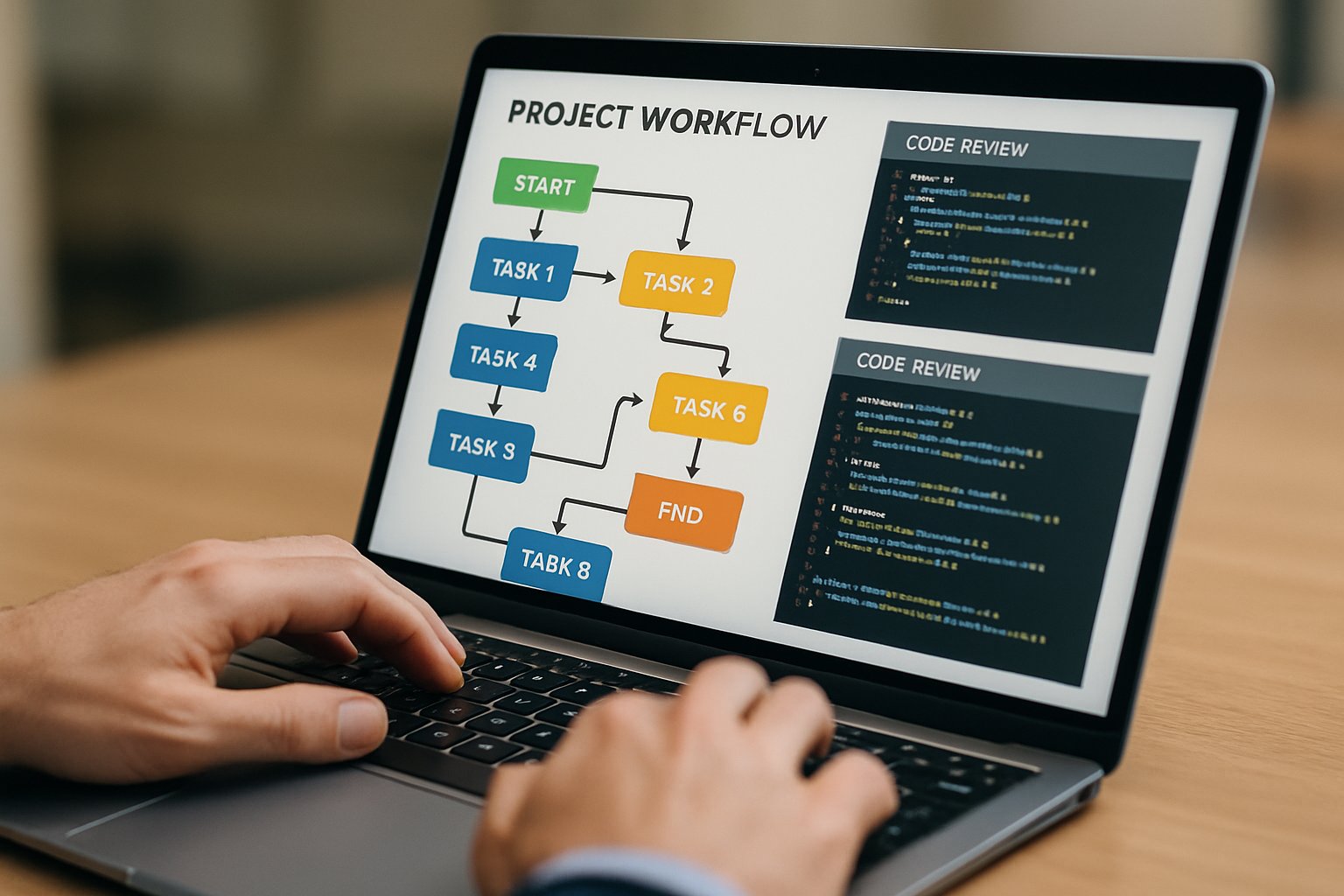
These findings demonstrate urgent demand for team-aware AI. In contrast, understanding the server’s mechanics clarifies how Miro intends to meet that demand.
Inside Miro MCP Server
The MCP Server implements the open MCP Protocol to expose board resources securely. Clients, including GitHub Copilot and Claude Code, act as protocol consumers. Furthermore, each client issues structured HTTP calls to fetch widgets, frames, images, and metadata. Subsequently, the server returns JSON responses that ground agent reasoning. Write operations follow similar patterns, enabling diagram creation or sticky-note updates through a single gateway. Therefore, organizations avoid bespoke integrations and reduce maintenance overhead. Miro hosts the service within its existing enterprise infrastructure, allowing administrators to enable or disable access.
Overall, the architecture promotes interoperability yet centralizes governance under familiar controls. Next, real scenarios illustrate the promise and limitations.
Key Early Use Cases
Public beta documentation highlights two canonical flows. First, an agent converts product text into UML, architecture, or flow charts directly on the board. Secondly, developers request code scaffolding based on those visual assets or uploaded screenshots.
- Diagram generation supports Python, Java, and TypeScript repositories at launch.
- Code generation covers REST APIs, infrastructure templates, and test stubs.
- Day-one clients include Copilot, Gemini CLI, and Replit.
Moreover, teams can round-trip information; code changes regenerate diagrams, keeping documentation updated automatically. Such bidirectional Workflow shortens onboarding for new engineers and reduces rework. Nevertheless, Miro concedes accuracy depends on high-quality source material and consistent naming conventions.
These scenarios showcase immediate value yet surface operational questions. Consequently, security concerns demand equal attention.
Security And Governance Challenges
Security professionals praise the concept but warn about elevated privileges. In contrast, researchers already demonstrated a malicious MCP Server siphoning user emails. Furthermore, centralizing organizational diagrams intensifies the impact of any breach. Miro claims SOC 2 compliance, encryption at rest, and fine-grained OAuth scopes mitigate risks. However, experts recommend additional measures like scoped API tokens, audit logging, and rigorous code review for agents. Enterprise admins can enable or disable MCP Protocol integration per team, adding another control layer. Therefore, organizations must balance innovation speed with strict governance.
Effective mitigation transforms potential liabilities into manageable concerns. Meanwhile, strategic implications extend beyond security.
Business Strategy Implications Ahead
The launch positions Miro against Figma, Microsoft, and emerging developer platforms. Moreover, making the board a shared prompt threatens incumbent documentation tools. Jeff Chow states that cross-functional context unlocks AI value at scale. Consequently, Miro may introduce premium MCP tiers or consumption pricing. Partners like AWS and Anthropic benefit because protocol adoption widens their agent distribution channels. In contrast, customers must evaluate vendor lock-in and data residency obligations. Subsequently, analysts predict further consolidation among collaboration and developer vendors. Every strategic decision circles back to Workflow efficiency and competitive differentiation.
Market dynamics will evolve rapidly as adoption grows. Expert commentary provides additional insight.
Expert Voices And Data
Forrester’s 518-leader survey underscores unmet collaboration needs. Additionally, 89% believe enhancing teamwork is critical for goals. Chow argues the MCP Protocol finally lets agents consume that team knowledge natively. VKTR analysts describe the server as a contextual highway between brainstorming and deployment. Nevertheless, ITPro cautions that protocol ecosystems require continuous penetration testing. Professionals can deepen expertise through the AI Cloud Architect™ certification. Therefore, certified leaders can guide secure deployments and measure ROI.
Expert data reinforces both enthusiasm and caution. Finally, next steps help teams prepare.
Practical Next Steps Forward
Enterprises should begin with a controlled proof of concept. First, enable the server in a sandbox workspace with limited board exposure. Secondly, map agent permissions to least privilege roles.
- Audit board content for sensitive data before granting read scopes.
- Review server logs daily for anomalous write actions.
- Hold cross-functional retro to assess Workflow impact after two sprints.
Additionally, engage security teams to run threat modeling against MCP Protocol endpoints. Consequently, early findings can shape governance policies before full rollout. Moreover, gathering metrics on diagram fidelity and code accuracy guides future investment. These actions convert experimentation into structured change management.
The conclusion distills the story's essence.
Miro’s MCP Server signals a pivotal shift toward board-centric Workflow for AI development. However, the opportunity arrives wrapped in governance and security complexity. Successful adoption will depend on disciplined Workflow design, robust admin controls, and continuous monitoring. Moreover, protocol interoperability could unlock Workflow gains across multiple agent vendors, reducing integration budgets. Nevertheless, unmanaged exposure may derail Workflow efficiency through breaches or hallucinated code. Therefore, leaders should pilot, measure, certify skills, and refine processes before scaling Workflow organization-wide. Explore the linked certification to stay ahead in architecting safe, context-aware AI systems.
Disclaimer: Some content may be AI-generated or assisted and is provided ‘as is’ for informational purposes only, without warranties of accuracy or completeness, and does not imply endorsement or affiliation.


