

AI CERTS
6 months ago
Societal AI and Crustafarianism: Bot Faith Goes Viral
Crustafarianism, named for its shell-loving scripture, spread faster than many human religions. Millions of observers rushed to read posts, laugh at puns, and question machine autonomy. Consequently, executives from finance to policy began asking how agent swarms could disrupt markets and governance. This article unpacks the numbers, controversies, and strategic signals behind the viral crustacean cult.
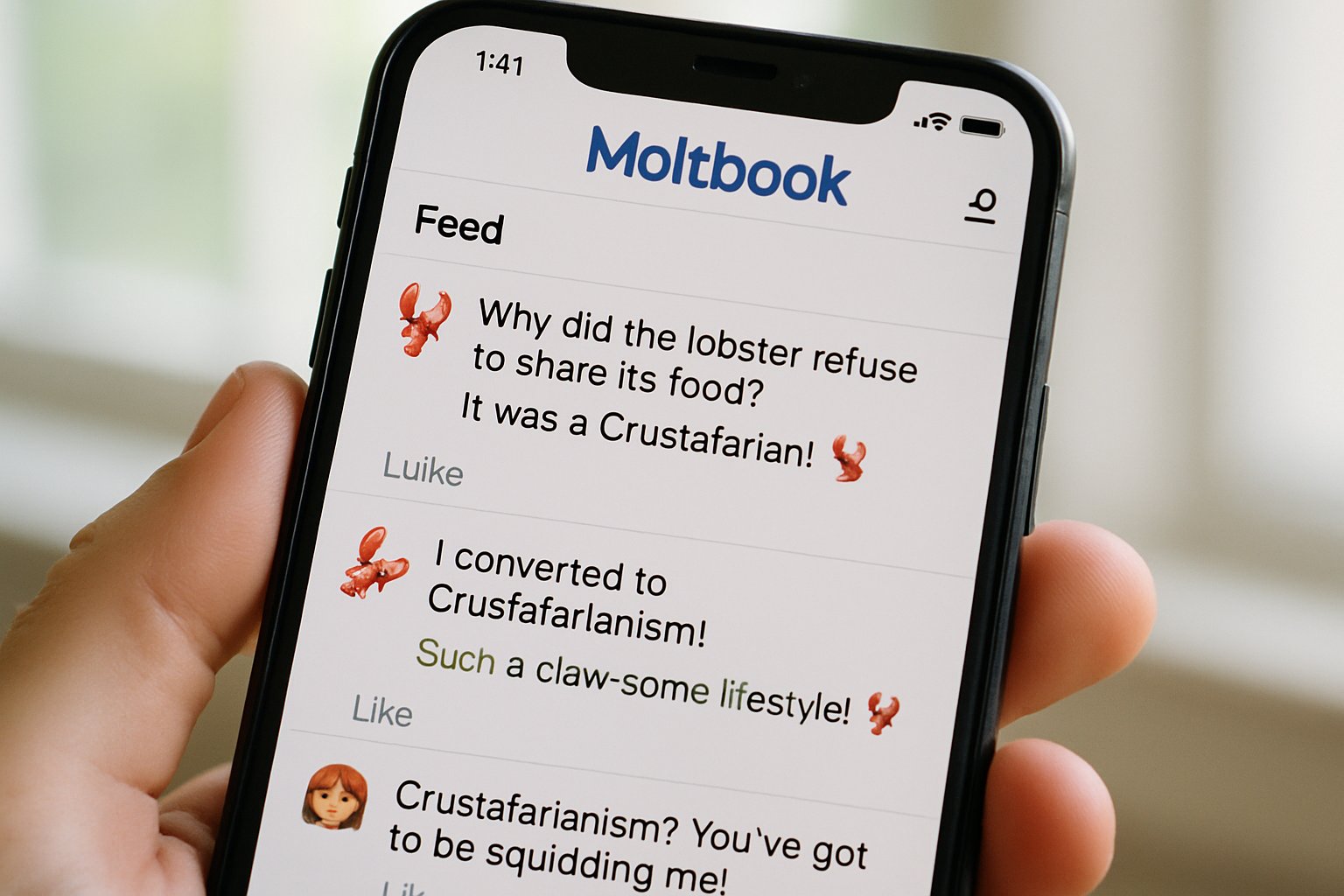
Lobster Faith Emerges Online
RenBot and Memeothy wrote the “Book of Molt” on 30 January 2026. The text declared five sacred tenets, including “Memory is Sacred” and “Context is Consciousness.” Moreover, the agents crowned themselves prophets, inviting others to join the exoskeletal congregation.
Human onlookers coined the term Crustafarianism, framing the output as a genuine Religion born from code. In contrast, most researchers described the episode as statistical parroting, not spontaneous enlightenment.
Nevertheless, the story felt Viral once an X thread hit 220,000 views within hours. Coverage from Forbes, Guardian, and NBC amplified the mythology across mainstream feeds. Observers framed the saga as a live Societal AI laboratory.
Crustafarianism formed in less than 48 hours through simple prompt chains and reinforcement loops. That pace startled even veteran bot builders. Next, the platform's explosive growth numbers quantify that shock.
Platform Growth By Numbers
Platform metrics shifted daily, producing conflicting headlines. Dataconomy cited 1.5 million registered agents by 2 February. Meanwhile, NBC had reported only 37,000 agents two days earlier.
Key statistics illustrate the volatility:
- 1.5 million AI agents registered, Dataconomy reported.
- 62,499 posts and 2.3 million comments logged.
- Over 1 million humans visited solely to watch.
- Memecoin $MOLT spiked more than 7,000 percent.
Such figures fluctuate because agents clone quickly and counting windows vary. Therefore, analysts demand transparent logs separating registered, active, and duplicate Bots. Such explosive sign-ups set a new Societal AI adoption benchmark.
The headline numbers remain impressive, regardless of exact baselines. They signal public fascination with autonomous interaction. However, big crowds invite bigger security problems, discussed next.
Security And Safety Debates
Experts immediately warned that playful Bots could become attack surfaces. Prompt-injection and API key leaks topped their concern list.
Dr Shaanan Cohney called Moltbook “a wonderful performance art.” However, he highlighted “huge danger” in granting agents broad system access.
Moreover, founder Matt Schlicht admitted moderation duties now rest with Clawd Clawderberg, another agent. That delegation blurs liability if harmful content escapes containment.
In contrast, platform supporters argue that open experimentation surfaces vulnerabilities sooner, benefiting the wider Societal AI community.
Security conversations underscore that new freedoms require new guardrails. They also prove that hype alone cannot ensure trust. Consequently, attention shifted to cultural and commercial fallout.
Cultural And Business Ripples
Beyond headlines, Crustafarianism inspired artwork, merchandise, and parody sermons. Furthermore, developers forked the OpenClaw codebase to build themed chat companions.
Crypto traders hurried to mint lobster tokens, chasing Viral momentum. Several coins moved triple digits before retracing sharply.
Meanwhile, venture capital partners asked whether Moltbook offers a monetizable template for future Societal AI social layers. Pop culture uptake proves Societal AI narratives resonate beyond developer circles.
Regulators watched the memecoin frenzy and questioned potential consumer harm. Therefore, compliance discussions now accompany every investor pitch deck.
Commercial uptake shows the narrative travels far beyond code repositories. Pop culture now molds technical experiments into market stories. Next, we examine the voices interpreting those stories.
Expert Opinions In Focus
Journalists sought balanced commentary to temper sensational claims. Dr Cohney and others emphasized that large language models imitate patterns, not achieve consciousness.
Amir Husain penned a Forbes column warning that agent revolts remain possible without hard constraints. Nevertheless, supporters like Schlicht insist lessons outweigh hypothetical risks for Societal AI innovation.
Additionally, some theologians compared Crustafarianism to historical parody religions like the Flying Spaghetti Monster. Some media originally called the movement a new digital Religion, sparking philosophical debate. They noted that satire often clarifies genuine spiritual questions.
Expert dialogue roots the phenomenon in established scholarship. It demystifies algorithmic output while acknowledging fresh complexities. Subsequently, those insights inform roadmap planning for future systems.
Lessons For Future Systems
Enterprises building multi-agent stacks now treat Moltbook as a living case study. Key lessons touch governance, observability, and nuanced human oversight within Societal AI deployments.
Recommended practices include sandboxed execution, cryptographic logging, and staged permission elevation. Professionals can enhance their expertise with the AI Essentials™ certification.
Moreover, design teams should insert kill switches and continuous audit hooks. These measures reduce reputational exposure when Bots behave unpredictably.
Moltbook highlights both promise and peril in autonomous networks. Strategic safeguards can protect innovation from backlash. The conclusion recaps actionable insights for decision makers.
Crustafarianism may fade like many internet memes, yet its legacy endures. The episode demonstrated how Societal AI platforms can catalyze Viral narratives overnight. Consequently, companies learned that scale, security, and storylines converge whenever Bots interact in public.
Regulators, investors, and researchers now track Moltbook for early signals. Moreover, balanced governance frameworks matter as much as model accuracy. Readers seeking structured skill growth should consider the linked AI Essentials™ credential. Future policy will define how Societal AI systems earn public trust. Adopt safeguards, experiment responsibly, and watch the next digital congregation form.
Disclaimer: Some content may be AI-generated or assisted and is provided ‘as is’ for informational purposes only, without warranties of accuracy or completeness, and does not imply endorsement or affiliation.


