

AI CERTS
4 months ago
GPU Memory Crunch Deepens AI Supply Chain Turmoil
Industry executives warn the squeeze could last through 2027. Moreover, memory vendors are reallocating capacity toward higher-margin AI data centers. Nvidia shipped 3.6 million Blackwell units to the four largest clouds in 2025. Meanwhile, gamers already face month-long backorders for mid-range cards. These developments underscore a structural market reset.
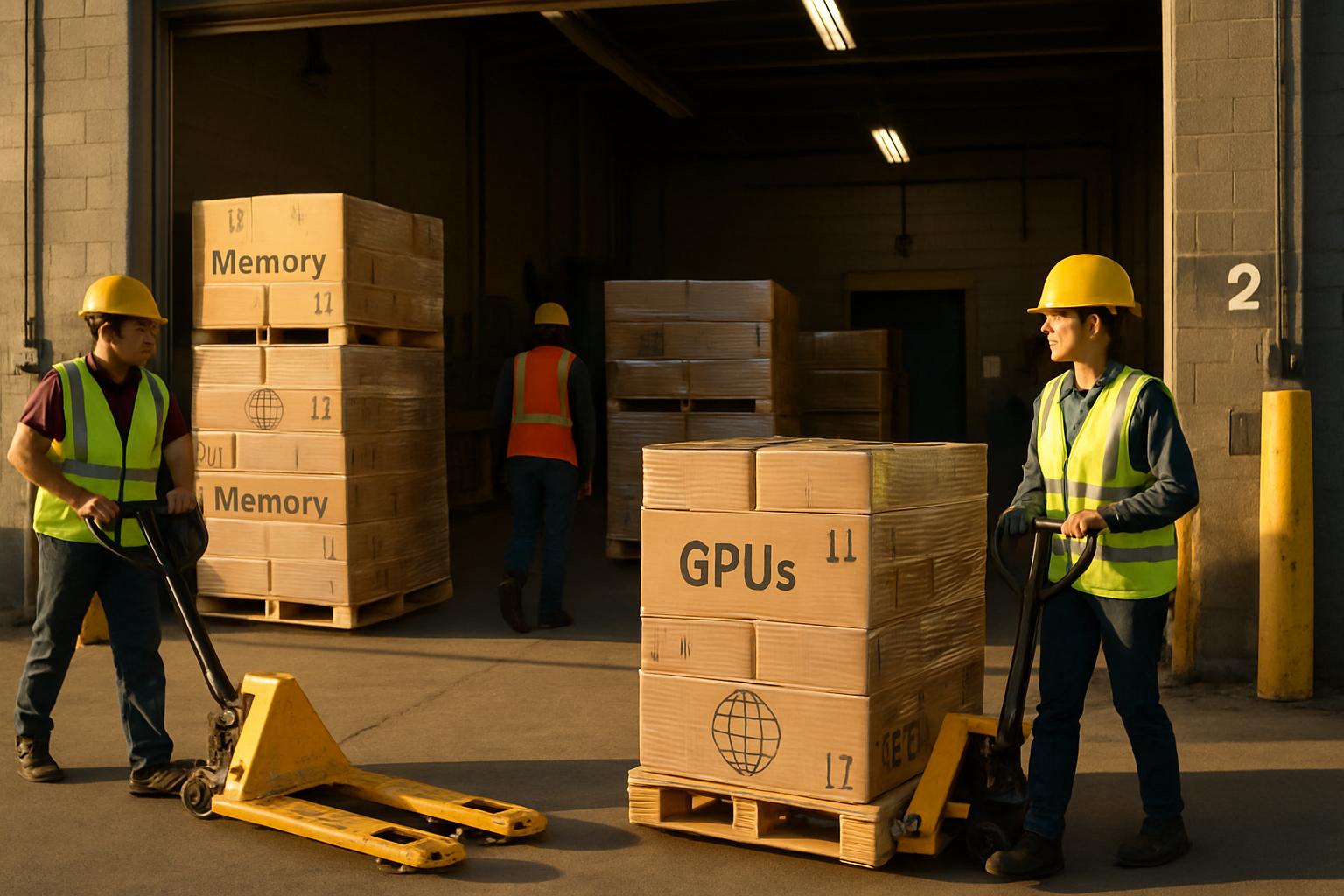
AI Supply Chain Strains
Demand for computational horsepower keeps expanding. Additionally, hyperscalers book production years ahead, leaving little slack. Samsung and SK Hynix both state that AI demand outpaces supply growth. Consequently, smaller buyers struggle to secure critical components.
The current squeeze reflects intertwined bottlenecks rather than a single failure point. Therefore, resolving one constraint will not immediately restore balance. These interdependencies define the challenge. Nevertheless, understanding each pressure helps stakeholders plan responses.
Demand Outpaces Chip Capacity
Wafer fabs still produce record volumes of advanced Chips. However, capacity growth lags exponential inference workloads. Blackwell orders alone dwarf 2024 Hopper volumes by almost threefold. Moreover, AMD and Intel accelerators chase the same production slots.
TrendForce projects advanced-node wafer additions of only 15 % this year. In contrast, accelerator unit forecasts rise more than 45 %. This mismatch feeds the broader supply squeeze faced by every participant.
Key figures highlight the imbalance:
- Nvidia Blackwell shipments: 3.6 million units in 2025
- TSMC CoWoS capacity: ~75 k wafers per month in 2025
- Projected DRAM contract price jump: 55-60 % QoQ in Q1 2026
These numbers confirm relentless demand. Consequently, the AI Supply Chain must expand beyond historical norms. Yet expansion will require time and capital.
Memory Market Power Shift
HBM dominates cost structures for data-center GPUs. Furthermore, SK Hynix controls over 60 % of this niche, while Samsung follows closely. Micron exited several consumer lines to prioritize enterprise sales. Therefore, bargaining leverage now sits firmly with suppliers.
Contract buyers report GDDR7 spot quotes 40 % higher than six months ago. In contrast, DDR5 server modules rose only 18 %. The differential shows how AI workloads reshape memory economics.
Market participants note four immediate impacts:
- Longer lead times for gaming Chips
- Steeper bill-of-materials costs for AIB partners
- Higher margins for Samsung and Hynix
- Increased investor focus on pure-play memory fabs
Suppliers enjoy short-term pricing power. However, ecosystem risk grows as consumers absorb repeated hikes.
Packaging Bottlenecks Still Persist
Advanced packaging, notably CoWoS, integrates HBM with logic dies. Moreover, substrate and interposer output cannot scale overnight. TSMC confirms CoWoS lines remain sold out into 2026. Consequently, GPUs awaiting assembly pile up at OSAT partners.
ASE and SPIL accelerate expansions, yet substrate tooling lead times run 12-18 months. Therefore, relief will lag wafer increases. This bottleneck, not raw die supply, now sets shipment ceilings.
Experts compare the situation to the 2021 ABF substrate crunch. Nevertheless, today’s volumes and capital intensity dwarf that episode. The AI Supply Chain thus requires novel capacity-sharing agreements.
Consumer GPU Fallout Widens
Zotac warns that memory costs threaten smaller AIB survival. Additionally, several mid-range SKUs face cancellation. Gamers observe retail prices spiking even for previous-generation Chips. Meanwhile, OEM desktops ship with downgraded configurations to conserve GDDR inventory.
Market chatter suggests RTX 50-series availability may slip into late 2026. In contrast, hyperscalers will receive contracted shipments on schedule. These disparities stoke criticism of supplier allocation policies.
Consumer frustration grows. However, vendors argue that AI clusters yield greater economic value per unit. This debate will intensify if the squeeze deepens next year.
Supplier Strategies And Risks
Samsung boosts capital spending by 30 % to capture premium HBM demand. Furthermore, Hynix invests in next-generation HBM4 lines. Micron reallocates equipment from consumer DRAM to enterprise nodes. These moves reinforce supplier dominance yet heighten concentration risk.
Foundry diversification offers limited relief. Consequently, AMD and Intel explore multi-source packaging plans, including in-house capabilities. Nevertheless, long qualification cycles temper such shifts.
Professionals can deepen insight through the AI Supply Chain Professional™ certification. The program equips managers to navigate inventory volatility and strategic procurement.
Mitigation Paths For Stakeholders
Retailers should secure inventory earlier and diversify SKUs. Additionally, PC OEMs may redesign boards to accept alternate memory footprints. Investors might overweight packaging specialists that scale CoWoS capacity fastest.
Policy makers weigh export controls against domestic supply ambitions. Meanwhile, alliances among hyperscalers and regional fabs gain momentum. Such collaborations aim to stabilize the AI Supply Chain before demand surges again.
These steps provide partial buffers today. However, sustained ecosystem health demands coordinated investment across wafers, memory, and packaging.
Ultimately, the GPU crunch illustrates systemic interdependence. Consequently, success will favor actors who anticipate constraints, negotiate flexible contracts, and cultivate multiple technical pathways.
In summary, memory leadership by Samsung and Hynix, persistent packaging limits, and unrelenting hyperscaler orders define the moment. Nevertheless, strategic mitigation and certified expertise can guide firms through turbulence.
Forward-looking leaders should monitor capacity announcements, contract price indices, and regulatory shifts each quarter. The AI Supply Chain will remain fluid, yet informed stakeholders can still capture opportunity.
Disclaimer: Some content may be AI-generated or assisted and is provided ‘as is’ for informational purposes only, without warranties of accuracy or completeness, and does not imply endorsement or affiliation.


