

AI CERTS
2 months ago
Microsoft AI Infrastructure Sparks Lake Michigan Water Debate
Environmental advocates sued for those figures and finally won disclosure. The released data provide a rare glimpse into hyperscale resource planning. Consequently, professionals tracking sustainability trends should examine the numbers closely. This article dissects the figures, cooling technology, regulatory backdrop, and transparency debate. Moreover, we outline what the case signals for future datacenter builds.
Every insight targets technical leaders responsible for balancing performance with stewardship. Stay with us for a concise yet detailed briefing. We start with project basics before diving deeper.
Mount Pleasant Project Overview
Construction began on former Foxconn parcels in 2024. Microsoft committed more than seven billion dollars across two investment phases. Therefore, local officials tout hundreds of long-term jobs and tax revenue.
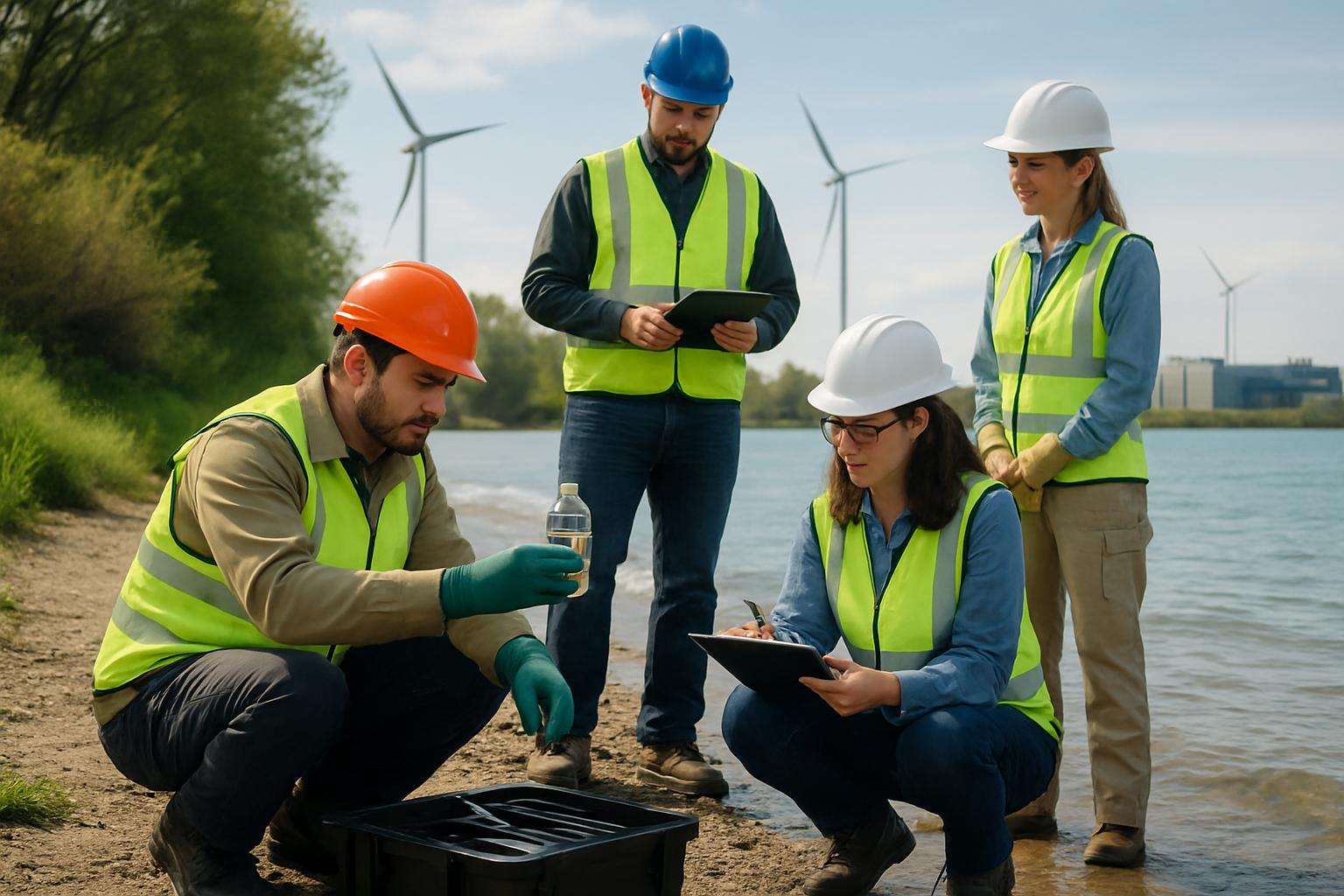
City documents label the campus "Fairwater" and divide it into Areas 2, 3A, and 3B. Phase 1, centered on Area 3B, will host the initial GPU clusters. In contrast, subsequent phases expand compute halls and onsite substations. Ultimately, the campus becomes core AI Infrastructure for Microsoft’s Midwest cloud region.
Peak water demand during Phase 1 reaches 234,000 gallons daily. That equals roughly 2.8 million gallons yearly. Full build projections climb to 702,000 gallons per day and 8.4 million gallons annually. Wastewater discharge scales proportionally, topping 243,000 gallons each day at maturity.
These figures contextualize the facility’s physical footprint. However, raw volumes reveal little without understanding thermal design. Next, we unpack how those gallons integrate with modern datacenter thermodynamics.
Released Usage Figures Explained
The numbers surfaced only after a nine-month public records standoff. Midwest Environmental Advocates sued Racine in September 2025 to compel disclosure. Consequently, the city published internal spreadsheets the following day.
Documents show separate projections for supply and wastewater. Additionally, engineers provided hourly and seasonal peaks for planning redundancy. Nevertheless, Microsoft requested certain technical details remain confidential for security reasons.
- Phase 1 peak: 234,000 gallons daily.
- Full build peak: 702,000 gallons daily.
- Annual withdrawal projection: 8.4 million gallons.
- Wastewater peak: 243,000 gallons daily.
- Permit ceiling: 7 million gallons daily.
Regulators compared the withdrawal estimates against the 2018 diversion permit. That authorization already allowed Racine to draw seven million gallons daily from Lake Michigan. Therefore, the datacenter’s peak remains under the legal ceiling.
Legal documents confirm compliance yet highlight growing cumulative withdrawals. Transparency tensions persist despite regulatory clearance. Understanding technical mitigations may ease some concerns, therefore we examine thermal strategies next.
Advanced Closed-Loop Cooling
Hyperscale AI workloads generate dense heat bursts. Microsoft plans direct-to-chip cold plates linked to a sealed coolant loop. Furthermore, more than ninety percent of the campus rejects heat without evaporation. Such thermal engineering underpins resilient AI Infrastructure at hyperscale.
Dry coolers transfer energy to ambient air, trading water savings for higher electrical load. On rare extreme days, hybrid cooling modules will mist water to boost thermal rejection efficiency. Consequently, annual potable demand drops sharply compared with conventional towers.
Industry metric Water Use Effectiveness often falls below 0.2 liters per kWh in such designs. In contrast, wet towers can exceed 1.0 liters per kWh under similar loads. Therefore, closed-loop architecture aligns with Microsoft sustainability commitments.
Technical design choices directly constrain water draw from Lake Michigan. Yet environmental groups question modelled versus actual operations. We now explore the broader regulatory landscape shaping those operations.
Regulatory Context And Capacity
Great Lakes Compact rules require withdrawals stay within approved diversions. Consequently, Racine must report usage data to Wisconsin DNR annually. Microsoft inputs will roll into that public dataset.
The 7-MGD limit originated during the Foxconn negotiations. Moreover, the figure already incorporates municipal growth forecasts. Additional datacenter proposals could push aggregate demand toward that ceiling. Capacity planning frameworks will influence emerging AI Infrastructure clusters around the Great Lakes.
Wastewater discharge must meet thermal and chemical permit thresholds. Therefore, Racine’s treatment plant may need upgrades if flows compound. Meanwhile, energy utility WE Energies coordinates with operators to ensure grid stability.
Regulatory checks exist but depend on accurate reporting. Robust monitoring can inform community trust moving forward. Stakeholder perceptions ultimately drive that trust, so we review the debate next.
Environmental Transparency Debate
Advocates argue public data enables informed stewardship. Cheryl Nenn stated communities require clarity before construction begins. Furthermore, lawsuits spotlight alleged overuse of trade-secret exemptions.
Microsoft counters that competitive security necessitates limited redactions. Nevertheless, the company released summary metrics and design narratives. It also promises routine disclosure once operations stabilize.
Local officials echo the call for openness to maintain public confidence. Moreover, they highlight economic benefits alongside environmental duties. Balancing both narratives remains an ongoing challenge for AI Infrastructure expansion.
Transparency conversations shape policy precedents beyond Wisconsin. Consequently, national observers track resulting frameworks closely. Industry leaders must translate lessons into future planning, which brings us to strategic implications.
Implications For AI Infrastructure
Hyperscale compute demands continue their exponential climb. Consequently, siting decisions now weigh water availability as heavily as electricity price. Designers able to minimize water can unlock new regional possibilities for AI Infrastructure.
Furthermore, closed-loop innovations reduce political risk by shrinking ecological footprints. However, engineers must validate real-world performance through third-party audits. Operating teams should share Water Use Effectiveness metrics alongside Power Usage Effectiveness.
Professionals seeking to lead such projects can enhance credibility with specialized education. They may pursue the AI Cloud Architect™ certification for advanced cooling fluency. Moreover, certified leaders often accelerate risk assessments across AI Infrastructure deployments.
Strategic adoption of efficient designs can protect freshwater reserves. Therefore, early planning aligns sustainability with business continuity. The Racine case encapsulates this balance, as the conclusion underscores.
Conclusion And Outlook
Microsoft’s Mount Pleasant campus illustrates freshwater challenges linked to global AI Infrastructure growth. Records suggest annual withdrawals under one percent of Racine’s existing diversion capacity. However, cumulative effects demand vigilant oversight and transparent data sharing. Consequently, closed-loop cooling, regulatory audits, and community engagement form a necessary triad.
Professionals should integrate these lessons into upcoming site selections and retrofit plans. Meanwhile, gaining credentials like the AI Cloud Architect™ boosts strategic and technical credibility. Act now to master sustainable designs and lead responsible AI Infrastructure projects worldwide.


