

AI CERTS
2 months ago
Healthcare AI Trial Lifts Cancer Detection, Slashes Workload
Radiologists also completed 44% fewer reads without harming specificity. These findings arrive amid global workforce shortages and rising imaging volumes. Moreover, national initiatives like England’s EDITH trial will soon involve 700,000 women. Global healthcare systems struggle to maintain double reading models. Early adopters already integrate Healthcare AI pilots in routine clinics. Stakeholders now ask whether Healthcare AI can safely scale. This article examines the data, caveats, and next steps.
Trial Reveals Detection Gains
The MASAI randomized trial enrolled more than 105,000 women between 2021 and 2022. Additionally, participants underwent standard digital mammography with or without software support. The AI allocated low-risk exams to one reader and highlighted high-risk studies. Therefore, cancer detection reached 6.4 per 1,000 versus 5.0 in controls. Interval cancers dropped from 1.76 to 1.55 per 1,000 during two years.
Meanwhile, sensitivity climbed to 80.5% while specificity stayed near 98.5%. Experts like Kristina Lång called these numbers “clinically meaningful.” Importantly, false positive recalls did not increase significantly. These outcomes underpin early Healthcare AI momentum.
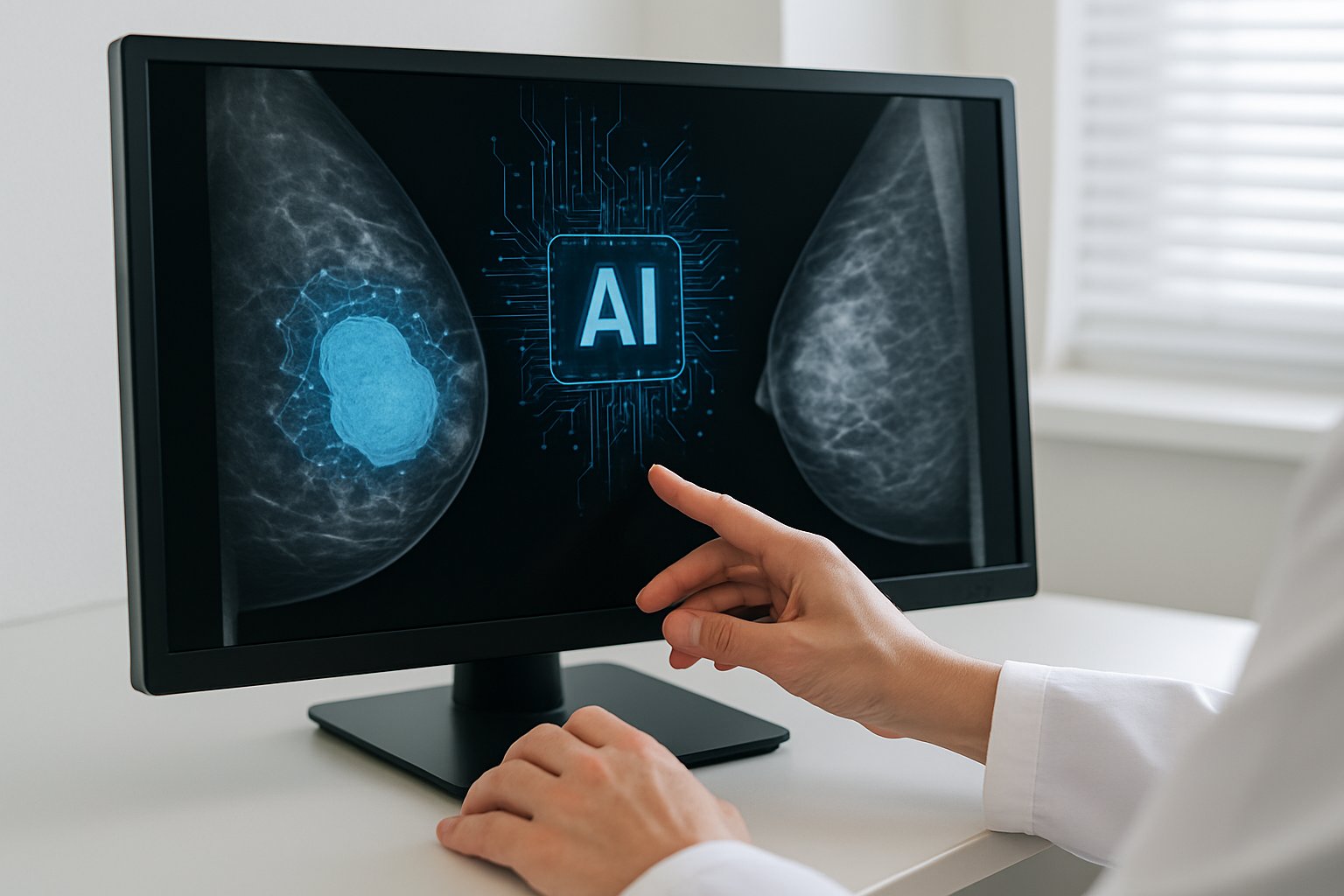
Early evidence indicates meaningful detection gains. However, workload benefits also drive stakeholder interest.
Workload And Cost Impact
Radiologist shortages threaten many screening programs. Consequently, MASAI’s 44% workload reduction attracted policy attention. Healthcare AI could thus protect limited budgets while maintaining quality. Academic models predict up to 30% cost savings when AI triage replaces double reading. Furthermore, quicker reads may shorten result turnaround, easing patient anxiety. A recent University of Illinois simulation also linked AI adoption with improved workforce retention. Nevertheless, operational gains vary across regions and reimbursement structures. Healthcare executives therefore need robust cost-effectiveness data before procurement.
- Detection increase: 29%
- Interval cases reduction: 12%
Healthcare AI workload reduction reached 44% in MASAI.
These figures illustrate tangible efficiency benefits. However, safety and equity questions remain unresolved.
Safety And Equity Questions
Clinical success requires more than metrics. In contrast, stakeholders fear overdiagnosis and demographic bias. MASAI increased detection of carcinoma in situ, potentially leading to overtreatment. Moreover, the trial occurred in Sweden, a relatively homogeneous population. Performance across diverse ethnic groups and imaging hardware remains uncertain. Systematic reviews reveal wide heterogeneity between algorithms and thresholds.
Consequently, regulators demand multi-country evidence before endorsing reader replacement. Independent experts also emphasize transparent reporting of false negatives. Healthcare AI vendors now publish version histories to support auditability.
Patient safety depends on careful deployment. Consequently, global trials are broadening the evidence base.
Global Trials Expand Evidence
England’s EDITH study launched in 2025 with almost 700,000 participants. Additionally, it compares two integration strategies and several vendors. Interim analyses will report detection, interval Cancer rates, and cost metrics. Meanwhile, regional programs in Spain and South Korea have begun phased roll-outs. Lunit and iCAD systems supplement Transpara in these pilots. Furthermore, RSNA research highlights image-only risk models that personalize Screening intervals. Such diversity will clarify algorithm strengths and weaknesses under real-world pressures. Healthcare AI adoption will thus follow stronger, multinational datasets.
Expanding evidence should boost stakeholder confidence. Nevertheless, implementation hurdles still loom.
Implementation Challenges Remain Ahead
Deploying complex software within radiology workflows is rarely trivial. Therefore, seamless PACS integration, cybersecurity, and uptime guarantees are essential. In contrast, litigation risk and consent processes also raise administrative burdens. Additional workstation alerts may overwhelm inexperienced readers. However, targeted training and clear escalation protocols mitigate alarm fatigue. Professionals can enhance their expertise with the AI in Healthcare™ certification. Moreover, equity monitoring dashboards should track performance by breast density and ethnicity. Healthcare AI suppliers increasingly bundle analytic modules for this purpose.
Strong governance can address technical and legal barriers. Subsequently, market forces and credentialing may shape adoption speed.
Market And Certification Outlook
Industry analysts forecast double-digit growth for mammography AI over the next five years. Consequently, vendors race to secure FDA and CE approvals. ScreenPoint, Lunit, and Kheiron have multiple clearances and public hospital contracts. Healthcare AI references now appear in procurement tenders across Europe. Moreover, payers study cost models before granting reimbursement codes. Success stories from MASAI already influence these deliberations. Meanwhile, clinicians seek structured learning pathways. Therefore, certifications validate practical skills and reassure risk managers. The highlighted course equips teams to champion AI-driven Screening programs.
Commercial momentum complements expanding evidence. Therefore, informed decision makers can align strategy with patient benefit.
Healthcare AI now stands at a pivotal point. Rigorous data confirm higher Cancer detection, fewer interval cases, and real efficiency gains. Furthermore, multinational trials and certification frameworks promise broader validation. Nevertheless, equity, overdiagnosis, and integration issues demand vigilance. Stakeholders should weigh local workforce needs, device mix, and legal contexts before scaling deployments. Early success must translate into sustained benefit. In contrast, delaying implementation may forfeit measurable patient benefit. Consequently, leaders should follow forthcoming EDITH updates while investing in staff training. Explore the linked certification to drive confident, evidence-based Screening innovation.


