

AI CERTS
2 months ago
India’s 2047 Tax Holiday Boosts AI Infrastructure Ambitions
However, critics warn that revenue effects and sustainability risks remain unclear. This article unpacks the proposal, market context, and next steps for professionals following Infrastructure strategy. Moreover, it offers guidance on certifications that build public-sector fluency in emerging governance models. Readers will gain concise insights for boardroom discussions and investment evaluations. Meanwhile, transition analysis highlights gaps demanding regulatory clarity before capital commits at scale.
AI Infrastructure Budget Implications
The Budget speech offers a simple sentence yet a sweeping promise. It exempts foreign companies from corporate tax on global cloud revenues generated through Indian compute facilities until 2047. Additionally, a 15% safe-harbour margin covers related data-centre entities, reducing transfer-pricing disputes. Therefore, investors obtain predictable post-tax cash flows across a two-decade horizon, a rarity for capital-heavy AI Infrastructure investments. Crucially, the incentive targets AI Infrastructure rather than routine hosting, signalling premium compute priorities.
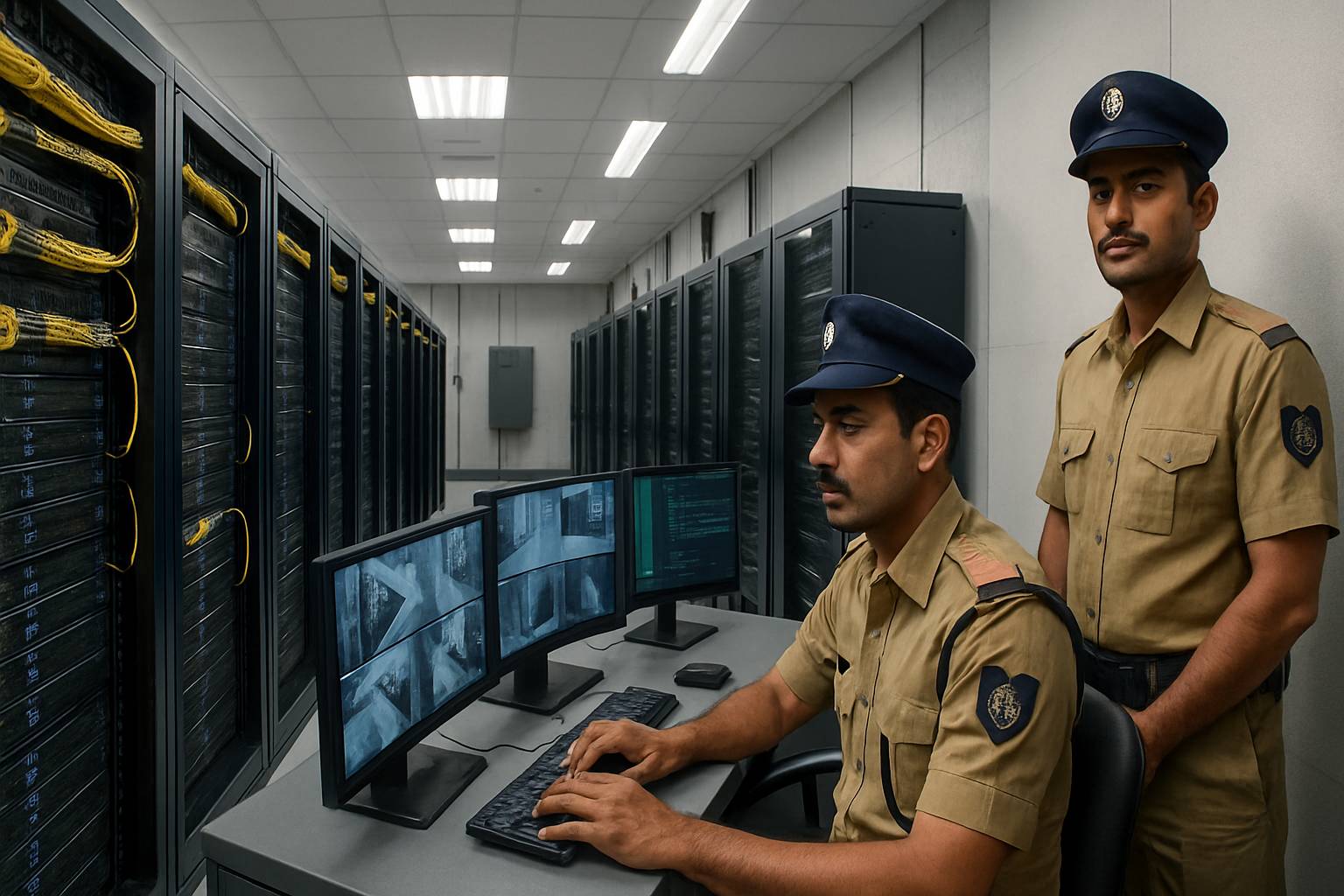
The Budget ties long tax relief to domestic compute usage. Consequently, foreign executives now reassess build-buy timelines. Next, market metrics reveal the scale of opportunity.
Market Context Quick Snapshot
Colliers estimates Indian data-centre capacity at 1,263 MW across seven cities as of April 2025. Furthermore, capacity could surpass 4,500 MW by 2030, attracting $20–25 billion of new Infrastructure capital. Google, Microsoft and AWS have already announced multi-billion projects in India. For example, Google and Adani plan a $15-billion campus in Visakhapatnam specialising in AI workloads.
Meanwhile, AWS pledges $12.7 billion by 2030, and Microsoft signals similar ambition. Such commitments illustrate a hyperscaler race that the Tax Holiday aims to accelerate. Moreover, UNCTAD data show foreign direct investment jumped 73% in 2025, partly due to cloud expansions. Capital is already moving toward Indian racks. Therefore, the new incentive could convert intent into concrete deployments. However, investor enthusiasm coexists with cautious industry commentary, as explored next. Global capital views AI Infrastructure as the next export category, alongside software services.
Industry Reactions Mixed Early
Early signals from operators and vendors appear broadly supportive. Sify Technologies founder Raju Vegesna lauded the long horizon, calling it “cost-effective capacity creation”. Additionally, Microsoft regional chief Puneet Chandok welcomed clarity around safe-harbour profit norms. Nevertheless, tax advisers highlight unanswered questions on eligibility definitions and anti-abuse tests.
In contrast, some domestic cloud providers fear competitive pricing gaps versus advantaged multinationals. Local players still benefit through colocation contracts, yet margin pressure may intensify. Raamdeo Agrawal described the Tax Holiday as “groundbreaking” but urged balanced safeguards. Stakeholders support certainty yet request granular rules. Consequently, attention shifts toward legislative drafting timelines. Those rules determine the real economic upside discussed below. Executives believe AI Infrastructure sited near renewable parks delivers latency and sustainability benefits simultaneously.
Potential Economic Upside Scale
The incentive can unlock several revenue streams. Firstly, hyperscalers could route global software services through energy-efficient Indian campuses, lowering effective taxation. Secondly, related construction, fiber, and renewable projects would proliferate, generating local employment. Moreover, policy planners expect advanced AI Infrastructure to spill over into domestic innovation ecosystems.
- Compute export earnings strengthening the rupee.
- Higher capacity securing national AI research access.
- Skilled workforce demand boosting STEM education.
Broader adoption of AI Infrastructure could elevate domestic research institutions by offering affordable compute time. Therefore, macro benefits appear tangible if execution succeeds. However, forecasts assume stable power and network provisioning. Economic promise rests on multiple dependencies. Subsequently, analysts balance optimism with risk analysis. The next section maps those risks.
Risks And Concerns Key
Fiscal experts question revenue foregone by a multi-decade exemption. Furthermore, the Budget speech omitted any formal cost estimate. Opposition lawmakers may demand sunset reviews or minimum investment thresholds. Meanwhile, transfer-pricing specialists warn that 15% margins might be exploited through artificial cost allocation.
Environmental groups raise worries over power demand and groundwater use in arid districts. In contrast, developers argue that renewable buildouts will offset grid strain. Nevertheless, prior data-centre clusters abroad faced community pushback despite green power promises. Significant policy risks could erode projected gains. Therefore, regulators must craft strict yet workable compliance pathways. Implementation details now take center stage. Analysts caution that the Tax Holiday could invite international treaty scrutiny. Unchecked subsidies might encourage AI Infrastructure sprawl without adequate environmental safeguards.
Implementation Path Ahead Clear
The proposal currently exists inside the Budget speech alone. Consequently, legal force arrives only after Finance Bill passage and subsequent Central Board of Direct Taxes guidance. Draft rules will clarify definitions, documentation, and anti-avoidance provisions. Moreover, state governments will negotiate land, power, and local incentives, stacking on the federal Tax Holiday.
Policy drafters inside India must coordinate with states on grid upgrades. Professionals should monitor three notification streams.
- Finance Bill clauses defining eligible revenues.
- CBDT circulars on the 15% safe-harbour computation.
- State memoranda outlining Infrastructure support packages.
Subsequently, hyperscalers will adjust capital deployment schedules based on clarity and speed. Timely rulemaking will convert policy rhetoric into shovel-ready projects. Meanwhile, implementation delays could freeze planned spend. Sustainability factors also demand equal attention.
Sustainability Considerations For Data
Large data centres consume significant electricity and water. Consequently, developers must secure renewable power purchase agreements and advanced cooling technologies. Moreover, regulators may impose efficiency benchmarks to align AI Infrastructure with climate goals.
The Climate Watch notes that unmitigated facilities in India could strain local aquifers. However, hyperscalers increasingly deploy closed-loop water systems and on-site solar arrays. Therefore, sustainability audits will become a licensing prerequisite across multiple states. Green design now intersects directly with tax eligibility. Subsequently, compliance teams must integrate environmental metrics into financial models. The final section summarises actionable next steps for executives and policymakers.
Professionals can deepen policy skills through the AI for Government™ certification.
Conclusion And Next Steps
India’s bold 2047 incentive places AI Infrastructure at the heart of national growth strategy. Consequently, hyperscalers gain predictable economics, while local partners secure long-term demand. Nevertheless, fiscal, environmental, and competitive risks require diligent rulemaking. Regulators must define eligibility, enforce safeguards, and support renewable Infrastructure. Moreover, boards should integrate tax scenarios into capital models and sustainability plans. Professionals can stay informed through government gazettes and industry briefings. Additionally, pursuing the linked certification sharpens governance expertise. Ultimately, seizing the AI Infrastructure opportunity demands balanced oversight and proactive skill development. Act now to align strategies with forthcoming regulations and accelerate responsible growth.


