

AI CERTs
4 months ago
Why Meta’s VR Shake-Up Signals a New Strategic Direction
Investors expected virtual reality to be Meta's next growth engine. However, the sudden departure of VR legend John Carmack exposed deeper execution issues. Consequently, headlines still revisit his blunt 2022 memo condemning internal inefficiency. Meanwhile, Reality Labs continues to post multibillion-dollar losses. In contrast, leadership now diverts funding toward artificial intelligence wearables. This article unpacks the exit, the numbers, and the latest strategic pivot. Readers will learn why these moves matter for developers, partners, and shareholders.
Carmack Exit Context Now
John Carmack resigned as consulting CTO on 17 December 2022. Furthermore, he posted a scathing note stating, “We constantly self-sabotage and squander effort.” Therefore, the message became a touchstone for critics tracking VR delays.
Carmack argued that Meta possessed abundant talent yet lacked shipping discipline. Nevertheless, he praised individual engineers while blaming management layers. Subsequently, analysts framed the resignation as an early warning of larger structural friction.
For context, VR encompasses fully immersive head-mounted displays replacing real-world vision. Augmented reality instead layers digital data onto physical surroundings. XR acts as an umbrella term covering both paradigms and mixed approaches.
Carmack's exit highlighted cultural obstacles slowing product delivery. However, the bigger financial story lay ahead, as the next section shows.
Reality Labs Spending Spiral
Reality Labs booked an operating loss of about $4.2 billion in Q1 2025. Moreover, full-year 2025 losses reportedly reached nearly $19.1 billion. Cumulative deficits since 2020 may top $50 billion, depending on accounting.
Consequently, investors questioned whether Meta could justify ongoing VR investment. Meanwhile, CFO filings confirmed the division would remain in the red during 2026. In contrast, other business units produced steady cash flow, intensifying shareholder pressure.
TechCrunch calculated cumulative Reality Labs losses near $70 billion when including 2020-2025. Moreover, cash burn exceeded the annual revenue of many standalone gaming publishers. Such figures fueled calls for sharper capital discipline among institutional investors.
These numbers signalled an unsustainable burn rate for premium headsets. Therefore, leadership initiated a sweeping review, described next.
Recent Strategy Pivot Details
January 2026 brought layoffs affecting roughly 10 percent of Reality Labs staff. Additionally, first-party studios such as Armature and Sanzaru closed. The company called the move a resource reallocation, not retreat.
Meta said it would "shift some" capital toward AI glasses and wearables. Subsequently, Metaverse software programs entered maintenance mode, and Horizon expansions paused. This Restructuring also halted several enterprise pilots built on Horizon OS.
Moreover, analysts viewed the pivot as a concession that mainstream VR adoption remains distant. Nevertheless, management insisted the long-term vision survives, albeit on a tighter budget.
Reports indicated between 1,000 and 1,500 employees lost positions during January cuts. Nevertheless, company spokespeople characterized many departures as redeployments into other divisions. Affected staff spanned engineering, program management, and quality assurance roles.
The pivot trimmed costs while betting on nearer-term wearable uptake. Consequently, industry observers debated upside and downside, explored below.
Industry Views And Risks
Equity analysts applauded the cost discipline. Furthermore, they argued AI glasses could leverage the company's existing consumer brand awareness. Consequently, margin forecasts improved slightly after the announcement.
In contrast, VR developers feared content droughts following studio closures. This Restructuring removed pipelines that previously funded experimental titles. Subsequently, headset owners may face fewer must-have experiences, slowing hardware sales.
Regulatory watchers also flagged potential workforce concentration risks inside remaining studios. Nevertheless, Meta responded by promising external content grants and partnership programs. Details, however, remain sparse.
Analyst Cathy Woods stated the pivot "aligns long-term vision with near-term prudence". However, she warned that prolonged uncertainty could erode developer confidence. Others highlighted the reputational damage caused by abrupt studio closures.
Stakeholders therefore hold mixed expectations regarding ecosystem health. The next section examines practical effects for software teams.
Implications For Developers
Fewer internal studios mean reduced first-party competition for store placement. Consequently, independent creators could secure more visibility if quality remains high. However, diminished marketing budgets may offset that advantage.
Teams should monitor feature roadmaps publicized by Meta to align launches. Additionally, they must evaluate headset install-base growth against investment levels. This Restructuring suggests a conservative approach until wearable momentum is clearer.
- Track quarterly Reality Labs spend.
- Validate store promotion commitments in writing.
- Pursue cross-platform ports early.
- Strengthen monetization through live services.
- Professionals can enhance their expertise with the AI Researcher™ certification.
- Prototype voice interfaces to future-proof interaction models.
- Adopt open XR standards for portability.
- Secure early access to camera APIs for mixed reality features.
Platform partners should negotiate milestone-based funding to de-risk schedule slips. Furthermore, diversification across PlayStation VR and SteamVR reduces single-platform exposure. Teams can also explore revenue sharing for DLC to stabilize cash flow.
Developers must therefore balance caution with opportunistic positioning. Finally, we assess broader strategic impact for the company itself.
Looking Ahead For Meta
Leadership still frames XR as a decade-long journey. However, capital allocation now favors nearer returns. Consequently, Meta will measure future VR funding against AI wearable traction.
Investors should watch quarterly call language and unit segmentation changes. Additionally, leadership incentives may shift, signaling commitment levels. Such signals will guide expectations around further Restructuring or renewed expansion.
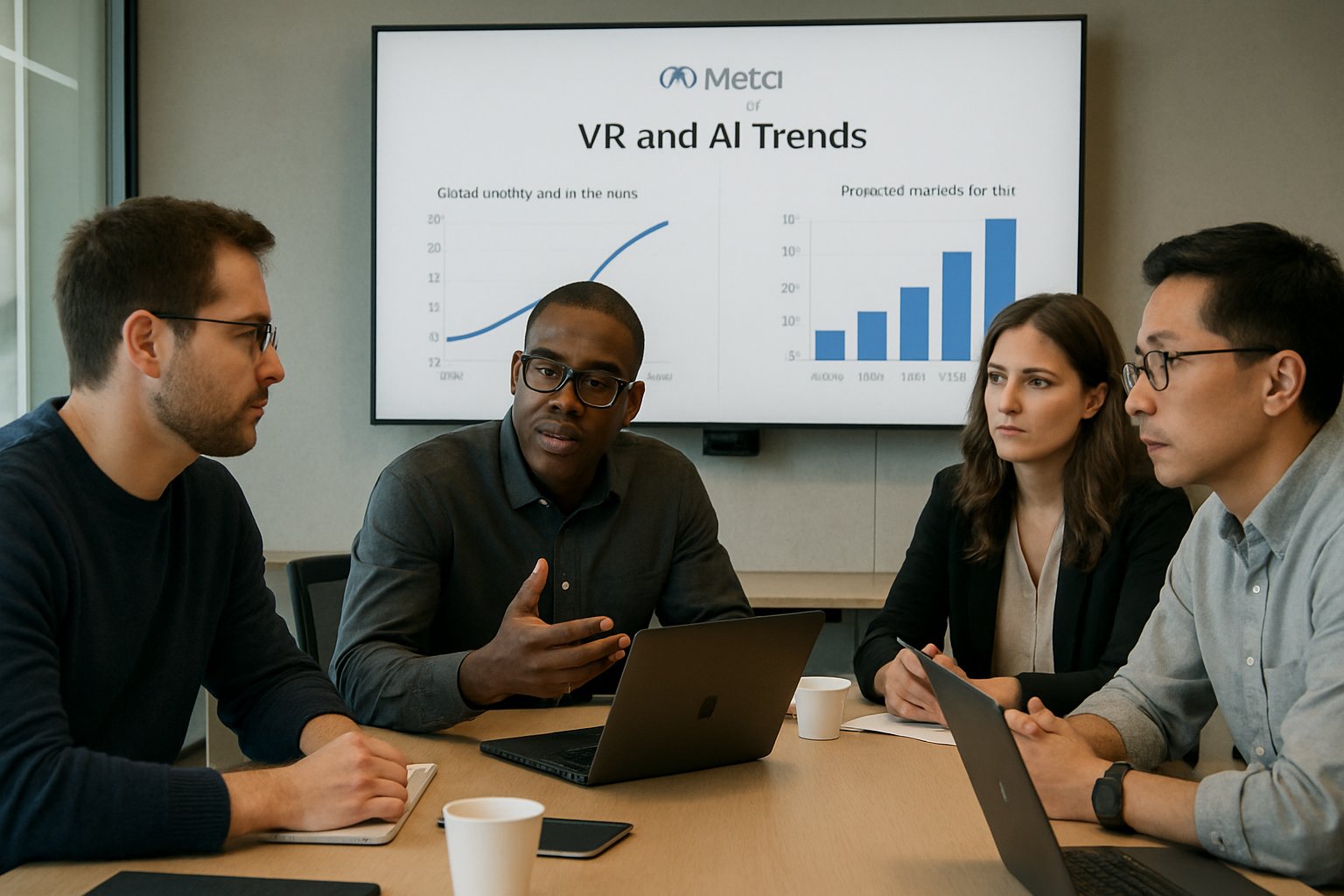
Consultants forecast global XR hardware shipments reaching 20 million units by 2028. Consequently, scale may still arrive, although later than early roadmaps predicted. Meanwhile, AI glasses could ship tens of millions sooner, driven by everyday utility.
These indicators will reveal whether lessons from Carmack's critique translate into leaner execution. Nevertheless, innovation cycles in XR rarely follow linear forecasts.
Meta enters 2026 confronting hard arithmetic and harder culture change. Moreover, Carmack's memo still echoes inside every budget review. Nevertheless, Meta's pivot toward AI wearables promises faster consumer feedback loops. Consequently, Reality Labs can refine focus while containing losses. Developers and investors should track spending trends, product roadmaps, and partnership policies. Meanwhile, upskilling through programs like the linked AI Researcher™ certification strengthens strategic resilience. Stay informed, adapt quickly, and seize opportunities as the next chapter unfolds.
Consequently, the broader XR ecosystem remains in flux yet brimming with possibility. Forward-looking leaders will track policy shifts while cultivating adaptable roadmaps. Additionally, continuous skills development equips professionals to pivot with market currents. The certification highlighted above offers structured learning in applied AI research techniques. Use that knowledge to build differentiated experiences that thrive across hardware generations.
Disclaimer: Some content may be AI-generated or assisted and is provided ‘as is’ for informational purposes only, without warranties of accuracy or completeness, and does not imply endorsement or affiliation.


