

AI CERTs
2 months ago
SpaceX’s one-million-satellite data center gambit
Regulatory filings rarely shock veteran observers. However, the document Space Exploration Holdings delivered on 30 January jolted the satellite sector. The eight-page narrative asks the U.S. Federal Communications Commission for authority to loft an “Orbital Data Center System” of up to one million spacecraft. Consequently, analysts scrambled to digest the implications. The proposal links booming AI demand with reusable launch economics. Therefore, many wonder if SpaceX has just redrawn the future of cloud infrastructure.
FCC Filing Details Unpacked
The filing outlines narrow orbital shells between 500 km and 2,000 km altitude. Moreover, it cites Ka-band frequencies for limited earth links while relying on laser mesh networking in space. The company requests milestone waivers, arguing its radio footprint is minimal. In contrast, traditional operators face strict build-out deadlines. The phrase “Orbital Data Center” signals a shift from connectivity toward compute. Reporters note that the request for one million craft dwarfs the roughly 15,000 satellites now in orbit. Additionally, the text positions Satellite Data Centers as a remedy for terrestrial cooling limits.
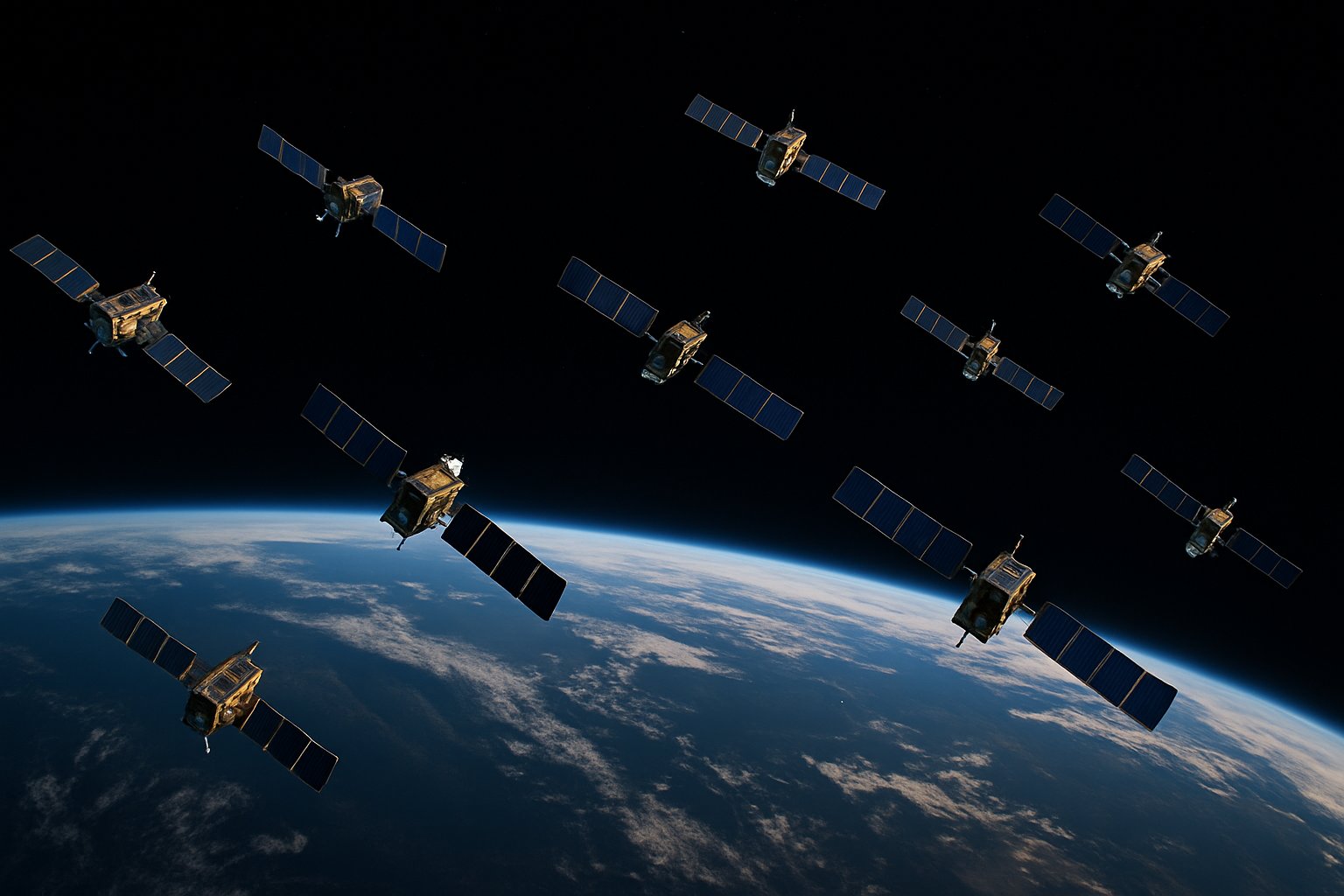
These disclosures offer only high-level parameters. However, absent mass, cost, and schedule figures, regulators have little to audit. The gaps invite tough technical questions. Nevertheless, the FCC will open a docket and demand details soon.
These early facts frame the discussion. Meanwhile, the sheer scale pushes stakeholders to examine feasibility in depth.
Ambitious Scale Explained Clearly
Elon Musk claims launching one million tonnes of hardware yearly could yield 100 gigawatts of fresh compute power. Subsequently, the filing asserts radiative cooling in vacuum slashes water use. Independent engineers caution that 100 kilowatts per tonne assumes aggressive chip efficiency and radiator design. Furthermore, orbital debris models must absorb a population nearly 100 times larger than today’s.
Satellite Compute Capacity Metrics
- Proposed satellites: 1,000,000
- Altitude range: 500 km – 2,000 km
- Illustrative power density: 100 kW/tonne
- Projected annual compute: 100 GW
Advocates highlight reusable Starship launches that could drop dollar-per-kilogram rates sharply. Additionally, bulk production of modular spacecraft could compress timelines. Still, skeptics emphasize that even SpaceX must prove a launch cadence far beyond current records. Consequently, investors will track Starship’s maturation closely.
This quantitative snapshot shows breathtaking ambition. However, numbers alone cannot answer whether manufacturing, propulsion, and thermal hurdles are solvable at scale.
Key Potential Benefits Highlighted
Supporters point to nonstop solar exposure in sun-synchronous orbits. Therefore, orbital arrays could power AI payloads without tapping strained grids. Moreover, vacuum radiative cooling eliminates evaporative water use, easing environmental pressure. Training tasks tolerant of higher latency may migrate above the atmosphere, freeing ground facilities for real-time inference.
Corporate strategists also see strategic autonomy. Cloud vendors could rent on-orbit cycles immune to terrestrial outages. Meanwhile, governments might pursue sovereign compute beyond national borders. Professionals can enhance their expertise with the AI + Quantum Robotics™ certification, positioning themselves for emerging orbital-compute roles.
These advantages appear transformative on paper. Nevertheless, each benefit depends on solving launch, maintenance, and networking challenges.
Such potential upside energizes innovators. In contrast, the next section outlines risks that could stall momentum.
Risks And Critiques Examined
Astronomers warn that reflective hardware threatens dark-sky observations. Additionally, debris experts cite Kessler-syndrome scenarios if collision-avoidance fails. Satellite Data Centers multiply objects in orbital corridors already crowded by Starlink and rivals. Consequently, the FCC will scrutinize SpaceX’s automated maneuver plans.
Financial analysts question economic practicality. Furthermore, missing per-unit cost estimates cloud return-on-investment models. Independent reviews also doubt the radiative cooling math under worst-case thermal loads. Nevertheless, supporters argue iterative design can close technical gaps.
Regulatory exposure looms large. In contrast to Starlink’s broadband mission, compute nodes store significant data, raising cybersecurity concerns. Therefore, policy bodies will likely impose stricter certification and inspection regimes.
These critiques underscore formidable hurdles. However, understanding regulatory dynamics offers clues to possible outcomes.
Likely Regulatory Path Forward
The FCC recently approved only 7,500 of the requested Gen2 Starlink craft. Therefore, observers expect incremental licenses rather than blanket approval. Moreover, the Commission may tie tranches to debris-mitigation milestones. Internationally, ITU coordination will shape spectrum access outside U.S. jurisdiction. Meanwhile, Europe debates its own mega-constellation rules, adding geopolitical complexity.
Competing operators such as Kuiper and OneWeb could file petitions to delay or limit authorization. Additionally, scientific NGOs will lobby for dark-sky protections. SpaceX must address each petition with concrete engineering data. Consequently, a multiyear review seems inevitable.
This procedural roadmap suggests a marathon, not a sprint. Nevertheless, industry players prepare scenarios based on partial approvals.
Regulatory signals feed directly into strategic planning. Subsequently, we examine broader market repercussions.
Broader Industry Implications Ahead
If successful, orbital compute could relieve terrestrial power grids projected to near 1,000 TWh by 2030. Furthermore, launch providers would gain steady demand for heavy-lift capacity. Chipmakers may design radiation-hardened accelerators tailored for Satellite Data Centers. Additionally, new software stacks will optimize task scheduling across ground and space.
Traditional colocation firms might partner with on-orbit operators, offering hybrid architectures. In contrast, data-sovereignty laws could complicate cross-border workloads. Nonetheless, first movers could capture premium AI training contracts. SpaceX holds a unique vertical stack, yet rivals like Blue Origin and national agencies plan comparable concepts.
Industry chatter now includes orbital-edge computing plus in-space manufacturing of server components. Consequently, the talent market will demand multidisciplinary engineers versed in propulsion, networking, and AI. Satellite Data Centers could become a mainstream career path within the decade.
These ripple effects illustrate why stakeholders track the FCC docket closely. However, the ultimate verdict rests on technological proof.
Conclusion And Strategic Outlook
Space-based compute has crossed from science fiction to formal regulatory petition. SpaceX has ignited debate by proposing one million orbital servers. Potential energy savings, enhanced scalability, and new market models excite supporters. Nevertheless, debris risk, astronomical impact, and economic unknowns remain daunting. The FCC, global regulators, and industry peers will test every assumption. Consequently, engineers and strategists should monitor filings, technical annexes, and launch milestones. Meanwhile, professionals can future-proof careers through advanced credentials and interdisciplinary study. Explore emerging opportunities and consider specialized certifications to lead in the orbital compute era.


