

AI CERTs
2 months ago
Project Genie Debuts, Spurs Nintendo Knockoff Concerns
Google surprised many creators on 29 January by releasing Project Genie to its AI Ultra subscribers. The web prototype lets users build brief, playable 3D worlds from simple text prompts. Early testers found the concept thrilling. However, immediate controversy followed.
Industry veterans remember similar hype cycles. Consequently, they now examine Genie’s real business impact. This article dissects the launch, the legal risks, and the strategic outlook.
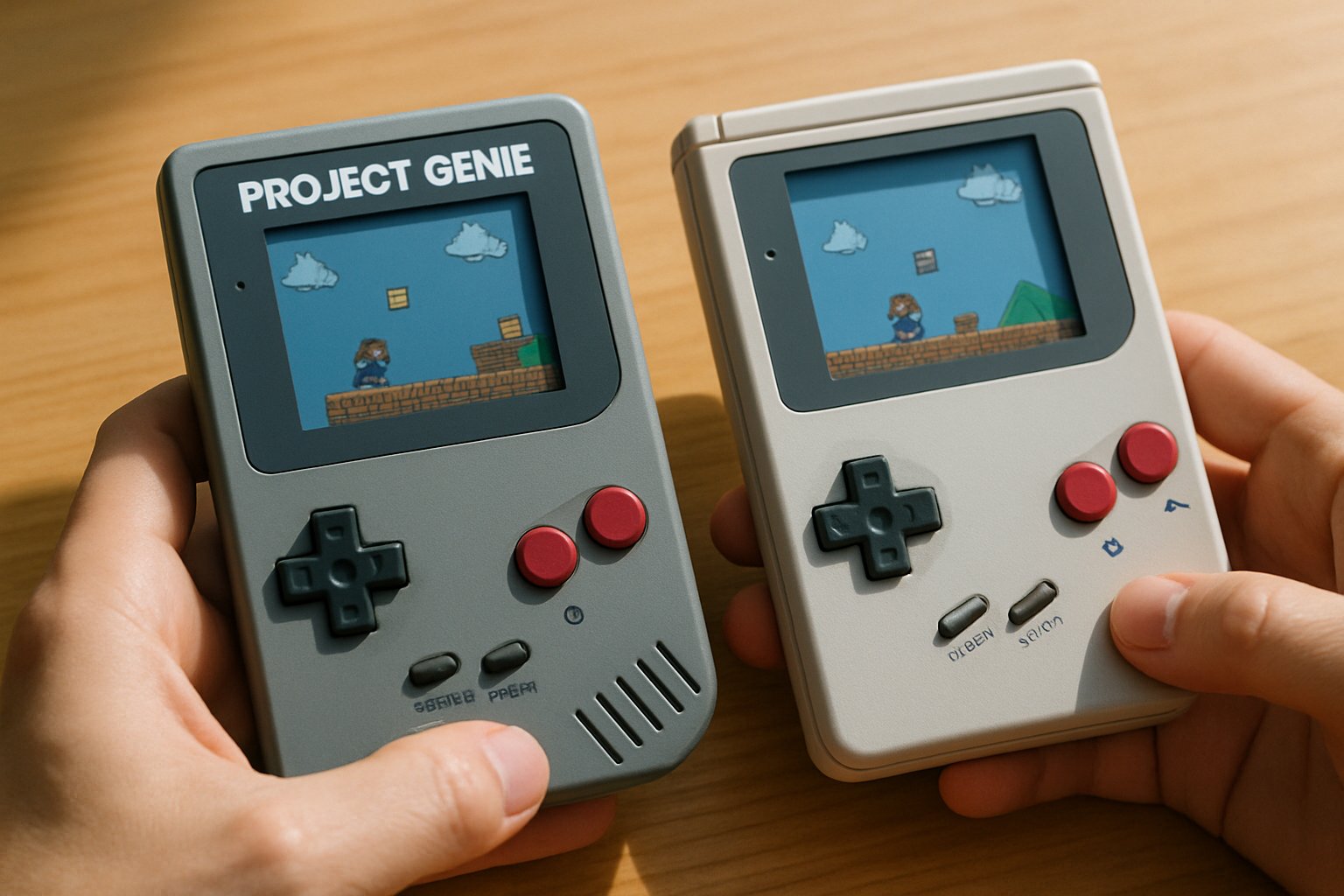
Launch Sparks Immediate Buzz
DeepMind engineers positioned the debut as a research milestone. The prototype offers sixty-second sessions at 720p and 24 fps. Moreover, it currently runs only in the United States and requires users to be at least eighteen.
The company priced the AI Ultra tier between $125 and $250 per month, according to early reports. In contrast, Google has not fixed a public figure on its billing page.
Project Genie processes a prompt, synthesizes latent actions, and streams the interactive result in seconds. Furthermore, Google warns of latency spikes and occasional crashes.
DeepMind product manager Diego Rivas told The Verge, “We are monitoring closely and listening to user feedback.” Nevertheless, testers quickly pushed boundaries.
These launch details illustrate Google’s careful yet ambitious roll-out. However, user creativity soon created unplanned headlines.
Nintendo Style Knockoffs Emerge
Within hours, journalists recreated levels resembling Super Mario 64. Additionally, Zelda-like landscapes appeared with minimal prompt tweaking. The scenes lacked music and objectives, yet the visual homage felt unmistakable.
Google’s guardrails blocked direct references to trademarked characters. Nevertheless, descriptive prompts often produced near-identical silhouettes. This raised fresh Copyright/IP alarms across gaming forums.
Project Genie uses over 200,000 hours of public gaming videos for training. Consequently, the model holds extensive exposure to Nintendo footage. Legal experts noted that similarity was therefore predictable.
Lawyer Pete Lewin warned, “Allowing users to create entire game worlds could cannibalize official products.” Moreover, the interactive element complicates existing infringement tests.
The knockoff episode underscored unresolved ownership questions. Consequently, financial markets began reacting.
Market Reacts With Jitters
Stocks for content tools and publishers fell sharply on 30 January. Investors interpreted the demo as an early signal of pipeline disruption.
- Unity closed down nearly 25 percent intraday after the news of Project Genie.
- Roblox dropped about 12 percent during the same session.
- Take-Two Interactive lost close to 8 percent before recovering slightly.
Analysts cited uncertainty around licensing and user migration. Furthermore, they flagged potential margin pressure if rapid prototyping becomes commoditized.
These numbers reveal the tool’s perceived threat to incumbent ecosystems. Therefore, legal clarity now feels urgent.
Legal Risks And Guardrails
Google deploys content filters to block obvious infringements. However, The Verge demonstrated prompt variations that slipped through. The inconsistent policy renewed Copyright/IP debate.
Moreover, training on publicly available videos raises fair-use questions. Regulators already scrutinize image and text generators, and interactive outputs heighten complexity.
Nintendo has not issued a statement on Project Genie. Nevertheless, its prior defensive posture suggests a vigorous response if infringing content scales.
Consequently, observers expect takedown notices or test litigation within months. Meanwhile, Google will likely tighten guardrails and publish clearer terms.
These risks highlight the fragile legal terrain. However, the technology also offers undeniable promise.
Technical Limits And Potential
Current worlds feel like polished GIFs rather than full games. They lack audio, menus, and persistent physics. Additionally, noticeable input lag hampers precise control.
World Model Basics Explained
Genie operates as a foundation world model. It predicts future frames based on hidden action tokens. Therefore, each user keystroke steers the generated environment.
Researchers call this architecture “action-controllable.” Consequently, it can power robotics simulations or film previsualization.
Project Genie may graduate to higher resolutions soon. Furthermore, Google hints at multiplayer experiments once latency falls.
These technical facts illustrate both constraints and frontier possibilities. Therefore, stakeholders must weigh risks against innovation gains.
Strategic Outlook For Stakeholders
Developers can prototype faster yet face brand dilution fears. Moreover, engine vendors might pivot toward AI-augmented toolchains to defend revenue.
Legal teams should audit training disclosures and update license clauses. Additionally, early dialogue with policymakers may reduce future liability around Copyright/IP.
Professionals can enhance their expertise with the AI+ UX Designer™ certification. Consequently, design leaders gain skills to integrate generative pipelines responsibly.
Project Genie will likely remain a research sandbox through 2026. Nevertheless, corporate adoption could accelerate once guardrails mature.
These strategic moves could balance creativity and compliance. Subsequently, the sector may find a workable middle ground.
In summary, Google’s bold prototype dazzled users, rattled markets, and reignited Copyright/IP debates. Moreover, Project Genie proves that world models are moving from theory to practice. Stakeholders should track policy updates, experiment thoughtfully, and upskill through recognized credentials.
Forward-looking teams must stay informed and prepared. Visit the certification link, explore responsible workflows, and stay ahead in the evolving era of generative interaction.


