

AI CERTS
5 months ago
Tesla Bets on Physical AI, Ends Model X for Optimus Robots
Moreover, management linked the move to a broader autonomous future that includes robotaxis and energy platforms. This article dissects the numbers, risks, and opportunities behind Tesla's new direction. Readers will understand why Physical AI now sits at the heart of the company’s growth narrative. Furthermore, we explore expert reactions and critical execution challenges. Finally, professionals will find resources to deepen their Robotics competencies as the market transforms.
Tesla Shifts Product Lines
January 28, 2026 marked a watershed moment for Tesla strategy. Elon Musk told investors the premium sedan and SUV would receive an "honorable discharge" next quarter. Meanwhile, the Fremont factory space will transform into an Optimus assembly hub. Tesla produced only a small share of Model S and X units in 2025, under three percent of deliveries. Therefore, management argued the lines could serve higher value roles. The company framed the pivot as essential to scaling Physical AI platforms beyond vehicles. Consequently, legacy enthusiasts must move fast if they still want a new flagship Tesla. Analysts noted that Model S debuted in 2012 and had already lost volume leadership. In contrast, humanoid robots promise an untapped addressable market. Musk even floated an eventual one-million-unit annual capacity for Optimus inside the reclaimed space.
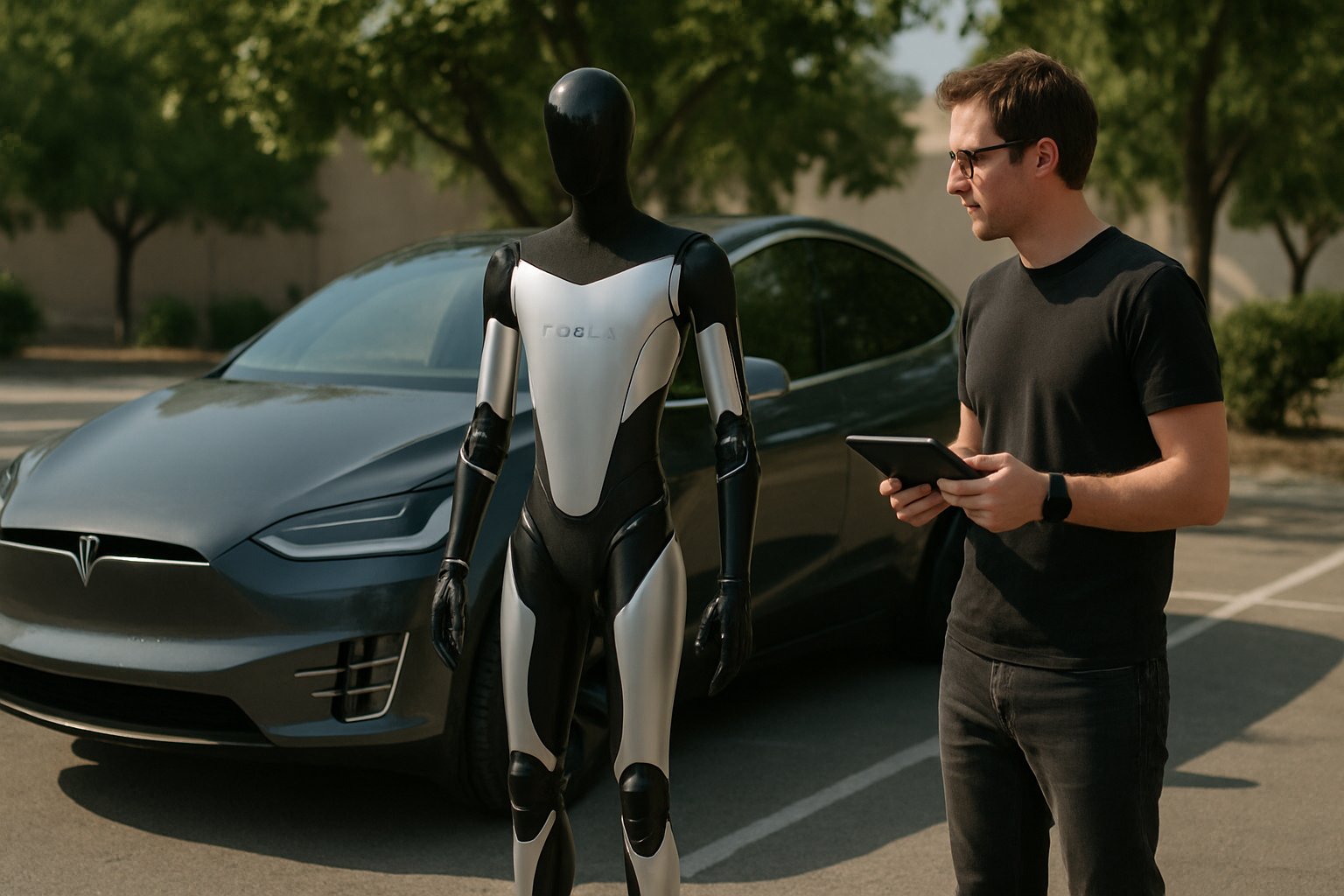
Tesla is sacrificing mature products to release factory bandwidth. However, success depends on delivering Optimus at industrial scale.
Pivot Drivers And Data
Numbers on the ground clarify management motives. Q4 2025 revenue reached $24.9 billion, beating Wall Street estimates. However, quarterly deliveries fell short, totaling 418,227 against prior growth forecasts. Moreover, full-year deliveries declined year-over-year to roughly 1.636 million vehicles. Other models, including S and X, contributed a low single-digit share. The following figures illustrate the scale of the pivot:
- CapEx 2026 guidance: over $20 billion, heavily weighted toward the humanoid and Robotaxis projects.
- Announced $2 billion xAI investment to strengthen Physical AI compute stack.
- Production target: up to 1 million Optimus units annually in converted Fremont lines.
- Model S/X wind-down expected by June 2026, freeing capacity quickly.
Consequently, capital allocation shows a decisive bet on nontraditional hardware. Tesla signals that revenue growth must come from new Physical AI verticals. The data reveals shrinking car momentum and soaring robotic ambition. Therefore, understanding Optimus goals becomes essential.
Understanding Optimus Ambitions
Optimus stands as Tesla’s first full-scale humanoid product. Musk asserts it will leverage the same perception stack that powers Robotaxis. Additionally, the robot will integrate custom actuators and Dojo-class silicon for edge inference. Independent Robotics researchers caution that bipedal locomotion remains fragile under industrial loads. Nevertheless, Tesla’s vertical manufacturing may reduce bill-of-materials costs faster than academic labs.
In contrast, earlier prototypes never exited laboratory assembly, missing 2025 pilot targets. Subsequently, management redesigned key joints for higher torque and reliability. The Gen 3 unit, promised for 2026, will define whether mass production is realistic. Physical AI frameworks require safe human-machine interaction, reliable autonomy, and upgradable cloud links. Consequently, Tesla must line up suppliers for sensors, motors, and replacement parts.
Tesla's humanoid goal illustrates a colossal technical query. However, financial exposure elevates execution risk, directing attention to funding dynamics.
Financial Stakes And Risks
Tesla will spend more than $20 billion on capital projects during 2026. Furthermore, the company allocated an extra $2 billion to xAI for training clusters. Investors enjoyed a revenue beat, yet automotive margins continued sliding under fierce competition. Nevertheless, leadership argues high-margin Physical AI services will offset temporary pressure. Analyst Sam Fiorani warns that mass humanoid manufacturing remains commercially unproven.
Moreover, each robot will require warranty reserves, field service, and regulatory certifications. In contrast, BYD and legacy automakers continue releasing fresh electric models, courting Tesla refugees. Cash burn could rise if Robotaxis approvals face delays or safety setbacks. Key risk indicators include:
- Component cost volatility for advanced Robotics actuators and sensors.
- Slower learning curves than forecast for Optimus walking and manipulation.
- Regulatory scrutiny of unsupervised driverless ride deployments in major cities.
Consequently, the equity story relies on flawless operational execution. Capital intensity magnifies both upside and downside. Therefore, industry watchers crave tangible production milestones.
Industry Reactions And Analysis
Wall Street expressed cautious optimism immediately after the call. Meanwhile, Reuters highlighted Musk's repeated timeline slips on ambitious programs. Fortune quoted academics who doubt humanoid cost parity before 2030. Additionally, regulators at NHTSA stressed ongoing investigations into driverless crashes. Robotics experts from Omdia noted Tesla's integrated supply chain could accelerate learning loops. Nevertheless, they called the one-million-unit goal "heroic" by current standards. Musk responded that scaling physical systems mirrors Moore's Law curves once manufacturing matures. In contrast, rivals like Figure and Agility target five-digit annual volumes for now.
Stakeholder views remain sharply divided. However, consensus agrees that Physical AI is redefining competitive boundaries.
Implications For Autonomous Mobility
Axing premium cars narrows Tesla’s showroom lineup. Consequently, future growth must lean on Robotaxis and service subscriptions. The same vision stack feeds both Optimus limbs and robot driver logic, yielding code reuse. Furthermore, mobility regulators will likely test unified safety arguments across vehicles and robots. Physical AI success would let Tesla monetize data from homes, factories, and city streets. Moreover, energy storage and charging divisions could bundle services to power fleets. Nevertheless, any autonomy crash could damage both product families simultaneously.
Autonomous convergence enhances synergy yet amplifies systemic risk. Therefore, Tesla must synchronize legal, safety, and commercial playbooks.
Preparing For Robotic Future
Enterprises planning automation investments should monitor Tesla benchmarks closely. Additionally, workforce planning must account for rising collaboration between humans and advanced Robotics systems. Physical AI will demand new compliance frameworks, cybersecurity standards, and maintenance skills. Professionals can enhance knowledge via the AI Robotics Specialist™ certification. Moreover, Tesla’s ramp could spark cross-industry demand for sensor, actuator, and edge-AI suppliers. Consequently, supply chains may reorient toward components optimized for next-generation autonomy workloads. In contrast, companies ignoring the shift risk technological obsolescence.
Skill development and strategic sourcing will separate winners from laggards. However, proactive steps today position firms for tomorrow’s Physical AI ecosystem.
Tesla’s decision to retire its flagship vehicles underscores a dramatic corporate reinvention. Furthermore, the Fremont makeover signals unwavering confidence in the humanoid robot and Robotaxis as future revenue pillars. Nevertheless, capital intensity and engineering complexity introduce significant execution hazards. Physical AI promises expansive markets, yet only validated production will reassure investors. Consequently, stakeholders should track delivery milestones, regulatory approvals, and cost curves through 2026. Professionals eager to lead the shift should pursue advanced Robotics certifications and stay informed. Act now to sharpen your expertise and help shape the coming era of intelligent machines.
Disclaimer: Some content may be AI-generated or assisted and is provided ‘as is’ for informational purposes only, without warranties of accuracy or completeness, and does not imply endorsement or affiliation.


