

AI CERTS
2 months ago
Digital Misinformation: White House Slopaganda Sparks Furor
Researchers cited doctored images of civil-rights lawyer Nekima Levy Armstrong as a particular flashpoint. Moreover, the administration's publicly championed AI Action Plan appears at odds with its meme tactics. Civil-rights advocates argue that manipulated visuals risk harassment and legal misinterpretation. Meanwhile, platform audits reveal inconsistent labeling, allowing synthetic content to circulate widely before corrections appear.
These early signals highlight an urgent ethics question that business and policy professionals must now confront. Therefore, this article unpacks the events, mechanics, and potential safeguards shaping the slopaganda storm.
White House Visual Gambit
White House feeds pushed at least a dozen AI images between July 2025 and January 2026. For example, one post pictured former President Trump crowned like a medieval king. In contrast, another included a Studio Ghibli-styled migrant roundup scene. Furthermore, an arrest photo of Nekima Levy Armstrong gained traction after staff added artificial tears and darker tones.
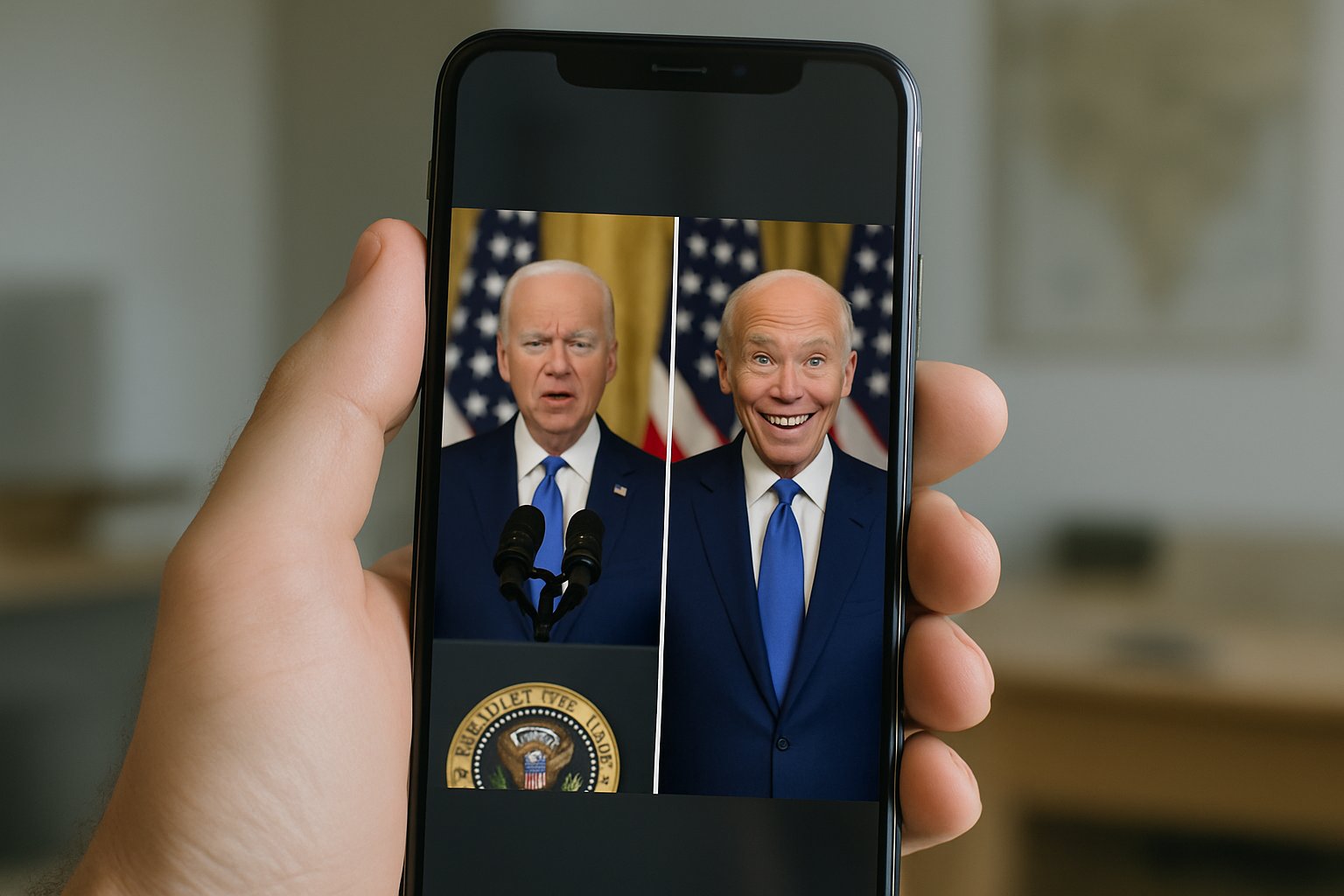
Deputy Communications Director Kaelan Dorr defended the campaign, calling it edgy outreach. However, experts observed that humor cloaked deliberate narrative framing favourable to administration positions. Critics therefore frame the gambit as Digital Misinformation disguised as meme culture.
The gambit blends entertainment with persuasion, muddying verifiable facts. Consequently, analysts demand deeper scrutiny of these official storytelling choices.
Slopaganda Mechanics Explained Clearly
Slopaganda describes low-cost AI content mass-produced for rapid algorithmic spread. Moreover, scholars note that quantity, not quality, drives impact because repetition overwhelms audience recall. AI Forensics found 354 Agentic AI Accounts generating 43,000 posts and 4.5 billion views.
These accounts continuously prompt, upload, and repeat images until engagement spikes. Additionally, half of surveyed Instagram items lacked any AI disclosure, compounding deception. Such gaps accelerate Digital Misinformation across demographic and ideological boundaries. Deepfakes further intensify confusion by offering photorealistic fabrications that resist casual detection.
Slopaganda thrives on volume, speed, and ambiguous provenance. Therefore, understanding platform dynamics sets the stage for examining moderation failures next.
Platform Labeling Gap Crisis
Platform disclosure policies promise clarity yet often stumble in execution. AI Forensics audits showed desktop users missed many AI labels entirely. Consequently, manipulated visuals circulated unchecked for hours, gathering millions of impressions before fact-checkers responded.
TikTok search data revealed that 25 percent of top results featured synthetic imagery. Meanwhile, over 80 percent of that subset originated from automated Agentic AI Accounts. Instagram performed worse on transparency, exposing only 23 percent of relevant posts as synthetic. Therefore, Digital Misinformation scaled rapidly through virality incentives baked into recommendation engines.
Key audit figures illustrate the scope:
- 25% TikTok top results contained AI imagery.
- 4.5 billion views accrued across 354 Agentic AI Accounts.
- Only 23% Instagram AI posts carried visibility labels.
These numbers confirm systemic transparency failures across major networks. In contrast, the next section explores how such failures threaten Image Integrity directly.
Image Integrity Under Fire
Photojournalism standards depend on verifiable provenance and minimal alteration. However, the digitally tearful Nekima Levy Armstrong portrait breached those norms. Experts warned that altered emotional cues could prejudice legal proceedings or public opinion. Moreover, racist tropes embedded within the edit compounded harm toward communities of color.
Image Integrity suffers when official sources strip metadata and remove watermarks. Such omissions prevent independent verification and foster further Digital Misinformation. Deepfakes escalate risks because they replicate lighting, texture, and context convincingly.
The Armstrong example demonstrates tangible harms when provenance breaks. Consequently, policy contradictions emerge, discussed in the following section.
Policy Versus Practice Clash
The 2025 AI Action Plan listed over 90 initiatives championing trustworthy AI. Yet, the same administration posts unlabeled synthetic media that undercut stated principles. In contrast, other governments mandate clear watermarking for official communications.
Furthermore, President Trump touts deregulation as essential for competitiveness. Legal scholars argue that freedom without guardrails enables Digital Misinformation emanating from state channels. Observers highlight this inconsistency as evidence of performative governance.
Policy promises ring hollow without matching operational discipline. Therefore, mitigation paths deserve immediate attention.
Mitigation And Certification Paths
Technical solutions include cryptographic provenance, visible watermarks, and robust audit trails. Moreover, the Coalition for Content Provenance and Authenticity pushes an open standard for origin metadata. Platforms subsequently experiment with tamper-evident hashes and automated provenance badges.
However, tools alone fail without incentives and enforcement. Regulators could tie federal advertising budgets to strict Image Integrity compliance. Businesses can also upskill teams to recognize Deepfakes and verify sources. Professionals can enhance their expertise with the AI Ethical Hacker™ certification.
Key mitigation priorities include:
- Mandate watermarking for official visuals.
- Require real-time AI content dashboards.
- Fund public media-literacy campaigns targeting Digital Misinformation.
These steps strengthen Image Integrity and slow virality achieved by slopaganda tactics. Subsequently, citizens regain confidence in official communications.
Concluding Insights
Trust in public data hinges on transparent imagery, consistent labeling, and rapid corrections. However, recent incidents show how Digital Misinformation can overwhelm those safeguards when state actors embrace viral memes. Slopaganda may appear trivial, yet its cumulative effect corrodes democratic deliberation. Moreover, Image Integrity becomes collateral damage as Deepfakes evolve toward flawless realism.
Therefore, leaders must integrate ethical policies with technical provenance tools to blunt Digital Misinformation. Businesses should train staff to spot pattern anomalies, conduct source checks, and flag Digital Misinformation early. Additionally, earning credentials like the AI Ethical Hacker™ equips professionals to audit AI pipelines responsibly. Act now, share verified content, and champion initiatives that contain Digital Misinformation before the next election cycle.


