

AI CERTS
2 months ago
Tech Titans Reinforce Nuclear Infrastructure For AI Era
Therefore, utilities and developers suddenly enjoy access to corporate capital once reserved for renewables. This report unpacks the capacity contracted, the timelines, and the economic stakes. It also examines why critics warn about cost overruns and regulatory delays. Meanwhile, policymakers see strategic value in diversifying beyond weather-dependent sources. Understanding this pivot matters for anyone shaping energy, finance, or digital strategy.
AI Power Demand Surge
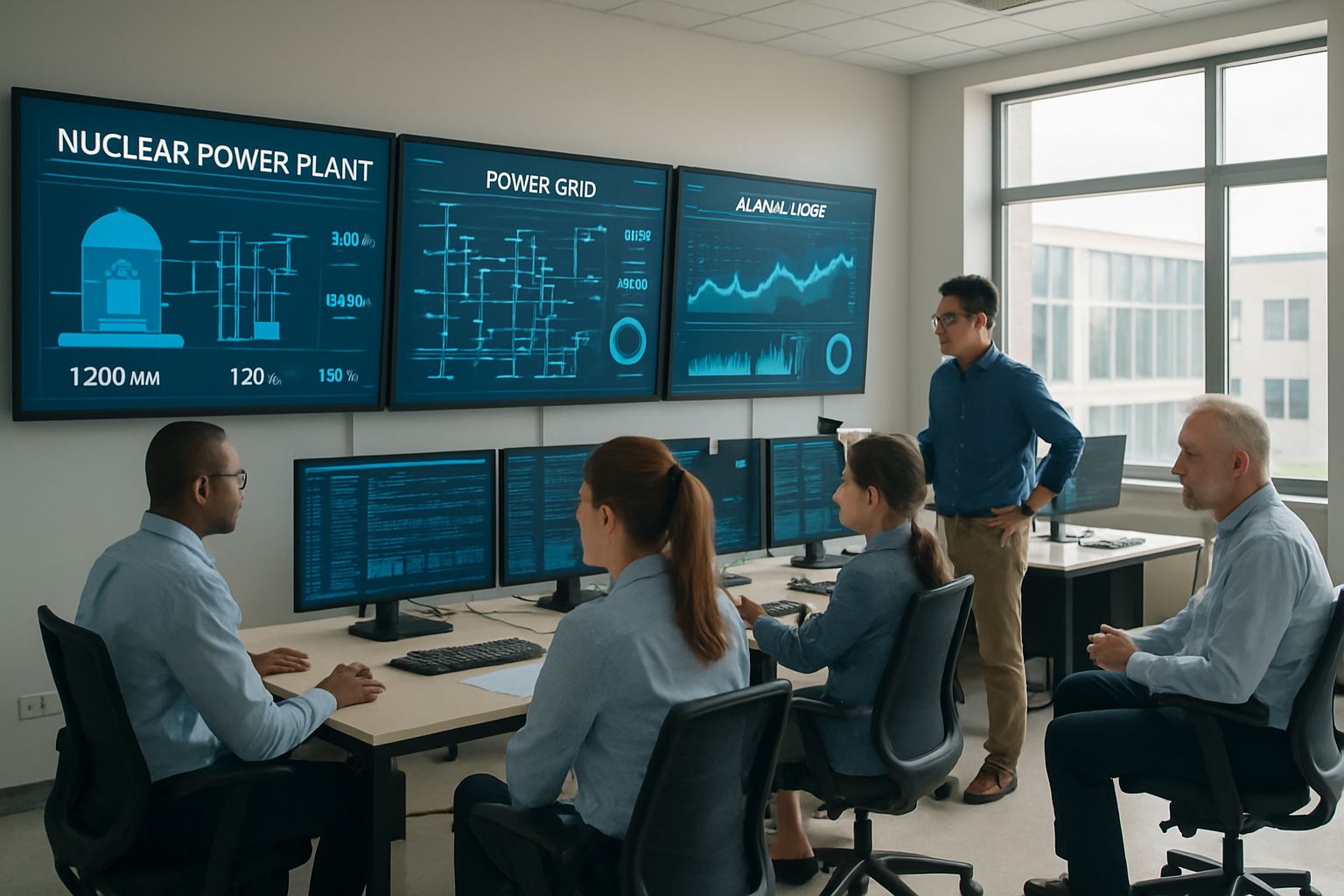
AI training clusters can draw as much power as small cities. In contrast, conventional cloud loads appear modest beside these accelerators. BloombergNEF estimates aggregate hyperscale electricity demand could top 6GW annually by 2027. Furthermore, operators now benchmark facility plans in multi-gigawatt increments rather than megawatts. Consequently, load growth forces procurement teams to seek dispatchable sources with minimal carbon. Nuclear fits that profile when paired with transmission agreements and flexible contracting.
These dynamics explain the sudden corporate attention given to atomic projects. However, capacity commitments require more than public statements; they demand concrete contracts. The next section details how those agreements are structured.
Expanding Nuclear Infrastructure Footprint
Google struck a master agreement with Kairos Power to enable 500 MW of advanced reactors. Additionally, the company financed Elementl Power to scout three further sites. Together, these plans underline Google's intent to anchor regional Nuclear Infrastructure growth. Microsoft matched that ambition by backing Constellation's restart of Three Mile Island Unit 1. Meanwhile, Amazon secured up to 1,920 MW from Talen's Susquehanna plant and possible SMRs.
Meta followed by locking 1.1 GW from the Clinton facility, citing AI driven Data Centers. Moreover, all four companies signed a pledge to triple global nuclear capacity by mid-century. Such unified pressure signals a durable market for new Nuclear Infrastructure. Consequently, utilities now recalibrate investment roadmaps once constrained by price volatility. Corporate alignment with reactor owners is reshaping risk allocation. Next, we examine specific contracts and their financial levers.
Tech Firms Nuclear Contracts
Power Purchase Agreements remain the dominant vehicle for corporate offtake. However, equity stakes and development loans are emerging complements.
- Google & Kairos: up to 500 MW; deployments begin 2030.
- Microsoft & Constellation: 20-year contract for 835 MW at Three Mile Island.
- Meta & Constellation: 1.1 GW over 20 years from Clinton, plus 30 MW uprate.
- Amazon & Talen: 1,920 MW through 2042 with SMR exploration.
- Kairos & TVA: 50 MW Hermes 2 supporting Google’s regional Data Centers.
Collectively, these agreements push the tech nuclear pipeline toward 6GW by mid-decade. Therefore, analysts forecast total contracted volume exceeding 30 GW once pending terms finalize. Importantly, every deal ties payments to delivery milestones, limiting developer exposure. Nevertheless, first-of-a-kind projects still carry cost uncertainty. These contractual nuances feed into project scheduling, discussed next. Robust Nuclear Infrastructure financing hinges on how timelines unfold.
Projects And Timelines Ahead
Restarting an idle reactor can be faster than building an SMR. Consequently, Constellation targets 2027-2028 for Three Mile Island’s commercial return. DOE loan guarantees and the Microsoft PPA underpin that schedule. Meanwhile, Kairos seeks NRC approval for Hermes 2, aiming for 2030 grid connection. Further deployments under Google's master plan stretch to 2035.
Amazon’s Susquehanna agreement ramps in stages, reaching full delivery by 2032. Moreover, the partners are studying co-located SMRs that could add several hundred megawatts. Such additions would deepen regional Nuclear Infrastructure and diversify revenue. Nevertheless, every milestone depends on regulatory clearance and supply-chain resilience. Timelines therefore embody both opportunity and execution risk. The economic debate around costs intensifies under that uncertainty.
Economic And Policy Tension
SMR cost estimates remain higher than wind or solar on a levelized basis. In contrast, proponents stress lifetime value, reliability, and land efficiency. GenCost modeling places early SMR capital above 10,000 USD per kilowatt. Consequently, corporate credit backstops are critical for initial deployments. Governments also deploy tax credits, loan guarantees, and fast-track licensing reforms.
Critics warn that subsidies could crowd out cheaper renewables. Nevertheless, cloud providers argue intermittent resources alone cannot satisfy always-on Data Centers. Therefore, policy debates increasingly weigh reliability metrics alongside headline cents per kilowatt hour. Robust Nuclear Infrastructure advocates highlight fuel security and domestic jobs. These policy trade-offs shape investor sentiment. Next, we turn to innovation that may bend the cost curve.
Innovation In Reactor Design
Advanced reactors promise modular fabrication, passive safety, and flexible siting. Moreover, designs like Kairos’s fluoride salt cooled unit operate at higher temperatures. Higher temperatures improve thermal efficiency and potential hydrogen co-production. Subsequently, diversified revenue could lower delivered electricity prices. If mass production reaches 6GW per year, learning curves could slash costs rapidly.
Corporate buyers are also piloting hourly tracking software to align generation with consumption. Furthermore, Google’s 24/7 matching algorithms will test Nuclear Infrastructure integration with renewables. Professionals can enhance their expertise with the AI Project Manager™ certification. Meta also funds software audits to verify hourly nuclear supply for its Data Centers. Innovation efforts complement hardware advances. Consequently, the skills landscape is expanding for engineers and analysts. The next section highlights workforce pathways.
Workforce And Skill Paths
Nuclear buildouts require specialists across engineering, cyber, and supply logistics. Additionally, cloud operators need energy market strategists who grasp complex PPA structures. Consequently, professional upskilling becomes essential. Certification programs now integrate nuclear project management with AI workload forecasting. Graduates versed in Nuclear Infrastructure planning command premiums across utilities and tech.
Moreover, policy analysts must interpret evolving tax credits and safety regulations. Therefore, cross-disciplinary talent pipelines are forming between campuses and industry. Professionals can validate credentials through the AI Project Manager™ pathway. Such recognition accelerates career mobility into high-growth Nuclear Infrastructure programs. Workforce development closes the loop between ambition and delivery. Finally, we summarize the strategic takeaways and next steps.
Strategic Takeaways And Outlook
Tech giants have shifted from pilot rhetoric to binding multi-gigawatt commitments. Consequently, Nuclear Infrastructure procurement now rivals earlier renewable procurement booms. Microsoft’s restart strategy, Google’s SMR gambit, Amazon’s large baseload purchase, and Meta’s long contract illustrate varied pathways. However, cost, licensing, and supply chains could still derail timelines. Therefore, continued collaboration between utilities, regulators, and investors remains critical. Professionals who master project finance, policy, and AI workload modeling will shape the outcome. Consider earning advanced certifications to stay ahead of this fast-evolving energy frontier.


