

AI CERTs
6 months ago
Samsung Roadmap Sets Aggressive AI Milestones Through 2026
Analysts expected bold plans, yet Samsung’s latest briefing still surprised. The company unveiled a sweeping Samsung Roadmap focused on pervasive artificial intelligence. Consequently, executives declared 2026 an “AI-first” year, promising agentic experiences across phones, wearables, TVs, and appliances. Meanwhile, the firm aims to double Galaxy AI-enabled devices to 800 million and anchor the push with its 2026 AI Smartphone flagship, the Galaxy S26. Industry stakeholders now watch for execution details and competitive responses.
Market Context Boosts AI
Global smartphone growth has stalled; however, premium AI features reset consumer expectations. The Samsung Roadmap positions AI as the next revenue catalyst, aligning with record 2025 profits of KRW 20.1 trillion. Moreover, Samsung links rising memory demand to on-device inference workloads, creating a virtuous hardware loop. Research shows that 400 million Galaxy units already support Galaxy AI. Management plans to hit 800 million by December 2026, effectively doubling reach. These numbers illustrate scale advantages.
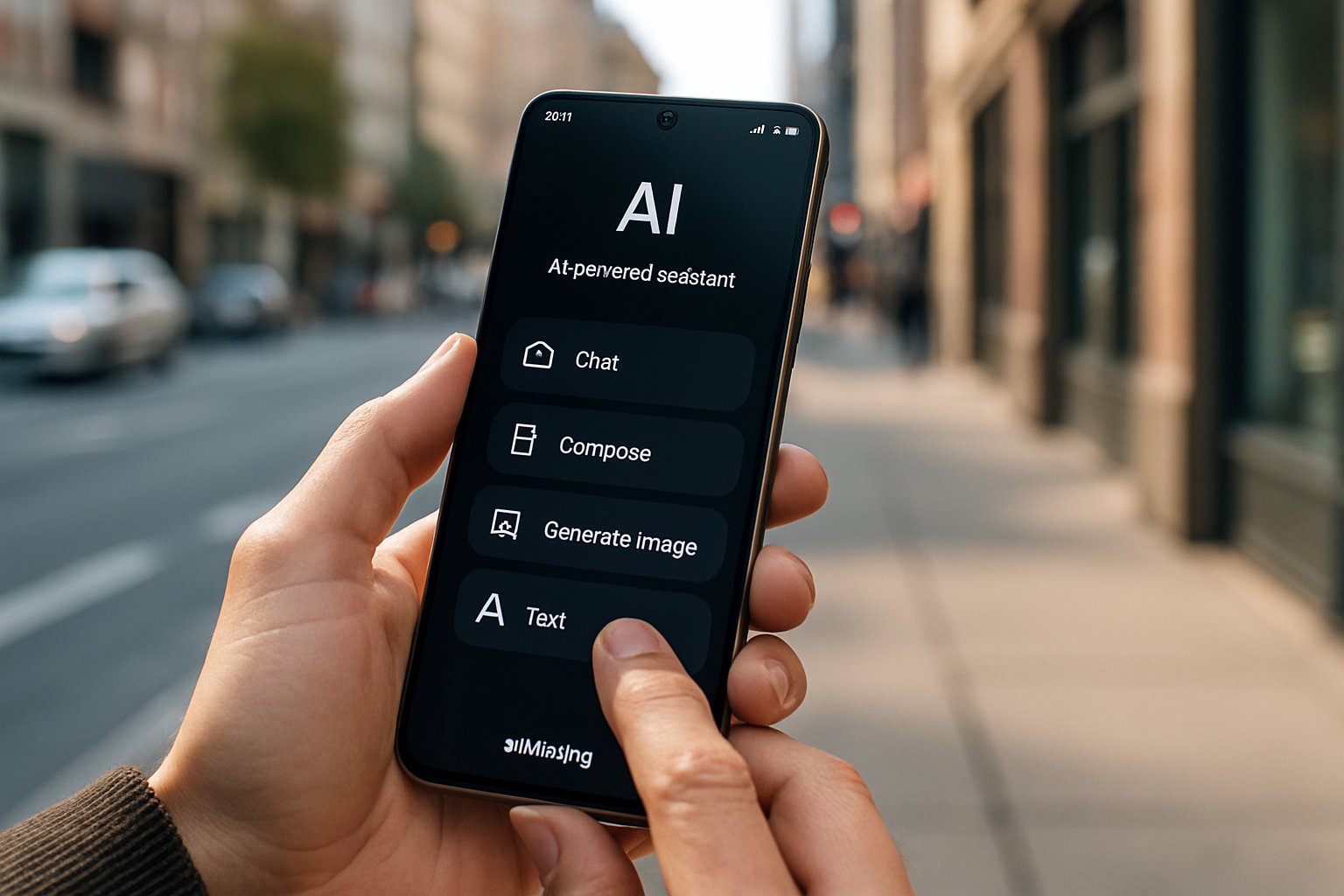
Such momentum pressures rivals because consumers increasingly equate innovation with intelligence. Nevertheless, sustained adoption hinges on practical benefits rather than marketing slogans.
These trends validate early investments. Furthermore, they frame upcoming announcements.
Galaxy S26 Agentic Leap
The centerpiece of the Samsung Roadmap is the Galaxy S26, a 2026 AI Smartphone designed for agentic tasks. Consequently, users will delegate multi-step workflows—booking trips, summarizing meetings, or editing images—through natural language. Samsung combines cloud models like Gemini Pro with on-device engines for latency-sensitive steps. Additionally, Nota AI compression enables heavier models to run locally.
Samsung confirmed a late-February Unpacked launch window, though final invitations remain pending. Leaked specifications mention the 2 nm Exynos 2600, yet regional Snapdragon variants persist. Therefore, capability fragmentation may continue. Nevertheless, executives insist feature parity will improve.
Galaxy S26 sets user expectations. Subsequently, its reception will influence portfolio rollouts.
Hybrid AI Architecture Details
Hybrid design underpins every milestone within the Samsung Roadmap. On-device NPUs execute lightweight models like Gemini Nano for instant translation or transcription. Meanwhile, cloud endpoints handle large-context generation through Gemini Pro, Samsung Gauss, or partner engines. Furthermore, Perplexity integration brings grounded citations, addressing transparency concerns.
This multi-provider setup reduces single-vendor risk and lets Samsung negotiate best-of-breed components. Moreover, it supports regional compliance by swapping models where regulations differ. Engineers rely on Nota AI’s NetsPresso toolkit, claiming up to 90 % parameter reduction. Vendor data suggests a 100 % NPU performance gain versus prior Exynos chips. Independent benchmarks remain awaited.
This architecture balances latency, privacy, and scale. In contrast, rivals often depend solely on cloud processing.
These technical choices drive memory needs. Consequently, semiconductor strategy becomes crucial.
Silicon And Memory Strategy
Device solutions divisions align closely with the broader Samsung Roadmap. The firm boosts HBM4 production and ramps 2 nm foundry nodes during 2026, expecting AI servers and 2026 AI Smartphone demand to absorb supply. Additionally, record 2025 R&D spending of KRW 37.7 trillion funds NPU research and package optimizations.
Samsung touts vertical integration as a defensible edge. However, price volatility in HBM markets threatens handset margins. Consequently, some advanced AI features may stay exclusive to flagship SKUs initially. Engineers also juggle Exynos yield targets to minimize regional disparities.
- HBM4 volume ramp: Q2–Q4 2026
- 2 nm Exynos 2600 mass production: H1 2026
- 800 million Galaxy AI target: End 2026
- R&D intensity: 11 % of revenue
These figures demonstrate synchronized hardware and software roadmaps. Subsequently, attention shifts to unresolved risks.
Risks And Challenges Ahead
No roadmap executes flawlessly. Dependence on Google’s Gemini remains a strategic vulnerability despite multi-provider framing. Furthermore, privacy regulators scrutinize data flows between devices and clouds. Regional chipset splits also risk inconsistent user experiences, challenging brand equity.
Cost pressures loom as memory prices surge. Moreover, vendor performance claims await third-party validation, and any gap could erode consumer trust. Nevertheless, Samsung has signaled transparency, inviting independent labs for early testing.
These hurdles spotlight potential speed bumps. However, proactive mitigation can preserve momentum.
Implications For Enterprise Teams
Enterprise mobility leaders track the Samsung Roadmap because employee expectations bleed into workplace tools. Consequently, IT departments may need to support agentic workflows natively within corporate policies. Additionally, developers can target on-device NPUs through Samsung AI Studio for privacy-preserving applications.
Professionals can enhance their expertise with the AI+ UX Designer™ certification. Moreover, understanding hybrid orchestration prepares teams for multi-model future states. The 2026 AI Smartphone cycle offers a large testing ground.
- Lower latency empowers field workers
- On-device data stays inside compliance boundaries
- Agentic flows reduce task friction
These benefits encourage pilot programs. Therefore, organizations should update mobile strategies now.
Key Takeaways Moving Forward
Samsung Roadmap ambitions hinge on synchronized hardware, software, and partner ecosystems. Galaxy S26 will debut the new agentic layer and test consumer appetite for goal-oriented assistants. Meanwhile, HBM4 ramps and 2 nm silicon underpin performance promises. Secondary players like Nota AI and Perplexity supply critical pieces, yet Google remains central.
Nevertheless, execution risks around regional fragmentation, cost, and regulation persist. Enterprises and developers should monitor benchmark data and security disclosures closely. The next 18 months will reveal whether Samsung can translate its scale into sustainable AI leadership.
These points foreground the closing outlook. Consequently, we consider strategic actions.
Conclusion And Next Steps
Samsung Roadmap sets a clear north star: embed AI into every product by 2026. Moreover, the firm targets 800 million Galaxy AI devices and an agentic smartphone flagship. Hybrid architecture, new silicon, and expanded memory capacity form the technical backbone. Nevertheless, vendor dependence, regional chipset splits, and cost pressures demand careful navigation.
Forward-looking enterprises should pilot on-device AI now, seek relevant certifications, and track independent benchmarks. Consequently, readers wanting deeper expertise should explore the linked AI+ UX Designer™ program or follow upcoming Unpacked reports for real-time insights.
Disclaimer: Some content may be AI-generated or assisted and is provided ‘as is’ for informational purposes only, without warranties of accuracy or completeness, and does not imply endorsement or affiliation.


