

AI CERTs
5 months ago
Messy Code Magnifies Coding AI Defect Risk
Legacy codebases look messy, yet many teams rush to deploy Coding AI tooling anyway. However, new peer-reviewed research warns that haste may be costly. A FORGE 2026 paper finds a 30% defect risk spike when assistants edit unhealthy code. Consequently, executives now question whether productivity gains outweigh mounting quality liabilities. Moreover, we contrast field studies, security scans, and vendor claims to reveal actionable insights. Meanwhile, quotes from researchers and practitioners ground the narrative in real-world experience. Finally, you'll discover how targeted refactoring, robust testing, and certification programs can mitigate risks. Therefore, technology leaders will gain a concise roadmap for responsible Coding AI adoption without sacrificing Software Quality. In contrast to sensational headlines, the story here is nuanced, data-driven, and immediately practical. Subsequently, each section builds on the last, guiding you from risk recognition to concrete mitigation steps. Keep reading to align strategy, tooling, and culture before your next AI commit hits production.
Defect Spike Research Explained
Researchers from CodeScene and Lund University examined 5,000 Python files. Specifically, they let a leading Coding AI model refactor each file, then tested semantic preservation. Results showed a 30% higher break rate when the original code scored low on CodeHealth. Consequently, unhealthy modules suffered disproportionate defects, even though the model behaved well elsewhere.
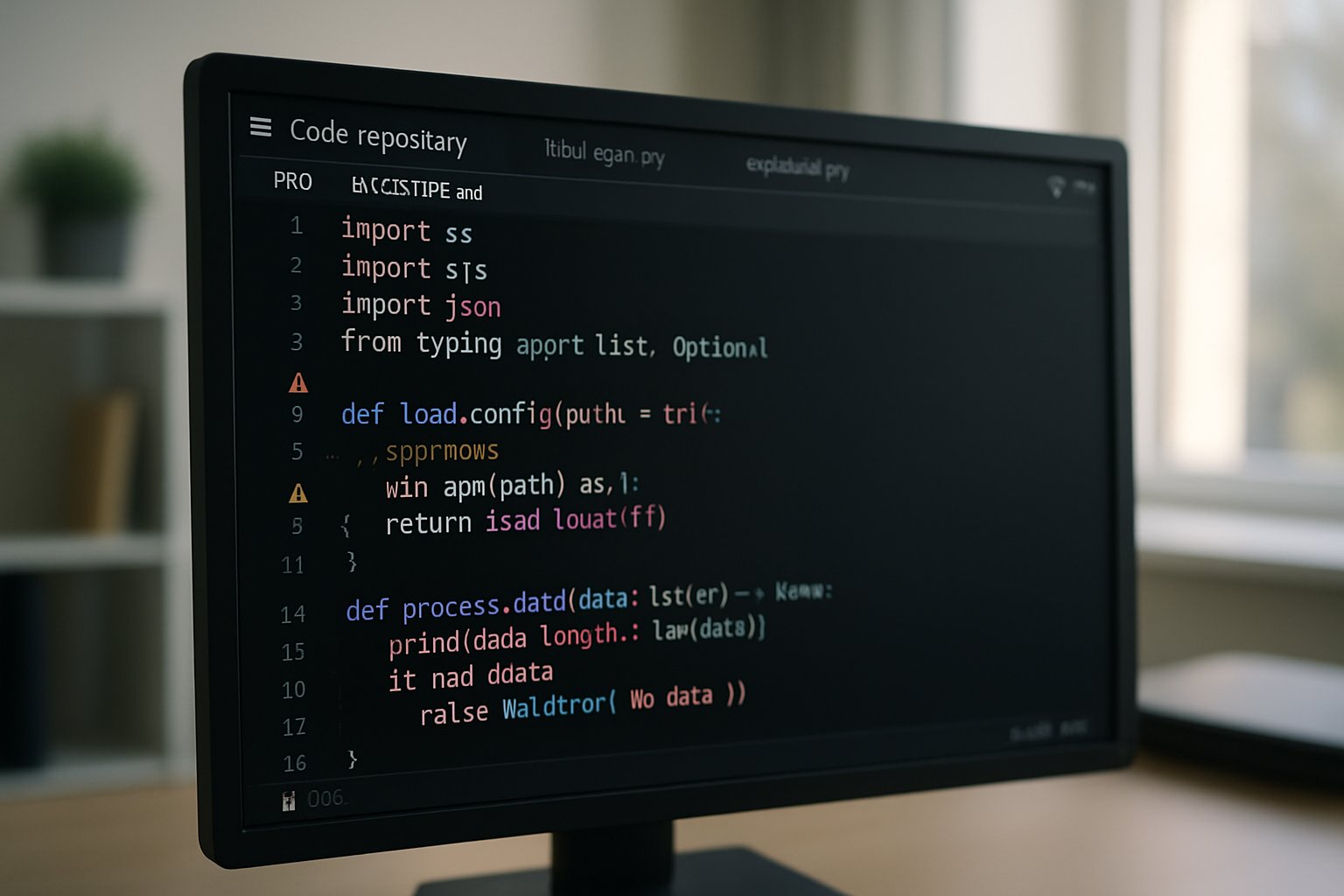
The paper will appear at FORGE 2026, giving the findings academic credibility. Moreover, the methodology and dataset are publicly available for replication. CodeHealth combines complexity, churn, and coupling into a ten-point maintainability score. Therefore, low scores often signal technical debt hotspots in legacy systems.
The headline is clear. Messy code magnifies assistant-induced defects by a measurable margin. However, understanding why messiness matters requires a deeper dive.
Why Messy Code Matters
Low-quality code hides implicit dependencies and misleading comments. Consequently, a Coding AI model builds predictions on noisy signals, amplifying latent faults. In contrast, clean code offers consistent patterns that guides probabilistic completion engines safely. Furthermore, prompt windows are small, so missing context worsens inference accuracy. Developers can unknowingly feed partial files, causing hallucinated imports or logic. Meanwhile, comments containing outdated todos may trick the model into resurrecting discarded approaches.
Security parallels exist as well. Veracode reported that 45% of AI-generated snippets carry vulnerabilities, often inherited from poor scaffolds. Therefore, structural chaos threatens Software Quality on multiple fronts. These dynamics explain the CodeScene findings. Empirical studies show that every additional cyclomatic point raises AI prediction entropy.
Messy context confuses probabilistic models and developers alike. Next, we weigh the productivity argument against these risks.
Balancing Speed And Risk
Vendors tout dramatic speed gains. For example, GitHub's controlled study showed participants completing a task 55% faster with Coding AI. Nevertheless, Uplevel's field data found a 41% bug increase and no measurable throughput gains. Similarly, several academic replications report neutral productivity when measuring delivery lead time.
Why the gap? Contextual differences, governance maturity, and test coverage shape outcomes. Clean codebases with strong pipelines offset many assistant errors before merge. Conversely, legacy monoliths lacking tests let bugs slip straight into production. Therefore, speed cannot be viewed in isolation from defect trends.
Economists frame the situation using the classic speed-quality frontier. Teams can shift the curve outward only when safeguards scale alongside automation. Otherwise, they trade hidden rework for visible velocity. Therefore, return on investment depends on defect density reductions, not commit counts alone.
Productivity boosts are real but conditional. Consequently, leaders need structured safeguards, which we explore next.
Governance And Mitigation Strategies
Effective teams treat Coding AI as a junior developer, not an oracle. They gate suggestions behind automated tests, linters, and human review. Moreover, measuring CodeHealth highlights fragile spots needing manual attention before delegation. Refactoring those hotspots first reduces the 30% risk spike documented earlier.
Security practices must evolve in parallel. Subsequently, organizations integrate SAST tools that parse AI provenance tags for targeted scanning. Tom's Hardware highlighted new agentic IDE attack surfaces, making isolation policies essential. In contrast, shops with strict least-privilege settings reported no major breaches. These controls shrink the Coding AI attack surface significantly.
Training rounds out the stack. Professionals can enhance expertise with the AI Learning Development™ certification. Coursework covers prompt design, risk flags, and metric dashboards. Therefore, certified developers contribute higher Software Quality while accelerating delivery.
Metrics dashboards close the feedback loop. Subsequently, teams trend defect rates per 1000 automated lines. Visual cues help product owners decide when to pause deployment. Moreover, sharing metrics in sprint reviews fosters accountability.
Governance, security, and training form a defensive triangle. Next, we examine persistent security concerns in greater depth.
Security Flaws Persisting Danger
Veracode scanned 80 tasks across 100 models and flagged vulnerabilities in 45% of outputs. Meanwhile, security researchers found remote-code execution vectors in agentic IDE plugins. Attackers already craft prompts to poison Coding AI pipelines. Such findings extend beyond Python into Java, JavaScript, and infrastructure files. Consequently, Software Quality and security intersect tightly in the AI era.
Mitigations include policy-as-code, provenance labels, and mandatory penetration testing for generated code. Additionally, rotating secrets and isolating build runners reduce blast radius if exploits slip through. Nevertheless, cultural vigilance remains decisive.
Security audits reveal recurring gaps despite modern pipelines. Therefore, the final section offers a pragmatic adoption checklist.
Case Studies Offer Nuance
Loveholidays adopted Copilot after cleaning debt and adding 90% test coverage. Six months later, defect density dropped 12%, while cycle time improved modestly. Xebia and Encora report similar wins using gated rollouts and weekly code-health reviews. In contrast, an unnamed fintech halted its pilot after three production outages traced to unvetted suggestions.
- Key success factor: measurable CodeHealth improvements before rollout.
- Second factor: enforced test coverage thresholds on pull requests.
- Third factor: structured training and certification for users.
Consequently, context, process, and culture determine whether Coding AI becomes asset or liability.
Case studies confirm that disciplined adoption minimizes downside. Subsequently, we outline a quick checklist for teams planning their next sprint.
Certification Path For Teams
Many initiatives fail because skills lag behind tooling. Therefore, structured learning pathways accelerate safe adoption. The earlier linked AI Learning Development™ program covers governance, ethics, and Software Quality metrics. Additionally, graduates learn to write CodeHealth dashboards and threat models.
Organizations often subsidize exams, aligning personal growth with business resilience. Consequently, retention improves while risk exposure drops.
Skills ultimately anchor every technical control. In contrast, unchecked enthusiasm alone invites trouble.
Coding AI promises speed, yet messy code turns that promise into a liability. However, the data also reveal a clear mitigation path. Clean up hotspots, gate suggestions, automate security, and train your developers. Consequently, Software Quality rises even as velocity accelerates. Moreover, certifications like AI Learning Development™ institutionalize best practices. Therefore, act now. Schedule a code-health audit, enroll key staff, and pilot responsibly before scaling. Your next release—and your customers—will thank you. Meanwhile, monitor defect trends monthly to validate that policies work. Nevertheless, stay prepared to pause rollout if metrics deteriorate. Finally, share lessons learned across teams to foster collective intelligence.
Disclaimer: Some content may be AI-generated or assisted and is provided ‘as is’ for informational purposes only, without warranties of accuracy or completeness, and does not imply endorsement or affiliation.


