

AI CERTs
2 months ago
Google Photos AI Editor Reaches Asia-Pacific
Early 2026 signals a fresh leap for Google Photos as its conversational AI editor arrives in India, Australia, and Japan. Consequently, millions now remove objects, fix lighting, or even reopen closed eyes by simply speaking to their phones. Meanwhile, Google’s Gemini-powered Nano Banana model handles many edits on-device, keeping personal images local. Additionally, the launch adds C2PA provenance tags, helping users verify which pictures have been altered. These combined advances position the service as a global benchmark for intuitive, trustworthy photo manipulation.
Global Rollout Momentum Surge
Since August 2025, the AI editor lived exclusively on U.S. Pixel 10 handsets. However, Google broadened availability in November, and the latest expansion demonstrates sustained momentum. TechCrunch reports that any Android device with 4 GB RAM and Android 8.0+ can now access the feature. Moreover, the company continues staggering releases, reflecting complex regional compliance and infrastructure demands. Localization updates arrive in parallel, smoothing uptake across diverse markets.
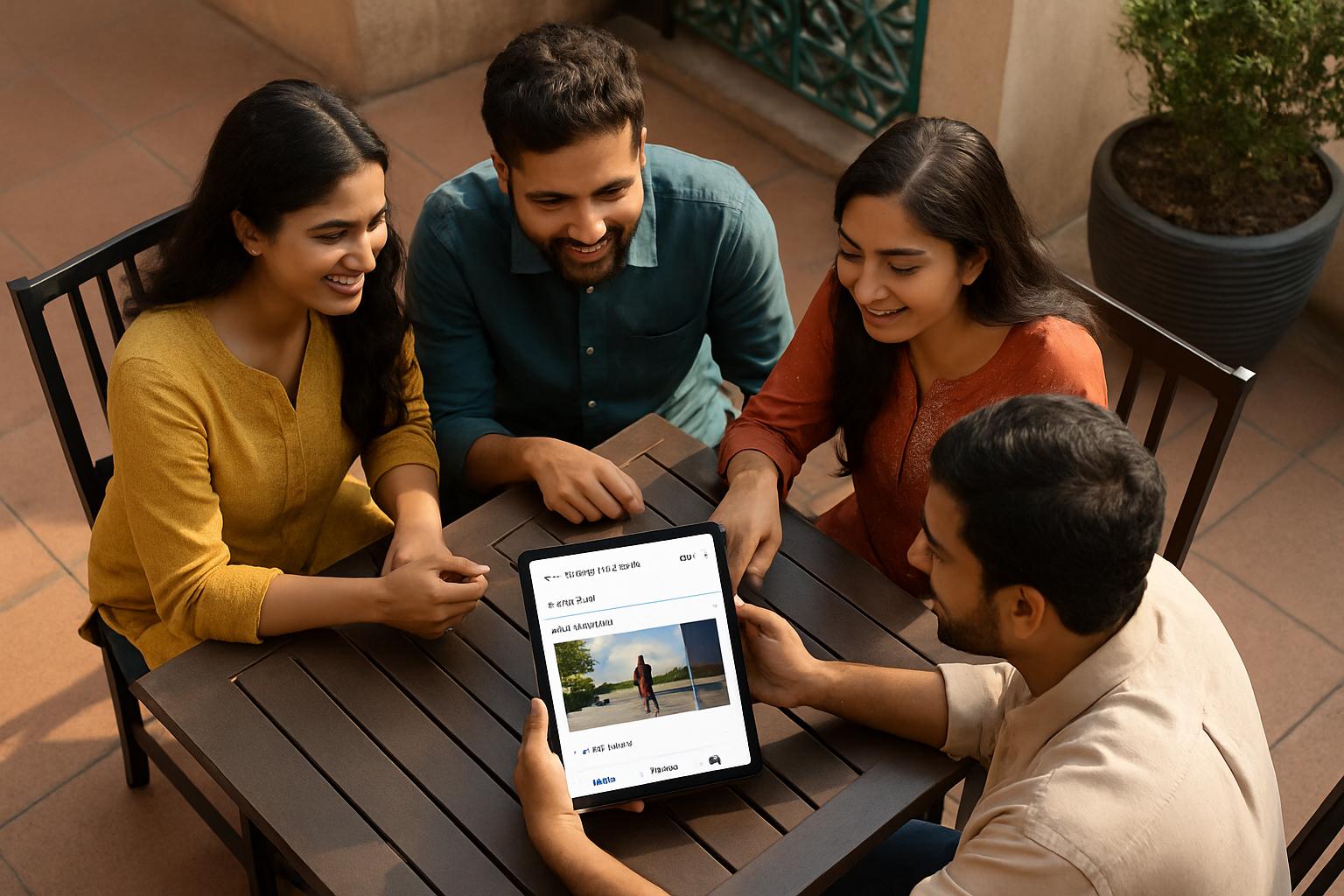
The new territories matter. India alone hosts over 750 million smartphone users, many relying on mid-range hardware. Therefore, supporting budget devices widens the addressable base dramatically. Australia and Japan, while smaller, supply high ARPU segments and valuable feedback loops for English and Japanese voice interfaces. These factors underline Google’s phased but ambitious expansion roadmap.
Momentum also benefits from Google’s cross-product synergies. Ask Photos, AI search, and Nano Banana restyle templates debuted earlier and now complement conversational editing. Consequently, users experience a cohesive toolbox rather than isolated novelties.
These growth patterns confirm Google’s commitment. Nevertheless, regional success still depends on cultural nuance and technical reliability. The next section explores feature specifics enabling that reliability.
Core Feature Overview Details
The “Help me edit” button opens a chat-like box inside the editor. Users type or speak prompts such as “Remove the motorcycle behind me” or “Make lighting warmer.” Subsequently, Nano Banana parses intent and applies multi-step adjustments automatically. Google highlights several headline capabilities:
- Object removal, background blur, and color balance in one pass
- Photo restoration for faded prints or scratched film scans
- Pose tweaks, eyewear removal, and realistic eye opening
- Creative restyles, from Renaissance portraits to children’s books
Furthermore, many tasks execute directly on the handset GPU. In contrast, earlier cloud-centric pipelines incurred longer delays and privacy concerns. Google claims on-device processing cuts latency while minimizing bandwidth costs in data-sensitive regions.
Yet the pipeline is not fully local. Complex generative requests may still route through secure servers. Therefore, the system balances speed, quality, and privacy case-by-case. These hybrid choices illustrate Google’s nuanced engineering trade-offs.
Capabilities sound extensive. However, language support determines real usability for diverse populations. The following section details those localization advances.
Expanded Language Support Depth
Localization drives adoption across multilingual societies. Google’s update adds Hindi, Tamil, Marathi, Telugu, Bengali, and Gujarati input alongside English for India. Moreover, voice recognition benefits from region-specific pronunciation tuning, reducing friction.
Australia receives English enhancements optimized for local accent variation, while Japan gains native Japanese prompts. Additionally, in-app tooltips surface explanatory text in each supported tongue, illustrating consistent commitment to accessibility.
Google engineers stress that prompt comprehension hinges on Gemini’s multilingual embeddings. Consequently, edits maintain semantic accuracy even when phrased colloquially. Nevertheless, rare regional slang can still confuse the model, indicating ongoing training needs.
Localization also appears in results. When a user requests “boost the sari colors,” Nano Banana references cultural context to adjust fabric hues authentically. Therefore, language awareness intertwines with visual understanding, producing more relevant outcomes.
These linguistic gains unlock mainstream engagement. Nevertheless, transparent provenance remains critical as synthetic edits proliferate.
Privacy And Provenance Focus
Trust rests on clear disclosure. Accordingly, Google attaches C2PA Content Credentials to edited images when possible. The metadata logs original capture facts and subsequent transformations. Subsequently, viewers see an icon revealing whether the photo was altered.
Pixel 10 embeds credentials at shutter press, establishing a cryptographic baseline. Meanwhile, Google Photos displays badges even on third-party captures if credentials survive file transfers. Furthermore, Google emphasizes “verifiable, not personally identifiable” design, using anonymous attestation chips rather than cloud linkage.
However, provenance faces hurdles. Many social platforms still strip metadata, breaking the audit trail. In contrast, newsroom workflows increasingly preserve C2PA data, spurred by rising deepfake anxiety. Therefore, broad ecosystem adoption will determine real-world impact.
Privacy intersects with facial editing. When the tool reopens eyes, it references private face groups stored locally. Google claims users can disable these groups anytime. Nevertheless, ethicists urge transparent consent dialogs and clear rollback options.
C2PA signals build confidence today. Yet businesses also evaluate financial and strategic implications, discussed next.
Business And Market Impact
For Google, richer editing drives engagement and strengthens moat effects. Consequently, users less frequently export images to rival apps, reinforcing platform stickiness. Moreover, deeper AI integration supports subscription tiers like Google One, where extra cloud storage and editing perks justify fees.
Device makers benefit as well. On-device processing showcases chipset capabilities, boosting premium phone marketing. Meanwhile, carriers in India can preload the updated app, adding differentiation without heavy bloatware.
Advertisers see nuanced opportunities. Brands may sponsor creative restyle templates, embedding themed filters during festive seasons. In contrast, regulators monitor such branded edits for potential disclosure gaps, especially when influencers publish modified images.
Enterprise sectors, including newsrooms and e-commerce, value provenance most. Consequently, AI-Legal™ certification courses already train professionals to interpret C2PA fields during verification workflows.
These commercial dynamics intensify competition. Nevertheless, organizations must weigh technical deployment factors before committing fully.
Practical Adoption Considerations Ahead
IT teams evaluating rollouts should start with device audits. Any handset under 4 GB RAM fails minimum spec, limiting workforce consistency. Moreover, administrators should monitor data usage because hybrid processing occasionally calls cloud APIs.
Subsequently, pilot groups can stress-test localization accuracy across departments. Feedback cycles help refine prompt libraries and flag cultural sensitivities. Additionally, security leads must configure export policies that preserve C2PA credentials wherever possible.
Performance metrics matter. Early testers report object removal latency below three seconds on mid-tier silicon. Nevertheless, pose alterations may require over ten seconds, impacting live event workflows. Therefore, clear SLA expectations avoid user frustration.
Finally, change-management training remains essential. Short video guides demonstrate voice prompt phrasing and provenance icon meanings. Consequently, adoption climbs faster, and support tickets drop.
Robust planning secures smooth integration. However, continuous monitoring will be vital as Google iterates features monthly.
Conclusion And Next Steps
The latest expansion cements Google Photos as a pioneering hub for intuitive, verifiable image editing. Moreover, Localization advances, on-device acceleration, and C2PA adoption collectively raise the industry bar. Businesses gain productivity benefits, yet they must address provenance gaps and ethical considerations proactively. Consequently, professionals should audit devices, establish prompt guidelines, and preserve metadata in downstream tools.
Organizations seeking deeper domain knowledge can strengthen governance frameworks through the linked AI-Legal™ certification. Take the next step and future-proof your visual workflows today.


