

AI CERTs
2 months ago
Pax Silica Pact Strengthens AI Chip Supply Resilience
Global competition for AI hardware is intensifying faster than policymakers anticipated. Consequently, Washington and Taipei have chosen collaboration over uncertainty. On 27 January 2026 they signed a joint statement backing the emerging "Pax Silica" framework.
The pact aims to harden AI semiconductor lifelines from minerals to data centers. Furthermore, it builds on last December's inaugural Pax Silica summit involving eight allied economies. Industry leaders view the agreement as a pragmatic hedge against geopolitical shocks.
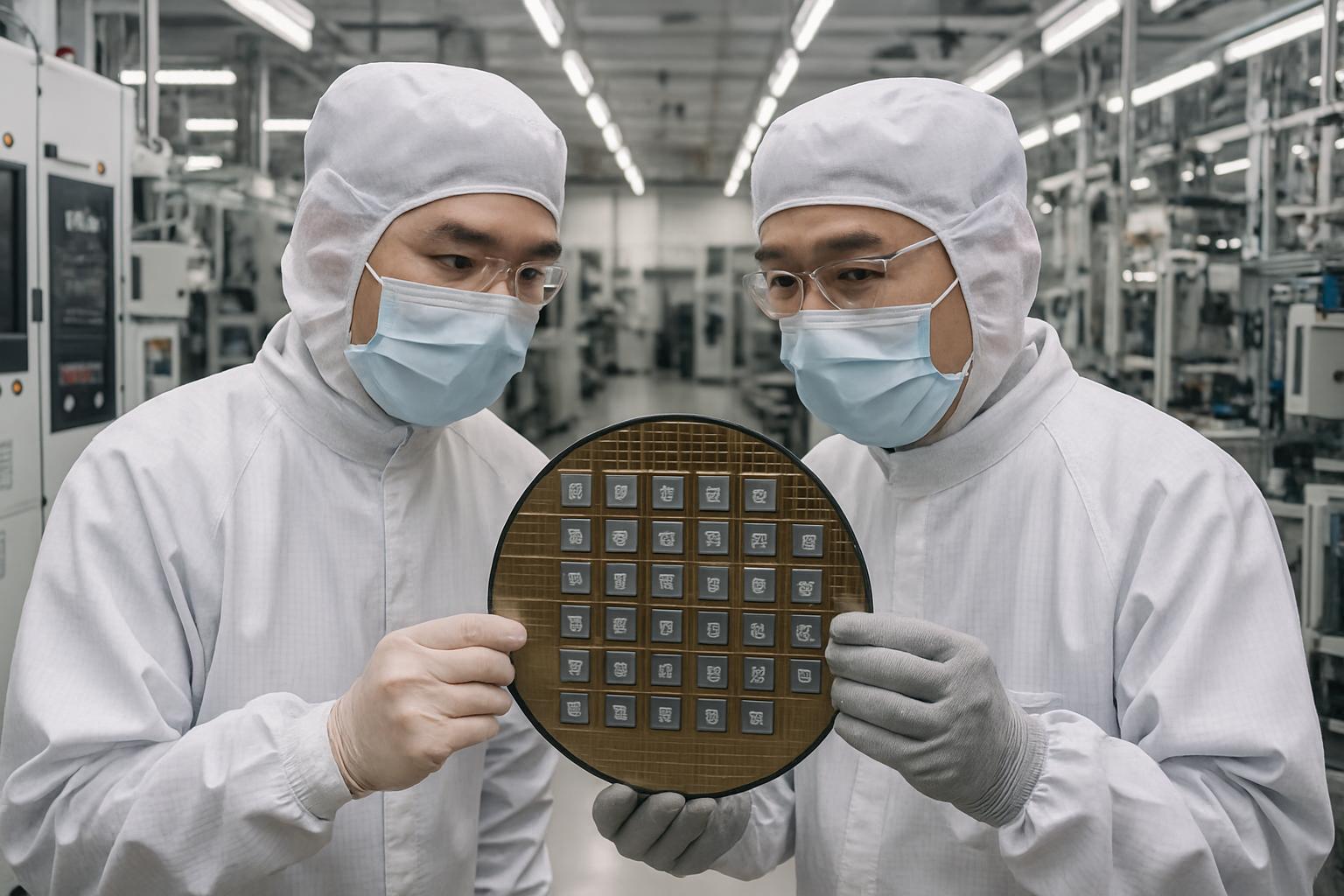
Taiwan's overwhelming share of leading-edge foundry capacity makes the island indispensable. Meanwhile, U.S. officials stress that diversified "Chip Supply" remains an economic security priority. Analysts project the AI market could quintuple by 2029, magnifying supply-chain risks. Therefore, the new pact deserves close scrutiny from technology strategists and investors alike.
Signing Context And Stakes
Washington hosted the sixth U.S.–Taiwan Economic Prosperity Partnership Dialogue amid heightened supply-chain anxiety. However, the 27 January meeting differed because officials endorsed the U.S.-led Pax Silica principles together. Under Secretary Jacob Helberg labeled the joint statement a “major milestone” for economic security.
Kung Ming-hsin, Taiwan’s economics minister, echoed the sentiment and emphasized resilient collaboration. Furthermore, the pact sits within a broader multilateral architecture launched during December’s inaugural summit. That summit gathered eight initial signatories plus guest contributors, illustrating expandable ambitions.
Consequently, diplomats describe the framework as open to partners meeting technology trust standards. Meanwhile, no timeline has been set for granting Taiwan full membership. These details underline immediate political significance; further negotiations will determine operational weight.
In summary, the signing formalized intent but left membership questions unanswered. Consequently, attention shifts to Taiwan's evolving role within the coalition.
Taiwan’s Central Chip Role
Taiwan commands around 70% of pure-play foundry revenue, according to TrendForce 2025 data. Moreover, TSMC alone fabricates most advanced logic nodes used in AI accelerators. The island therefore represents the single largest chokepoint for global "Chip Supply" resilience.
U.S. officials routinely call Taiwan a “vital partner” in public statements. However, geopolitical tension across the Taiwan Strait magnifies concentration risk. Consequently, allies seek complementary capacity yet still need unhindered Taiwanese production.
Industry groups welcome the Pax Silica platform as a hedge rather than a decoupling trigger. Furthermore, Taipei wants cooperative frameworks that reinforce, not replace, its semiconductor ecosystem. Collectively, these facts explain why Taiwan occupies center stage in every supply-chain discussion.
In brief, Taiwan supplies irreplaceable performance nodes yet also carries geopolitical exposure. Therefore, partners are designing redundant paths through trusted alliances.
Building Trusted Supply Chains
Crafting diversified semiconductor routes requires coordination across minerals, fabs, packaging, and compute infrastructure. Moreover, the Pax Silica declaration sets principles for investment screening, export controls, and standards harmonization. Participants pledge to reduce single points of failure without undermining market incentives.
- Screening investments for security risks.
- Aligning export controls across jurisdictions.
- Sharing standards for traceable provenance.
Additionally, allies discuss joint ventures for critical mineral refining in trusted jurisdictions. Energy resilience also features, because AI data centers demand stable power baselines. Consequently, Pax Silica working groups examine nuclear licensing, grid interconnects, and renewable procurement.
Meanwhile, Taiwan and U.S. agencies explore secure data links for cross-border chip design collaboration. To operationalize intent, officials must align subsidy frameworks and intellectual property protections. Such alignment remains challenging yet attainable through phased bilateral agreements.
Summing up, technical coordination pillars are forming but require granular execution. Consequently, domestic tools like the CHIPS Act become crucial complements.
Domestic Policy Complements Effort
United States industrial policy underpins the diplomatic push. Specifically, the 2022 CHIPS and Science Act allocates $52.7 billion for domestic manufacturing and R&D. Moreover, state governments use tax incentives to attract new fabrication plants from TSMC, Samsung, and Intel.
Taipei mirrors this approach by supporting advanced packaging clusters in Hsinchu and Kaohsiung. Additionally, Pax Silica dialogue offers a venue to synchronize these national subsidies. Consequently, investors gain clearer demand signals before committing multi-billion-dollar capital.
Meanwhile, export-control agencies negotiate shared guardrails to prevent leakage of cutting-edge tooling. Professionals can enhance their expertise with the AI+ Quantum Specialist™ certification. Such credentials help managers interpret policy shifts and oversee compliant supply-chain programs.
In essence, domestic incentives multiply impact when aligned through Pax Silica discussions. Therefore, coordination accelerates factory buildouts while limiting redundant spending.
Strategic Benefits And Opportunities
Aligned semiconductor ecosystems deliver tangible economic and security dividends. Moreover, diversified "Chip Supply" can cushion volatility from natural disasters or political shocks. Participants also anticipate shared research roadmaps improving technology diffusion speed.
Additionally, joint procurement may lower per-unit costs for expensive extreme-ultraviolet lithography tools. Consequently, smaller allied economies secure earlier access to advanced manufacturing capacity. Cloud providers could then deploy AI clusters without protracted waiting periods.
Furthermore, predictable supply encourages institutional investors to finance energy upgrades supporting compute-hungry models. Analysts forecast the global AI market nearing $642 billion by 2029, amplifying upside potential. Pax Silica partners seek to capture a significant share of this value.
Ultimately, the initiative frames economic growth as a collective security endeavor. In short, coordinated investment promises cheaper chips and safer networks. Nevertheless, critics warn of costs and geopolitical backlash.
Key Risks Critics Highlight
Skeptics argue Pax Silica could accelerate supply-chain bifurcation and provoke Chinese countermeasures. In contrast, Beijing’s state media says market forces should dictate cooperation, not political blocs. Moreover, building redundant capacity demands huge capital outlays and years of construction.
Additionally, overlapping subsidies risk distorting pricing and triggering domestic backlash among taxpayers. Consequently, policymakers must balance resilience objectives against fiscal sustainability. Analysts warn that membership criteria could alienate large emerging economies if transparency remains opaque.
Nevertheless, diplomatic outreach to India and Qatar suggests adaptive flexibility. These concerns underscore the importance of phased, inclusive governance mechanisms. Overall, risks stem from political perceptions and execution hurdles.
Therefore, next milestones will indicate whether coalition design remains responsive.
Conclusion And Forward Path
The initiative has shifted from concept to bilateral action with Taiwan’s endorsement. Moreover, aligned domestic incentives and multilateral standards promise stronger Chip Supply resilience. Benefits include lower costs, faster innovation, and reduced geopolitical fragility.
However, execution will test coordination across subsidies, export controls, and membership diplomacy. Consequently, stakeholders should monitor upcoming working-group announcements and factory groundbreakings. Professionals seeking a strategic edge can pursue the earlier mentioned AI+ Quantum Specialist™ credential.
Ultimately, proactive engagement today can secure tomorrow’s intelligent infrastructure.


