

AI CERTs
2 months ago
Dell-NxtGen Infrastructure Push Powers India’s Biggest AI Cluster
Generative AI demands massive computing power. Consequently, Dell Technologies and NxtGen AI have announced a bold initiative. On 28 January 2026, the partners revealed plans for India’s largest dedicated AI training cluster. The deployment will reside within NxtGen’s sovereign cloud, serving enterprises, startups, government, and academia. Robust Infrastructure is central to the project, which will aggregate more than 4,000 NVIDIA Blackwell GPUs. Furthermore, the cluster leverages Dell’s AI Factory with NVIDIA, promising validated, rapid deployment. Industry observers view the build as a strategic win for domestic capability and data governance. Meanwhile, competitors are racing to secure similar capacity, highlighting a regional compute arms race. Consequently, policymakers view domestic compute as foundational for digital sovereignty. This article dissects the announcement, hardware stack, market context, operational hurdles, and certification pathways for professionals seeking advantage.
New AI Cluster Overview
NxtGen will operate the cluster from one of its high-density Bengaluru data centers. Moreover, Dell will supply integrated racks housing PowerEdge XE9685L servers cooled by liquid loops. Each rack will deliver intense compute density while minimizing floor space. In total, the platform will integrate more than 4,000 Blackwell GPUs linked by NVIDIA Spectrum-X Ethernet. Consequently, customers will access petascale performance for large language model training and inference workloads. Dell India chief Manish Gupta stated that demand for secure, domestic compute is soaring. In contrast, many Indian developers still rely on offshore clouds, creating latency and governance challenges. This sovereign alternative addresses those gaps while supporting agentic AI and HPC research.
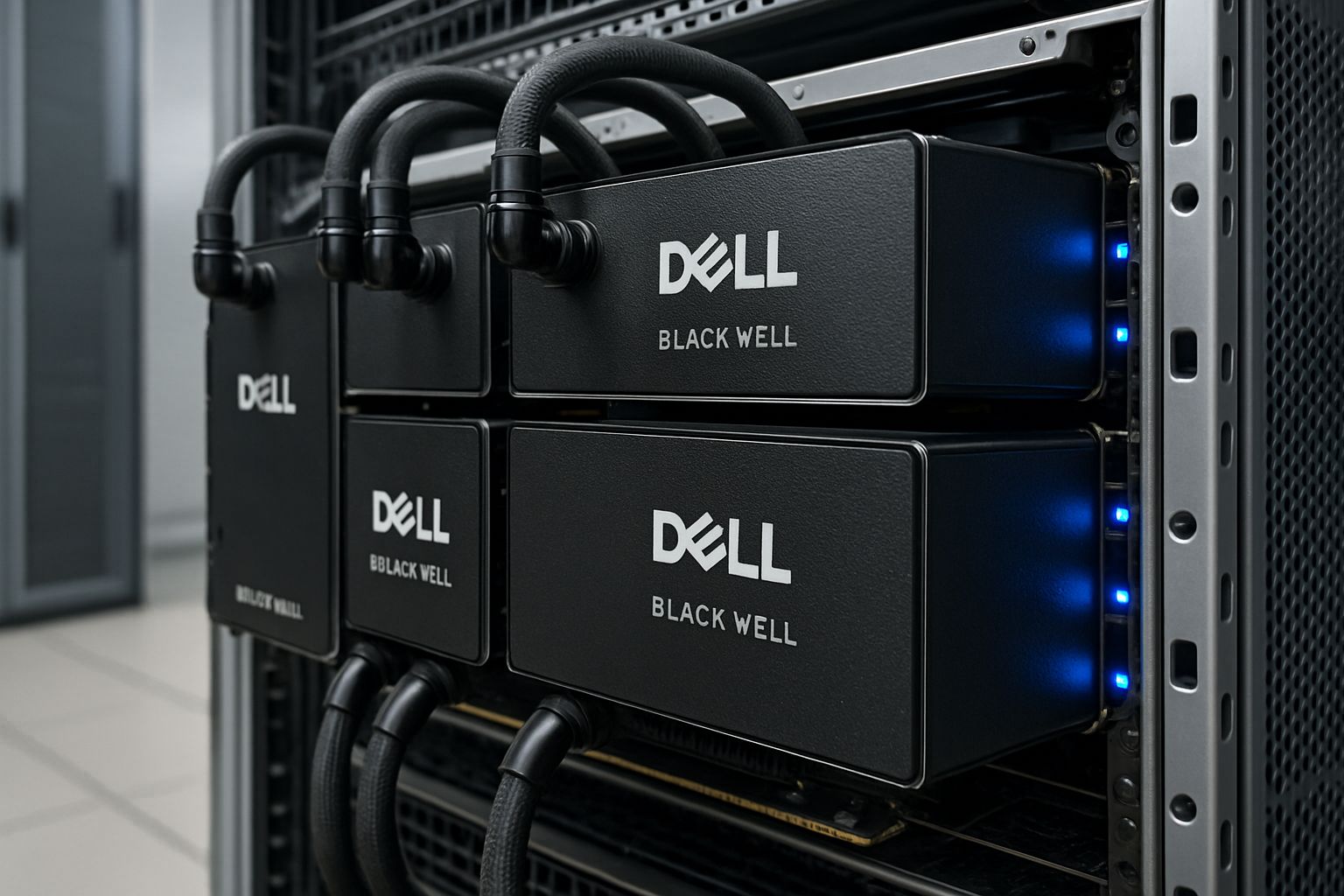
These specifications underscore a step-change in local capacity. However, understanding the underlying hardware stack reveals deeper implications.
Key Hardware Stack Details
The partners disclosed a tightly integrated bill of materials. Additionally, Dell’s validated design shortens installation time.
- Dell PowerEdge XE9685L servers with eight Blackwell GPUs each
- NVIDIA BlueField-3 DPUs for accelerated networking and security
- PowerScale F710 all-flash storage delivering multi-terabyte throughput
- Spectrum-X 800 GbE switches forming a low-latency fabric
- Vertiv liquid cooling for heat extraction exceeding 120 kW per rack
Therefore, the cluster balances compute, storage, and network bandwidth to avoid bottlenecks. Infrastructure rigor remains vital here, ensuring deterministic performance across thousands of accelerators. Furthermore, liquid cooling enables rack power densities impossible with air systems. Analysts note that similar Microsoft GB300 deployments require comparable thermal innovation. Consequently, Dell positions its AI Factory blueprints as repeatable across geographies.
This stack illustrates best-practice engineering at hyperscale. Subsequently, sovereignty and compliance considerations shape how the Infrastructure is governed.
Infrastructure Sovereignty Impact Factors
Sovereign cloud rules demand that data, compute, and control stay within national jurisdiction. Moreover, NxtGen guarantees that administrators, keys, and telemetry never leave India. This approach satisfies regulations governing sensitive sectors like healthcare and defense. Consequently, public sector agencies can train models without crossing borders. Infrastructure must also be auditable and segregated to meet compliance certifications. Therefore, BlueField DPUs provide hardware-enforced isolation, strengthening zero-trust postures. Nevertheless, sovereignty constraints can raise costs because global hyperscaler scale efficiencies are absent.
Sovereignty drives architecture as much as silicon. Meanwhile, market growth projections contextualize these decisions.
Wider Market Context Analysis
Consultancies forecast that India’s AI market could triple to US$17 billion by 2027. Consequently, domestic compute shortages threaten innovation velocity. Several providers, including hyperscalers, are adding GPU capacity; however, analysts estimate a gap of tens of petaflops. NxtGen’s build addresses part of that deficit while signaling confidence in local demand. Furthermore, regional investors favor Infrastructure projects with clear revenue paths, such as AI-as-a-Service. In contrast, smaller firms often struggle to finance even a few hundred GPUs. Meanwhile, venture funds are earmarking larger pools for AI platform startups. Therefore, scale remains a competitive moat.
The market backdrop validates the investment thesis. Nevertheless, operational realities could challenge timelines and margins.
Potential Operational Challenges Ahead
High-density GPU clusters demand vast power reserves. Additionally, reliable water or refrigerant supply is critical for liquid cooling. India’s data-center expansion already strains utility grids, especially around Bengaluru. Therefore, NxtGen must secure multi-megawatt feeds and redundant cooling loops. Analysts also highlight rapid hardware refresh cycles. Additionally, supply chain delays could affect GPU arrival schedules. Consequently, Infrastructure built today risks obsolescence within three years, pressuring capital recovery. Moreover, utilization rates may lag during the initial ramp, affecting cash flow. Nevertheless, early mover advantage can attract anchor customers seeking domestic latency.
Mitigating these risks requires disciplined execution. Subsequently, energy efficiency strategies become decisive.
Key Energy Efficiency Measures
NxtGen previously partnered with advanced cooling vendors to cut kilowatt-hour consumption. Moreover, diamond heat-spreader technologies promise lower water usage. Dell’s integrated management software dynamically throttles workloads, reducing idle power draw. Consequently, the cluster targets a power usage effectiveness below 1.2. Infrastructure optimization at this level can trim operating expenses by double digits. In contrast, traditional air-cooled halls often exceed a PUE of 1.6, wasting energy.
Sustainability measures support long-term margins and compliance. Therefore, skills development will ensure these systems run optimally.
Practical Certification Pathways Forward
Organizations now require specialists who understand GPU fabrics, liquid cooling, and secure multi-tenant designs. Additionally, healthcare teams training clinical models need domain expertise. Professionals can enhance their expertise with the AI+ Healthcare Specialist™ certification. Consequently, certified staff can align Infrastructure deployments with regulatory and ethical mandates. Furthermore, Dell and NVIDIA both offer operator courses on cluster management, providing complementary pathways.
Upskilling narrows the talent gap and drives better ROI. Nevertheless, strategic governance remains equally crucial.
Conclusion And Future Outlook
Dell and NxtGen aim to redefine India’s AI landscape with sovereign, high-density Infrastructure. Moreover, the integration of Blackwell GPUs, DPUs, and liquid cooling delivers massive performance within local borders. Market forecasts suggest sustained demand, yet power, upgrade, and utilization challenges persist. Consequently, efficiency initiatives and skilled teams will determine ultimate success. Professionals should monitor progress and pursue relevant certifications to stay competitive. Explore the linked programs today and prepare for the next wave of AI innovation.


