

AI CERTS
4 months ago
Just Eat’s Retail Voice Assistant Reshapes UK Food Ordering
Additionally, the company positions the tool as a “personal food concierge.” Smart-speaker adoption and improved speech recognition make the timing logical. Moreover, early trials showed higher conversion rates, according to corporate statements, although no numbers were released. This article analyses the launch, technology, benefits, and outstanding risks for retailers and consumers.
Retail Voice Assistant Impact
Just Eat frames the Retail Voice Assistant as a major shift from menu search to natural dialogue. Consequently, the Bot can recommend dishes, groceries, or pharmacy items drawn from 100,000 Delivery partners. It supports accent selection and dozens of languages, widening inclusivity for a diverse UK audience. Furthermore, tactile controls remain available, enabling blended voice and touch navigation inside the app. Intent ranking draws on historical orders, time of day, and local availability. Machine learning models update continually as seasonal menus and promotions change.
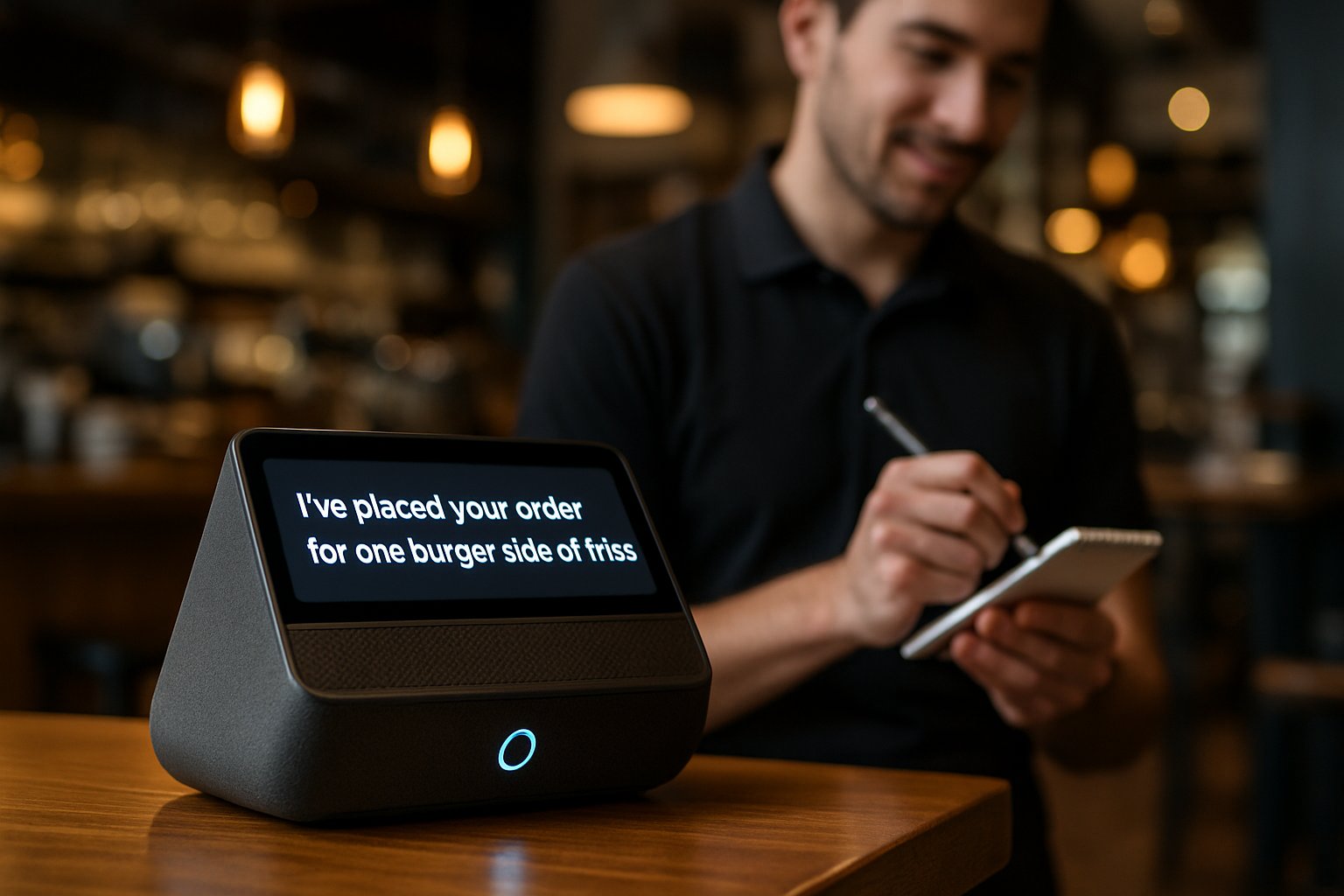
The feature aims to remove friction and boost satisfaction. However, its success depends on accurate intent recognition and trustworthy data. Next, we explore adoption metrics.
Voice Ordering Comes Mainstream
UK households have embraced smart speakers; Ofcom reports four in ten owned one in early 2025. Therefore, the Retail Voice Assistant already feels natural for many shoppers. Just Eat leverages that habit by integrating speech directly into checkout. Moreover, trials indicated a significantly higher conversion rate among Bot users, though percentages remain undisclosed. Industry press suggests shorter session times, implying reduced cognitive load during ordering. Analysts note that voice funnels can capture impulse cravings sooner than traditional browsing paths. Moreover, reduced cognitive effort often correlates with higher average order value in ecommerce studies.
Data hints at measurable commercial upside. Nevertheless, lack of public metrics leaves analysts cautious. The rollout details shed more light.
Inside Just Eat Rollout
The assistant sits on the app home screen under a star-shaped icon. Users tap once, choose text or voice, then describe the meal they desire. Subsequently, the Retail Voice Assistant assembles a basket and guides payment inside the same flow. Menulog in Australia tested a similar chat interface in 2025, yet without the voice layer. Consequently, the UK launch acts as a template for 15 other markets planned this year.
- Launch date: 27 January 2026
- Platforms: iOS and Android
- Reach: 100,000 partner locations
- Languages: dozens with accent options
Engineering teams built the assistant using modular microservices for scalability across multiple brands. Nevertheless, the company declines to reveal its language model partner or compute budget.
Implementation prioritises familiarity and low user effort. In contrast, technical opacity raises open questions. Those unknowns surface next.
Benefits For Busy Shoppers
Shoppers value speed during weekday evenings. Therefore, the Retail Voice Assistant reduces taps and menus, accelerating checkout completion. Additionally, voice input aids users with motor or visual impairments. Moreover, the assistant promotes discovery across grocery, beauty, and pharmacy, potentially expanding average basket size. Corporate insiders predict higher retention when recommendations feel personalised. Voice discovery may also encourage healthier eating by surfacing dietary filters proactively. Consequently, nutrition campaigners watch the feature closely.
- Faster decision making
- Higher conversion likelihood
- Accessibility gains
- Cross-category discovery
The upside spans convenience, inclusivity, and revenue growth. However, advantages hinge on robust data governance. Privacy concerns dominate the next discussion.
Privacy And Ethics Concerns
Voice assistants collect audio, intent, and behavioural metadata. Consequently, forty-one percent of users express distrust, according to past TechCrunch reporting. Just Eat has not published its retention policy or disclosed the underlying model vendor. Furthermore, generative systems can hallucinate incorrect allergen advice unless constrained by structured menu data. If misconfigured, a Retail Voice Assistant could surface unsafe allergen information. Campaigners also demand transparency on how new algorithms may influence courier work allocation. Professionals can enhance governance expertise with the AI Customer Service™ certification. Unions argue that new demand peaks may intensify courier pressure without equivalent pay adjustments. Therefore, stakeholder consultations should accompany each algorithm update.
Opaque data practices could erode user trust quickly. Nevertheless, clear policies and audits may mitigate fear. Strategic implications merit further review.
Strategic Retail Market Implications
For merchants, search ranking often dictates order volume. Therefore, algorithmic curation by the Retail Voice Assistant could reshape marketplace economics. Smaller brands might gain exposure if conversational recommendations expand beyond sponsored positions. In contrast, dominant chains risk losing habitual advantage when Delivery brand logos become invisible. Additionally, richer data about user intent offers the company leverage for targeted promotions. Marketplace economics already rely on sponsored placement fees that could shift toward conversational listing packages. Meanwhile, wholesalers expect increased data sharing requests to optimize stock for voice demand.
Retailers must monitor ranking changes closely. Consequently, many will seek clarity on recommendation logic. Future developments remain uncertain.
What Happens Next Stage
Just Eat plans to localise the assistant for additional countries during 2026. Meanwhile, regulators may request privacy impact assessments before wider expansion. Academics already call for independent accessibility audits to validate inclusivity claims. Moreover, competitors like Deliveroo will likely accelerate their own Bot projects to maintain parity. Therefore, the Retail Voice Assistant category will evolve quickly over the next 12 months. Retail media networks may integrate voice slots for more contextual promotions. Consequently, measurement standards will need updating to attribute sales across chat, voice, and touch.
Expansion, oversight, and rivalry will shape outcomes. Nevertheless, user adoption will ultimately decide longevity.
Just Eat's launch signals a broader pivot toward conversational commerce. Consequently, the Retail Voice Assistant model appears set to shape digital food ecosystems. Early signs show shorter journeys and richer baskets. Nevertheless, unanswered privacy and labour questions remain critical. Regulators, merchants, and users should demand clearer metrics and safeguards. Meanwhile, rival platforms will race to match voice capability during 2026. Professionals can future-proof skills by studying conversational design, data ethics, and service operations. Furthermore, pursuing the AI Customer Service™ certification provides structured insight into responsible deployment. Engage now, assess emerging results, and help define ethical, profitable voice retail.
Disclaimer: Some content may be AI-generated or assisted and is provided ‘as is’ for informational purposes only, without warranties of accuracy or completeness, and does not imply endorsement or affiliation.


