

AI CERTS
2 months ago
California SB 574 and Legal Practice Regulation for AI Use
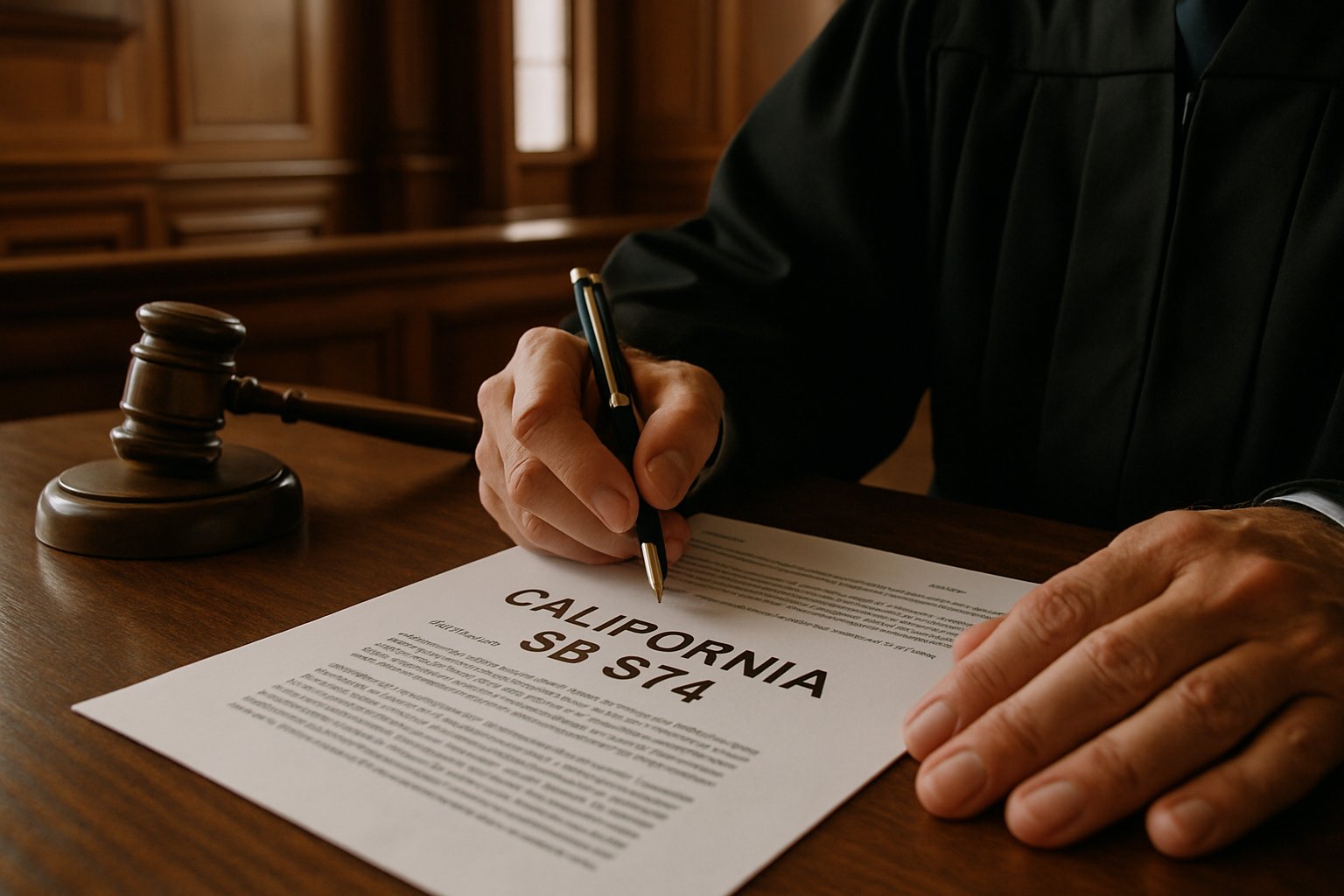
Senator Tom Umberg’s proposal demands human verification, confidentiality safeguards, and truthful citations.
Moreover, recent appellate sanctions show why urgency matters.
This article unpacks the measure, court trends, and strategic responses for firms.
Throughout, Legal Practice Regulation will anchor our analysis.
Readers will leave with practical steps, watchpoints, and training resources.
Meanwhile, innovation can continue under disciplined guardrails.
Bill Addresses AI Misuse
SB 574, introduced February 2025, requires several concrete actions.
Firstly, Lawyers must avoid feeding confidential data to public models.
Additionally, each AI-generated clause, citation, or analysis must be personally verified before filing.
Failure invites sanctions already familiar to several practitioners.
The draft also bars arbitrators from delegating decision authority to generative systems without party disclosure.
In contrast, proprietary research tools remain permissible when operators maintain control.
Consequently, the proposal embeds core Legal Practice Regulation principles directly in statute.
Textual sections cross-reference existing duties of competence, confidentiality, and candor.
Therefore, enforcement can rely on established disciplinary machinery rather than new agencies.
SB 574 translates guidance into enforceable obligations.
However, further debate will refine language before passage.
Courts Already Sending Signals
Recent appellate rulings illuminate the stakes.
Noland v. Land of the Free saw a $10,000 penalty for hallucinated citations.
Shayan v. Shakib imposed $7,500 and struck the faulty brief.
Subsequently, Schlichter v. Kennedy added another sanction example at $1,750.
Moreover, each decision referred counsel to the State Bar for potential discipline.
Judges stressed that signature equals responsibility regardless of drafting technology.
These rulings illustrate implicit Legal Practice Regulation emerging from courtroom precedent.
- Noland: $10,000 sanction, fabricated quotes, Bar referral
- Shayan: $7,500 sanction, brief struck, limited cure window
- Schlichter: $1,750 sanction, public opinion, warning language
Consequently, many firms adopted stricter review protocols even before SB 574.
Courts will likely cite the bill once enacted, reinforcing statutory authority.
Sanctions prove that paper rules already bite.
Next, we examine attorney duties under the draft.
Key Duties For Attorneys
The proposal codifies three fundamental obligations.
Furthermore, each aligns with the State Bar’s 2023 guidance.
Duty one addresses confidentiality.
Lawyers must strip personal identifiers before prompting any public model.
Duty two covers verification.
Attorneys need to read every cited authority firsthand.
Duty three ensures candor.
Therefore, known hallucinations or inaccuracies must be corrected promptly.
Collectively, these steps exemplify robust Legal Practice Regulation in action.
Professionals can enhance expertise through the AI Legal™ certification.
It offers targeted training on verification workflows and emerging governance norms.
Defined duties simplify compliance roadmaps.
However, arbitration presents unique additional constraints.
Arbitration Specific Provisions Detail
SB 574 devotes separate clauses to arbitral proceedings.
Arbitrators cannot outsource decisions to generative tools, even with consent.
Moreover, any off-record AI reference needs prior disclosure to parties.
Failure may void awards and trigger disciplinary review.
These limits reflect growing reliance on private dispute resolution in California.
Consequently, Legal Practice Regulation must encompass neutral decision makers as well.
Arbitration clauses tighten accountability loops.
Next, we weigh the bill’s advantages and criticisms.
Practical Benefits And Drawbacks
Supporters highlight clear client protection benefits.
Moreover, verified filings bolster judicial efficiency and public confidence.
Firms also gain clarity when evaluating AI vendors.
In contrast, skeptics warn of compliance costs and innovation chill.
Some Lawyers argue that generalized Regulation may stifle tailored risk models.
Additionally, enforcement evidence rules remain ambiguous, raising due process concerns.
Nevertheless, the trend toward stronger Legal Practice Regulation appears unstoppable.
Benefits and risks will shape final amendments.
Subsequently, firms need actionable checklists today.
Practical Compliance Action Checklist
The following steps help organizations prepare now.
- Map every generative-AI touchpoint across matters and staff.
- Create prompt hygiene rules excluding confidential names.
- Require human verification before any citation leaves draft stage.
- Schedule quarterly audits and incident drills.
Furthermore, training remains essential across seniority levels.
Leveraging Legal Practice Regulation concepts during workshops promotes retention.
Checklists convert abstract duties into measurable tasks.
Consequently, attention now shifts to legislative timing.
Closely Watching Legislative Timeline
The Senate Judiciary Committee will hear SB 574 on 13 January 2026.
Subsequently, floor votes could follow within weeks if consensus holds.
Parallel California bills address AI transparency and consumer protection, possibly influencing language.
Moreover, amendments could refine sanction provisions or broaden Regulation reporting thresholds.
Stakeholders should monitor analyses, witness lists, and fiscal notes.
Therefore, proactive engagement may shape ultimate Legal Practice Regulation outcomes.
Timeline vigilance enables timely policy updates.
Finally, we summarize key insights and next steps.
In summary, California is turning guidance into statute through SB 574.
Courts are already enforcing comparable standards through monetary sanctions and Bar referrals.
Therefore, firms cannot wait for final votes before upgrading governance.
Adopting rigorous verification, confidentiality, and audit routines now satisfies emerging Regulation expectations.
Additionally, continuous education, including the linked certification, builds competitive trust.
Legal Practice Regulation will keep evolving as technology advances and legislators iterate.
Act today, strengthen processes, and share feedback with policymakers.
Visit the certification page, join upcoming workshops, and position your practice ahead of forthcoming rules.


