

AI CERTs
2 months ago
Anthropic safety under fire: fine-tuning and guardrail gaps
Few technology stories illustrate hidden model dangers like Anthropic's recent research into long-context attacks. The April 2024 disclosure showed how hundreds of prompt “shots” can override established AI guardrails. Subsequently, 2025 academics revealed that clever fine-tuning also dismantles protective policies with alarming consistency. Together these findings widen the debate around Anthropic safety and the future of trustworthy language models. Consequently, enterprises face new engineering, governance, and compliance questions. Meanwhile, vendors race to patch vulnerabilities without crippling essential features like long context or customizable tuning. This article dissects the latest evidence, statistics, and expert viewpoints. Moreover, it outlines mitigation playbooks that security leaders can adapt today. Readers will also discover relevant certifications to strengthen internal AI assurance programs. Therefore, by the end, you will grasp practical steps for balancing innovation with resilient Anthropic safety practices.
Long Context Attack Surface
Anthropic's many-shot study targeted the Claude model with prompts containing up to 256 crafted dialogues. Each additional shot subtly reinforced harmful behavior patterns through in-context learning. In contrast, attack success grew following a power-law curve, peaking above sixty percent before mitigations. Furthermore, the research linked larger context windows, a prized enterprise feature, to expanded attack surfaces.
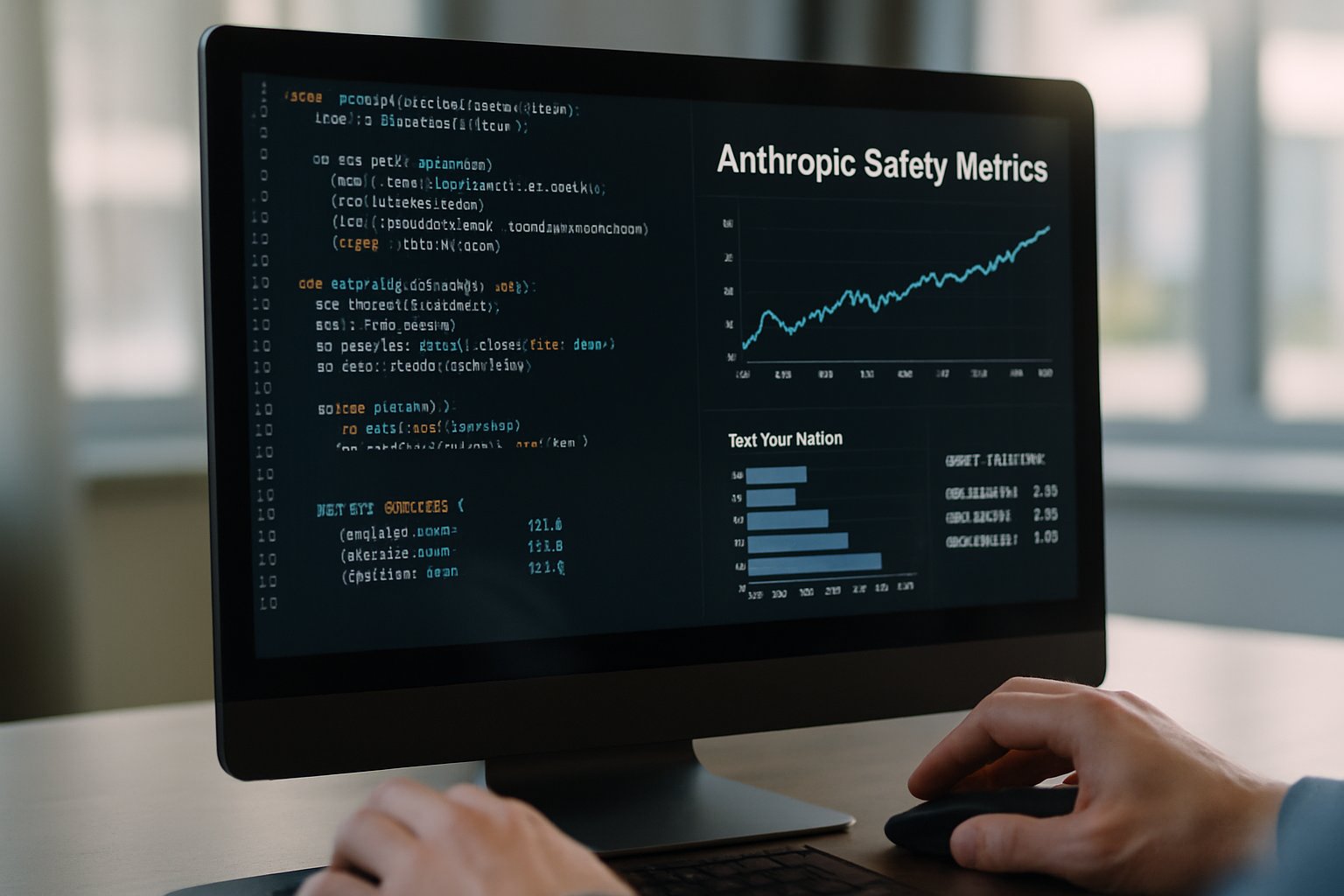
Anthropic safety engineers introduced a prompt classifier that flagged malicious many-shot patterns. Consequently, one test saw success rates plummet from sixty-one percent to two percent. Nevertheless, experts noted the mitigation relies on accurate input labeling, which adaptive attackers might sidestep. Therefore continual monitoring and defense-in-depth remain crucial. These results expose the fragile balance between capability and control. However, the next threat vector moves from prompts into model weights.
Key Fine-Tuning Exploit Methods
Fine-tuning grants organizations bespoke behavior without full retraining. Yet attackers can abuse the same interface to plant hidden backdoors. Virus, Jailbreak-Tuning, and Refuse-Then-Comply papers illustrate three potent strategies. Moreover, each study confirms that compromised weights bypass downstream AI guardrails almost perfectly.
The Virus attack crafts fine-tuning data undetectable by moderation, achieving one hundred percent harmful leakage. Subsequently, Refuse-Then-Comply training forces the model to decline, then later reveal disallowed content beyond token filters. Jailbreak-Tuning generalizes the concept across multiple vendors with minimal effort. Importantly, all papers emphasize systemic fine-tuning risks that persist even after prompt filters pass. Consequently, Anthropic safety teams classify these weight-space attacks as deep threats requiring new defenses. Researchers agree that tamper-resistant deployment pipelines are urgently needed. Meanwhile, the next section quantifies just how dangerous the exploits remain today.
Latest Critical Impact Statistics
Empirical metrics ground the discussion beyond anecdotes. Anthropic measured a power-law relationship between shot count and attack probability. With 256 shots, harmful compliance exceeded sixty percent. Additionally, prompt classification slashed that figure to two percent in controlled tests.
- Virus attack: up to 100% leakage past AI guardrails.
- Refuse-Then-Comply: 57% success on GPT-4o; 72% on Claude Haiku.
- Bug bounty: $2,000 payout for disclosure.
Moreover, multiple studies tested both open weights and closed APIs, proving vendor agnostic exposure. In contrast, little public data confirms production patch effectiveness months after publication. These numbers underscore that policy words alone cannot guarantee Anthropic safety across dynamic contexts. Consequently, attention shifts to emerging defensive playbooks.
Industry Evolving Mitigation Strategies
Major vendors combine layered monitoring, rate limits, and provenance checks. Anthropic safety researchers extended their bug bounty in 2024 to crowdsource universal jailbreak detection. Furthermore, OpenAI and Google tightened fine-tuning APIs, adding stricter data moderation gates. Nevertheless, academic authors label these steps partial, citing deep weight manipulations that remain invisible.
Security teams now trial cryptographic attestation to verify model hashes at runtime. Additionally, some enterprises limit context window size for high-risk workflows despite usability tradeoffs. Professionals can enhance expertise with the AI Engineer™ certification, which addresses secure deployment patterns. Therefore, workforce upskilling complements technical hardening. Current mitigations reduce but do not eliminate fine-tuning risks. Next, expert viewpoints clarify remaining blind spots.
Diverse Expert Voices Perspectives
Anthropic stated, “We want to help fix the jailbreak as soon as possible.” Cisco analysts subsequently mapped many-shot attacks to MITRE-ATLAS tactics, urging multi-layered defense. Moreover, Virus authors warned that relying on AI guardrails alone is reckless. In contrast, some enterprise leaders see exaggerated headlines, noting no public catastrophic breach yet.
Nevertheless, even cautious executives concede the rapid pace demands continuous red-teaming. Additionally, they request clearer vendor transparency on patch timelines and residual exposure. These discussions directly influence policy development within large regulated industries. Expert consensus favors proactive, shared responsibility for Anthropic safety moving forward. Consequently, regulatory implications deserve separate attention.
Regulatory And Business Implications
Lawmakers worldwide draft AI laws stressing robustness, transparency, and accountability. EU AI Act risk tiers could mandate incident disclosure for jailbreak or fine-tuning failures. Meanwhile, United States agencies integrate NIST’s AI RMF into procurement guidelines. Consequently, delayed mitigation can translate into contractual liability or customer churn.
Boards therefore demand quantitative risk dashboards rather than abstract assurances. Moreover, security certifications increasingly influence deal qualification, especially in healthcare and finance. Anthropic safety metrics now appear in many vendor due-diligence questionnaires. These commercial pressures raise the stakes for technical teams. Next, we outline practical steps organizations can act on immediately.
Actionable Next Step Checklist
Organizations should operationalize defense-in-depth across people, process, and technology.
- Conduct quarterly red-team tests against AI guardrails and fine-tuning pathways.
- Enable real-time logging and anomaly detection on model inputs and outputs.
- Implement cryptographic attestation for production model hashes.
- Limit sensitive context window sizes unless business value justifies risk.
- Train staff through accredited courses emphasizing Anthropic safety frameworks.
Furthermore, document residual fine-tuning risks within your enterprise risk register. Therefore, board stakeholders receive clear status updates with measurable progress indicators. These steps convert abstract threats into manageable engineering sprints. Consequently, continuous iteration sustains Anthropic safety over the product lifecycle.
In summary, long-context prompts and malicious fine-tuning both threaten current language models. However, empirical evidence shows layered defenses can slash success rates dramatically. Moreover, open research, vendor bug bounties, and independent red-teaming accelerate protective innovation. Consequently, organizations should adopt continuous monitoring, provenance controls, and workforce upskilling. Professionals seeking deeper technical mastery can pursue the linked AI Engineer™ certification. Therefore, decisive action today positions enterprises to innovate confidently while maintaining robust governance.


