

AI CERTs
4 months ago
Microsoft water usage to surge 150% by 2030: response plans
Water has become the newest flashpoint in hyperscale computing. Meanwhile, Microsoft’s internal forecasts reveal dramatic growth in consumption tied to generative AI. The headline figure: a possible 150% jump by 2030. Consequently, investors and policymakers are scrutinizing every liter. Understanding Microsoft water usage is therefore critical for data strategy planning. This article unpacks the numbers, engineering responses, community concerns, and remaining gaps. Additionally, it positions those insights against broader industry trends and regulatory pressures. Readers will leave with actionable context and certification resources for deeper expertise. Let us explore the road ahead.
Global Forecast Signals Surge
In 2020 Microsoft reported using 7.9 billion liters across its global facilities. Bloomberg and IEA data place that figure within a rapidly rising sector baseline. However, internal planning documents suggested consumption could soar to 28 billion liters by 2030. Microsoft later revised the projection to roughly 18 billion liters, still a 150% increase. Meanwhile, analysts warn that the denominator—compute demand—could expand faster than any efficiency gains.
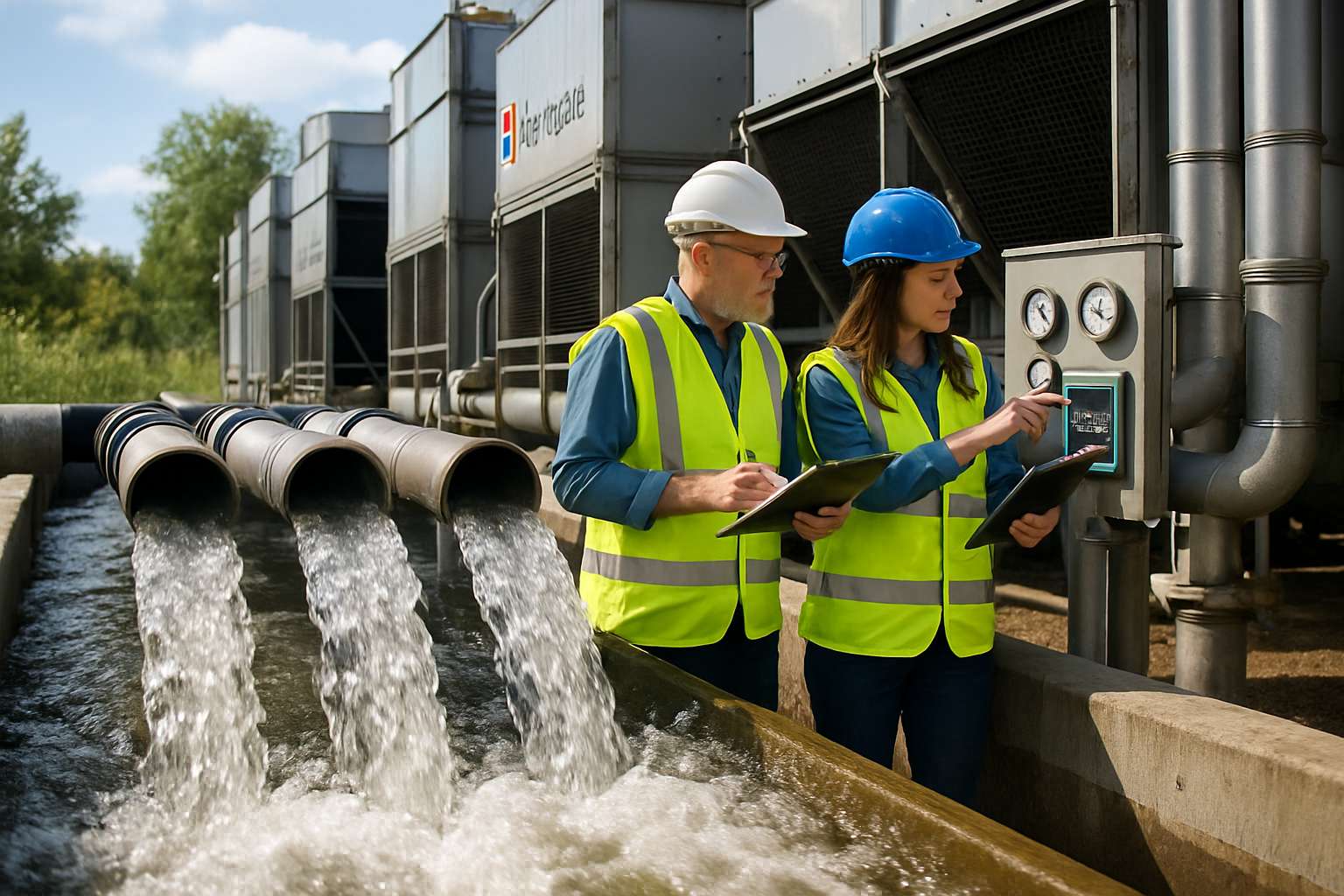
Consequently, Microsoft water usage metrics have become headline indicators for municipal permitting decisions. Local officials often benchmark allocation requests against the revised 18-billion-liter scenario. In contrast, communities in Arizona and India have highlighted potential strain on already stressed aquifers. Therefore, regional scrutiny remains intense, even after the public correction.
These numbers illustrate scale, yet raw volume tells only part of the story. Subsequently, attention shifts toward engineering fixes aimed at breaking the water-compute link.
Engineering Response Path Forward
Engineers have attacked the problem at the cooling loop itself. Microsoft now pilots closed-loop liquid and immersion systems across new AI data centers. Moreover, the company claims these designs eliminate onsite evaporative draw entirely. Per facility, reported savings reach 125 million liters annually, according to corporate blogs.
However, closed-loop configurations usually demand extra electricity for chillers and pumps. Microsoft engineers argue the energy penalty remains nominal relative to performance gains. Nevertheless, independent analysts plan to test that assertion once large deployments complete. Meanwhile, component vendors accelerate development of immersion-ready servers to support hyperscale adoption.
Zero Water Cooling Rollout
Pilot clusters in Quincy, Phoenix, and Pune already run zero-water cooling at scale. Consequently, on-site towers once dedicated to evaporative discharge now sit idle. Engineers monitor Water-Use Effectiveness, expecting a 40% fleetwide improvement by 2030. Microsoft water usage dashboards will publish updated WUE metrics each fiscal year. Therefore, investors can track progress against the water positive commitment.
Engineering momentum looks promising on paper. Yet technological success alone cannot satisfy community concerns, as the next section reveals.
Microsoft Water Positive Pledge
Corporate leadership introduced a "Community-First AI Infrastructure" plan in January 2026. Brad Smith promised replenishment projects that outpace operational withdrawals by decade’s end. Consequently, the pledge targets water positivity as a signature pillar alongside carbon neutrality. The program aligns with broader Microsoft sustainability 2030 milestones covering energy, waste, and biodiversity.
To quantify progress, Microsoft funds watershed restoration, rainwater harvesting, and agricultural efficiency grants. Additionally, volumetric accounting frameworks translate these projects into replenishment credits. Critics counter that basin-level hydrology, not corporate spreadsheets, determines real ecological relief. In contrast, the company insists standards mirror World Resources Institute guidelines and undergo third-party assurance.
- 40% datacenter water-use intensity improvement targeted by 2030.
- 18 billion liters projected consumption baseline for planning.
- 125 million liters saved yearly per new facility adopting closed-loop cooling.
These figures shape external expectations for Microsoft water usage performance. Therefore, transparent annual reporting will determine credibility.
Policy promises build stakeholder trust when partnered with clear metrics. Next, we examine how those promises collide with local realities.
Local Community Impact Debate
Water allocation hearings from Arizona to Indonesia reveal growing pushback. Residents fear AI data centers could outcompete farms and homes for scarce supplies. Moreover, some officials worry replenishment projects may occur upstream, missing localized stress points. Business Insider documented cases where permit approvals now include strict consumption caps.
Consequently, Microsoft negotiates community benefit agreements covering infrastructure upgrades and workforce development. Meanwhile, NGOs request basin-level impact assessments before construction begins. Microsoft water usage projections inform these assessments but remain subject to workload volatility. In contrast, regulators still view guaranteed caps more favorably than theoretical efficiency curves.
Local activism underscores that social license depends on demonstrated, not promised, conservation. Therefore, technical tradeoffs must be weighed within that social context, as the next section details.
Cooling Technology Tradeoffs Examined
Closed-loop cooling reduces freshwater loss but shifts environmental burden to electricity grids. Moreover, extra power often triggers higher Scope 2 emissions unless renewables backfill demand. IEA models show potential ten-percent energy increases when evaporative towers are retired. Consequently, water savings may clash with decarbonization objectives under sustainability 2030 guidelines.
Analysts suggest integrated planning that co-optimizes water, carbon, and capital costs. Additionally, siting AI data centers near abundant non-potable water or cheap renewables mitigates tradeoffs. Nevertheless, retrofitting existing campuses remains technically challenging and financially heavy. Therefore, Microsoft water usage targets could slip if retrofits lag workload growth.
Accurate tracking of Microsoft water usage underpins any credible lifecycle model. Technological choices always involve multidimensional resource arithmetic. Subsequently, strategic roadmaps must reflect those interdependencies, which we explore next.
Strategic Roadmap Toward 2030
Microsoft’s public roadmap bundles engineering milestones with policy checkpoints. Key deliverables appear in yearly sustainability 2030 progress reports. Furthermore, an internal steering committee tracks water, energy, and land metrics monthly. Brad Smith chairs the body, ensuring executive accountability.
Professionals can deepen domain knowledge through specialized training and certification paths. For example, professionals may boost expertise with the AI Healthcare Specialist™ certification. Such credentials contextualize technical decisions within broader ESG frameworks. Consequently, stakeholders gain fluency when questioning future Microsoft water usage disclosures. Successful delivery will equally depend on disciplined Microsoft water usage forecasting.
Looking ahead, Microsoft plans three pivotal actions. First, scale closed-loop cooling across all new AI data centers by 2028. Second, publish third-party verified basin accounting every quarter. Third, fund regional replenishment at 110% withdrawal volumes to achieve net positive.
These roadmap items will determine whether ambitions meet reality. Nevertheless, vigilant monitoring remains essential.
Key Takeaways And Actions
Microsoft water usage will remain a bellwether for digital sustainability. However, engineering breakthroughs, transparent reporting, and community engagement can bend the curve. Moreover, balancing water with carbon demands integrated planning across supply chains. Industry peers and regulators will watch each quarterly metric.
Meanwhile, professionals must stay informed and credentialed to influence decisions effectively. Therefore, explore advanced courses and certifications to steer AI data centers toward sustainability 2030. Consequently, the moment to engage is now. Take action, earn credentials, and join conversations shaping responsible hyperscale growth.
Disclaimer: Some content may be AI-generated or assisted and is provided ‘as is’ for informational purposes only, without warranties of accuracy or completeness, and does not imply endorsement or affiliation.


