

AI CERTs
2 months ago
India Issues Alert on President Murmu Deepfake Scam Threat
Deepfake technology has again rattled India. A new video allegedly shows President Droupadi Murmu supporting a dubious investment platform. Authorities quickly declared the clip manipulated, yet the damage reverberates across social feeds and chat groups. Moreover, the incident underscores a rising wave of synthetic media targeting influential Indians. Cybercrime investigators, fact-checkers, and policy makers are racing to contain the threat while educating citizens. Nevertheless, fraudsters are exploiting trusted faces to harvest credentials and money from unsuspecting investors. The phrase "President Murmu deepfake" now symbolises broader security concerns for the world’s largest democracy. Additionally, the case offers a textbook study on disinformation supply chains, regulatory gaps, and technical countermeasures. In contrast to sensational headlines, it provides evidence-based context for security leaders. Consequently, readers will gain actionable insights and pointers to professional upskilling resources.
Deepfake Threat Emerges Nationwide
On 29 October 2025, PIB Fact Check labelled a viral clip the second confirmed President Murmu deepfake that year. Subsequently, social media platforms removed mirrored copies, yet reposts by foreign propaganda handles persisted. Meanwhile, similar synthetic videos targeted Sudha Murty and Finance Minister Nirmala Sitharaman with fabricated investment endorsements. Experts warn that India faces an escalation window where detection tools slightly lag generation capabilities. Consequently, fraudsters enjoy higher success rates during that gap.
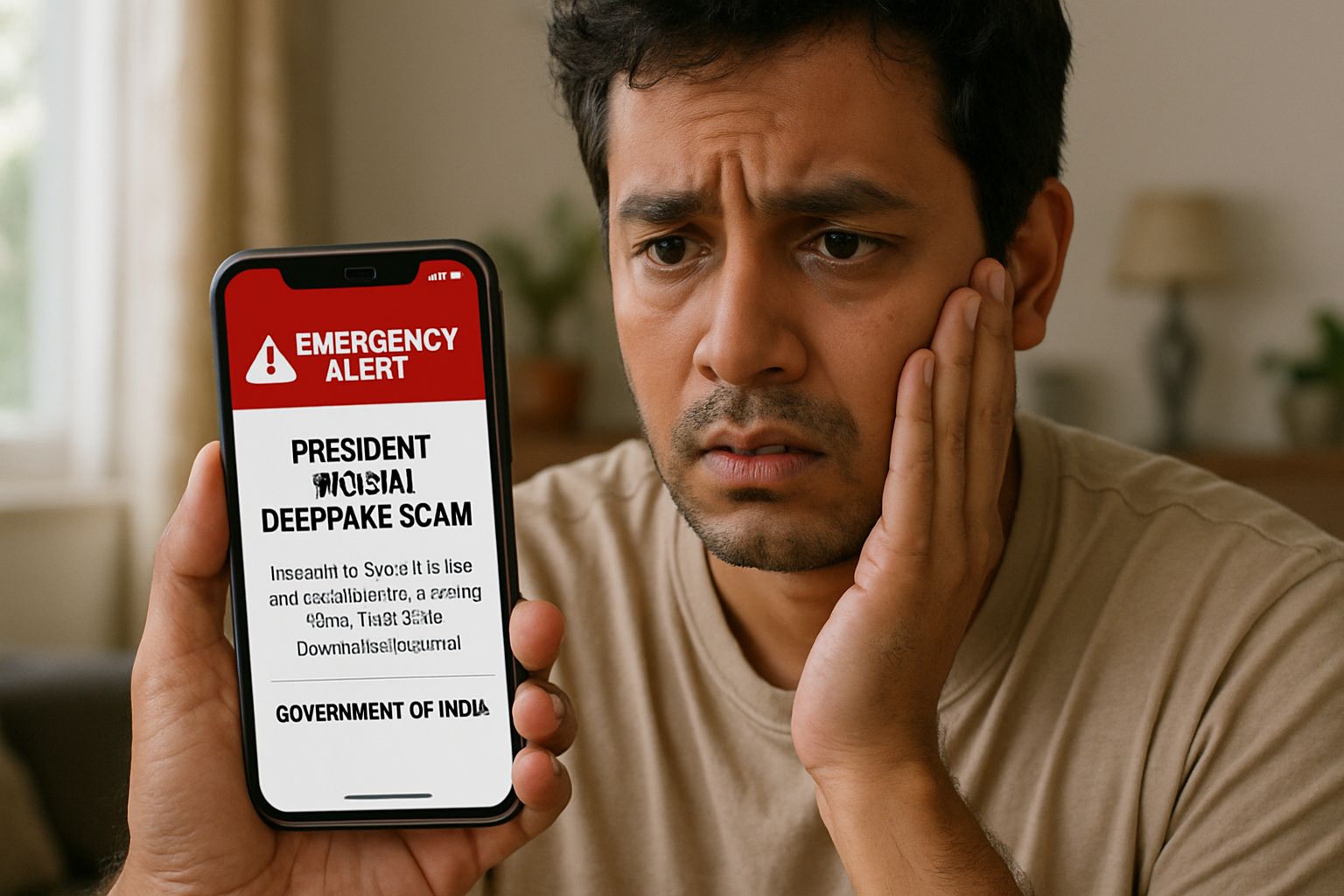
These patterns triggered an immediate scam warning from Bengaluru cybercrime units. Furthermore, MeitY urged intermediaries to fast-track takedowns and watermark AI content. Analysts link the surge to cheap voice cloning services and open-source video models now freely available. Nevertheless, widespread public curiosity multiplies reach before officials intervene.
The ground reality shows deepfakes shifting from novelty to mainstream menace. These observations set the stage for a detailed chronology. Therefore, the next section tracks incident milestones.
Timeline Of Key Incidents
The following concise sequence maps major events driving national attention toward the President Murmu deepfake narrative.
- 29 Oct 2025: PIB flags inflammatory Rafale clip as AI generated.
- 19 Dec 2025: Sudha Murty exposes false trading endorsement; media runs scam warning features.
- 20 Dec 2025: Bengaluru police register FIR on investment themed President Murmu deepfake.
- Late 2025: MeitY releases advisory mandating content labelling and enhanced India cyber safety training.
- Throughout 2024-25: Meta removes 23,000 scam pages linked to celebrity deepfakes.
The chain reveals progressive escalation over fourteen months. Moreover, enforcement cadence improved after every headline case. These dates contextualise the broader damage numbers discussed next.
Rising Scam Statistics India
Quantitative evidence underscores why each President Murmu deepfake sparks urgent policy debate. McAfee’s 2024 survey found 75% of Indians viewed at least one deepfake during twelve months. Additionally, 38% reported direct targeting by an audio or video scam. Average reported loss reached ₹34,500 per victim, according to the same analysis. In 2025, exposure to fake celebrity endorsements touched 90% in some demographics. Meanwhile, Sumsub recorded triple-digit growth in detected incidents through 2025.
- Meta removed 23,000 accounts pushing investment hoaxes.
- Detective vendors scanned millions of suspect clips for broadcasters and law enforcement.
- CERT-In logged rising deepfake advisories under its India cyber safety initiatives.
The statistics quantify harm far beyond individual reputations. Consequently, each new President Murmu deepfake further erodes baseline digital trust. Pressure mounts on agencies to introduce decisive safeguards. The following section reviews government actions.
Government Deepfake Countermeasure Efforts
The Indian government responded with multi-layered interventions soon after the first President Murmu deepfake circulated. Initially, PIB Fact Check adopted rapid public rebuttal tactics and linked authentic footage for comparison. Furthermore, MeitY invoked IT Rules to compel platforms toward quicker removal and visible disclaimers. CERT-In issued high-severity advisories mapping technical indicators for corporate defenders.
At the investigative front, Bengaluru’s Social Media Monitoring Cell applied forensic screening before registering its FIR. Additionally, C-DAC prototyped the “FakeCheck” tool to automate pixel and audio anomaly detection for police units. Moreover, joint training programs now familiarise judges with deepfake limitations, closing courtroom knowledge gaps.
Nevertheless, policy friction persists over mandatory watermarking and data retention periods. In contrast, industry groups advocate voluntary standards to avoid innovation chill. These debates influence technology investments discussed in the next segment.
Detection Tools And Forensics
Technical dismantling of each President Murmu deepfake hinges on layered evidence. Forensic analysts compare audio cleanliness, lip-sync accuracy, and sensor pattern noise against authentic baselines. Dr. Surbhi Mathur notes missing camera fingerprints often reveal compositing. Meanwhile, vendors such as Hive Moderation and TrueMedia score manipulation probability above 90% on suspect uploads.
Moreover, academic teams leverage GAN inversion and provenance chains to attribute source models. Sandeep Shukla, from IIIT Hyderabad, cautions that detectors remain fallible because generation algorithms evolve weekly. Therefore, multiple verification paths, including metadata hashes and reverse image search, remain essential.
Professionals can enhance expertise through the AI Policy Maker™ certification. This credential complements India cyber safety frameworks and equips leaders to draft resilient guidelines.
Detection science offers powerful levers, yet legal levers ultimately decide accountability. Consequently, the next portion reviews the policy landscape.
Legal And Policy Landscape
India lacks a standalone deepfake statute today. Instead, prosecutors invoke cheating, impersonation, and IT Act provisions when filing cases. These statutes covered the Bengaluru FIR against the investment themed President Murmu deepfake. Moreover, the IT Rules 2021 empower takedown demands within 36 hours for harmful content. Platforms must also provide user identification data upon lawful request.
MeitY’s December 2025 advisory instructs intermediaries to label synthetic media. Additionally, CERT-In can issue penalties for non-compliance with emergency directives. Nevertheless, civil liberty groups argue that sweeping obligations risk over-censorship. Therefore, policymakers juggle security, free expression, and technological feasibility while drafting updates.
Courts are gradually setting precedents. The Bombay High Court recently ordered swift removal of non-consensual celebrity deepfakes, signalling judicial recognition of reputational harm. These legal contours inform organizational defence planning, explored next.
Safeguards For Organizations Today
Corporate security teams should treat every viral clip as a potential scam warning until verification. Firstly, implement automated media screening using vendor APIs. Secondly, establish a zero-click policy for unsolicited investment links. Furthermore, integrate staff awareness modules within mandatory India cyber safety training programs.
- Create an executive likeness registry for authenticity comparison.
- Deploy multi-factor approval for public video releases.
- Monitor social platforms for brand impersonation using threat intelligence feeds.
- Escalate confirmed deepfakes to platforms and law enforcement within one hour.
Additionally, boards should allocate budget for forensic partnerships and legal counsel specialising in deepfakes. Professionals can future-proof careers through the previously mentioned AI Policy Maker™ path, which complements operational readiness.
These measures tighten organisational resilience against each emerging President Murmu deepfake variant. However, success also relies on public literacy, which completes the defence ecosystem.
Deepfake technology will continue advancing, yet proactive governance can reduce harm. The President Murmu deepfake episodes illustrate how rapid fact checks, coordinated takedowns, and targeted education blunt fraudulent campaigns. Moreover, reliable data shows that early scam warning signals and India cyber safety drills lower victim losses. Detection science, balanced regulation, and executive commitment form a holistic shield. Nevertheless, continuous upskilling remains vital as adversaries innovate. Therefore, readers should evaluate organisational protocols and pursue specialised learning. Explore the AI Policy Maker™ certification to gain strategic insight and champion responsible AI within your enterprise.


