

AI CERTS
2 months ago
UK Pushes Public Data Access for AI-Ready Weather Intelligence
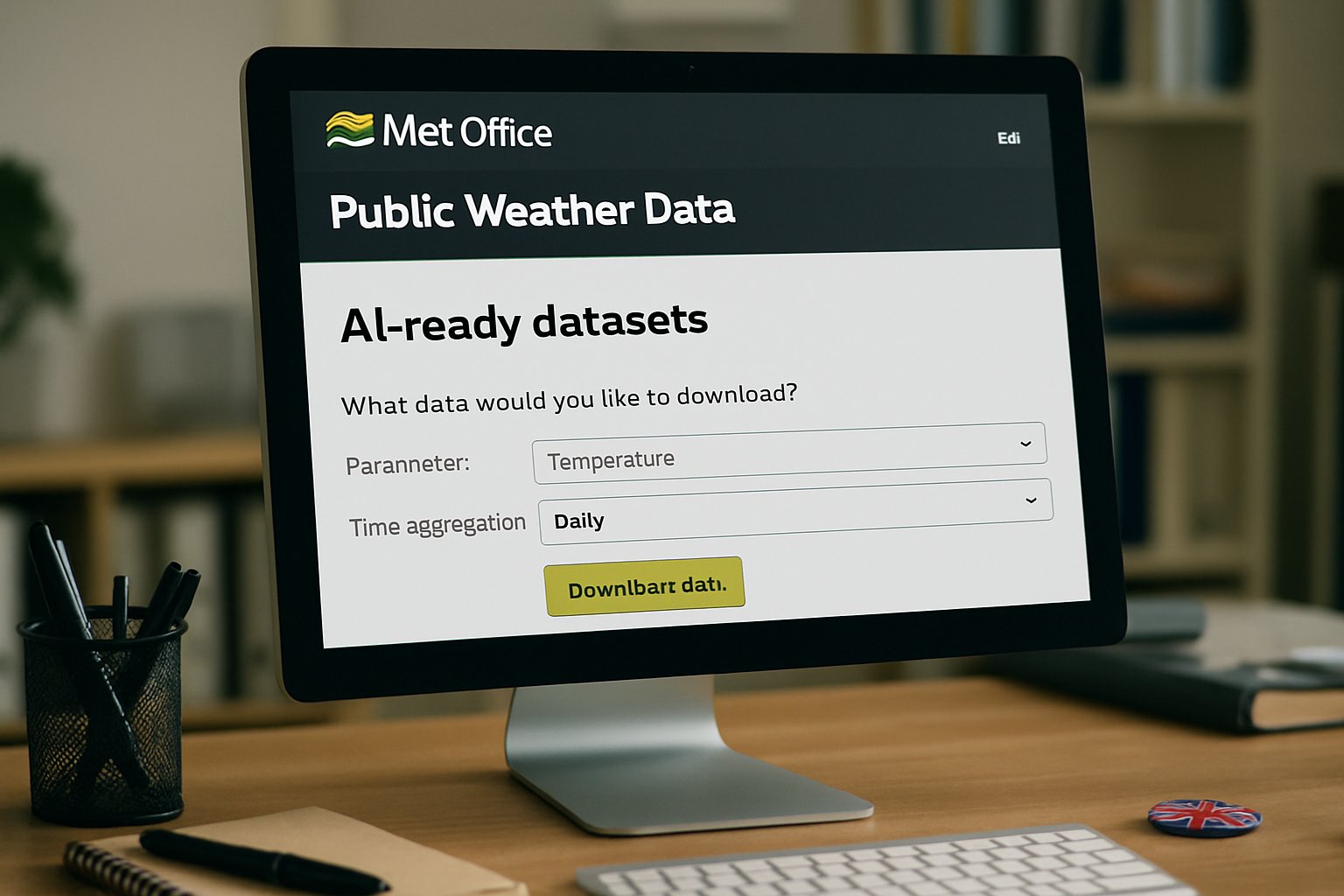
On 26 January 2026, ministers unveiled a progress update on the National Data Library (NDL). Moreover, they launched five “kickstarter” projects, including a scheme to convert trusted Met Office data into AI-ready formats. The project will pair data with public compute to test practical uses such as precision gritting or demand-aware retail planning. Therefore, observers view the programme as both a public-service upgrade and an industrial strategy.
Yet, critical questions remain. Meanwhile, comparisons with the European Centre for Medium-Range Weather Forecasts (ECMWF) highlight competing philosophies on value, cost, and openness. The stakes are high, because more than one in five British firms reportedly lost money to severe weather in 2024. These pressures set the scene for bold action and cautious negotiation.
Government Data Vision Unveiled
DSIT has committed more than £100 million to the NDL. Additionally, an extra £16 million will expand the Cambridge AI Research Resource sixfold by spring 2026. Ian Murray, Digital Government and Data Minister, said the plan “unlocks opportunities for growth and delivers for working people.”
The NDL blueprint centres on curated public-sector datasets delivered through modern infrastructure. Furthermore, officials promise robust governance, privacy safeguards, and export-control compliance. The January update signalled that Met Office information, National Archives records, and cultural collections could all appear in the first tranche.
These ambitions rest on three pillars: making information machine-readable, providing compute close to data, and harmonising licences. Consequently, DSIT argues that secure, frictionless sharing will accelerate research while preserving trust. This section shows policymakers’ intent. Nevertheless, execution will decide success. The next section examines the weather pilot in depth.
Met Office Pilot Explained
The Met Office pilot sits at the heart of the announcement. Therefore, analysts view it as a bellwether for the entire programme. Under the scheme, engineers will transform core observational and forecast feeds into formats optimised for machine learning workloads.
Currently, the Met Office Weather DataHub offers a free one-gigabyte tier plus paid subscriptions that scale to 600 GB per month. In contrast, ECMWF shifted its real-time catalogue to a Creative Commons licence in October 2025. Consequently, usage jumped 150 percent and downloads now exceed 680 terabytes monthly.
Supporters argue that integrating data and compute could cut costs for innovators without undermining revenue. Moreover, SMEs could train models inside the platform rather than exporting bulk files. Professionals can enhance their expertise with the AI for Government™ certification. These skills will be vital as public agencies adopt AI-ready flows.
In summary, the pilot aims to prove that structured transformation unlocks new value. However, commercial and legal realities still shape the access model. The following comparison spotlights those trade-offs.
Access Models Compared Carefully
Two contrasting archetypes dominate meteorological information policy. Firstly, the traditional paid-tier approach exemplified by the Met Office DataHub. Secondly, the fully open model adopted by ECMWF. Each path offers gains and drawbacks.
Paid-tier model advantages include predictable income, service guarantees, and controls over sensitive datasets. However, higher costs can deter experimental projects or resource-constrained councils.
Open model benefits cover wider reach, rapid research cycles, and easier international collaboration. Nevertheless, funding gaps can emerge if service charges vanish. Additionally, agencies may struggle to restrict misuse.
- Met Office DataHub highest published tier: £663 monthly for 600 GB.
- ECMWF monthly open-data traffic: 680 TB and rising.
- One in five UK firms suffered weather-related losses in 2024.
ECMWF Open Data Lessons
The ECMWF numbers demonstrate pent-up demand once friction falls away. In contrast, the UK must balance fiscal responsibility and innovation incentives. Consequently, DSIT’s pilot could explore a hybrid offering: free compute-adjacent usage with paid export beyond defined limits.
These comparisons clarify the stakes. Moreover, they influence industry expectations. Next, we evaluate economic implications.
Business Impact Outlook Ahead
Better Public Data Access promises concrete benefits across sectors. Retailers can refine stocking to match hyper-local forecasts. Meanwhile, insurers might price risk more dynamically. Local authorities could target gritting with sensor-driven precision, cutting salt waste and carbon emissions.
DSIT positions the NDL as an engine for growth. Furthermore, analysts see spill-overs into supply-chain optimisation, agri-tech, and mobility planning. When paired with modern AI tooling, enriched datasets shorten decision loops and reduce resource waste.
However, some creative-sector groups fear precedent. They worry that opening archival content may erode control over digital assets. The government must therefore demonstrate how economic benefits outweigh perceived threats. These tensions shape the risk landscape, discussed next.
Governance Risks Under Review
Converting public information into AI-ready pipelines introduces governance challenges. Licensing terms must respect intellectual-property law while enabling transformative reuse. In contrast, weak governance could trigger backlash.
Privacy represents another critical factor. Although weather data seems benign, integration with other datasets can expose location or behavioural patterns. Therefore, DSIT pledges stringent oversight and export-control checks.
Moreover, trade unions question whether automation efficiencies will translate into job losses. Government spokespeople argue that new roles will emerge around data stewardship. Nevertheless, transparent monitoring remains essential.
These risks highlight why consultation with the National Archives and cultural institutions continues. Comprehensive safeguards will underpin trust. The final section outlines timelines and decision gates.
Next Steps Timeline Summary
Spring 2026 will bring a detailed NDL blueprint. Additionally, results from the five kickstarter trials should surface. Stakeholders expect clarity on licence types, dataset lists, and compute-adjacent usage rules.
- Spring 2026: DSIT publishes full NDL design.
- Mid 2026: Met Office pilot technical report released.
- Late 2026: Potential scaling across further agencies, including the National Archives.
Meanwhile, industry groups will lobby on pricing and control. Consequently, negotiators must weigh societal benefits against institutional revenue needs. Observers should track whether Public Data Access remains the guiding principle or becomes a slogan diluted by caveats.
Upcoming milestones conclude our exploration. However, professionals can already prepare by deepening their policy and technical acumen through the linked certification.
ECMWF Open Data Lessons
ECMWF’s rapid traffic growth after fully liberalising access offers a test case. Moreover, it signals the scale of untapped demand. UK planners should study cost recovery mechanisms used by the European centre, such as value-added service fees.
Consequently, hybrid models may provide a pragmatic route. They could combine zero-cost in-platform usage with premium outward transfers. This approach could satisfy innovators while preserving critical funding streams.
These insights reinforce the importance of adaptive policy design. The concluding section distils overarching messages.
Conclusion
Britain stands at a pivotal moment. Expanded Public Data Access can unleash AI-powered solutions that protect livelihoods and stimulate growth. However, licensing, privacy, and funding complexities demand careful stewardship. The Met Office pilot, ECMWF example, and upcoming NDL blueprint will clarify the nation’s trajectory. Consequently, professionals should monitor policy updates, engage in consultations, and build skills that bridge data science and governance. Moreover, earning the AI for Government™ credential equips leaders to navigate these changes confidently. Act now to influence the debate and harness the opportunities ahead.


