

AI CERTS
2 months ago
AI Civic Arts Redefine Civic Performance at UABBHK 2025
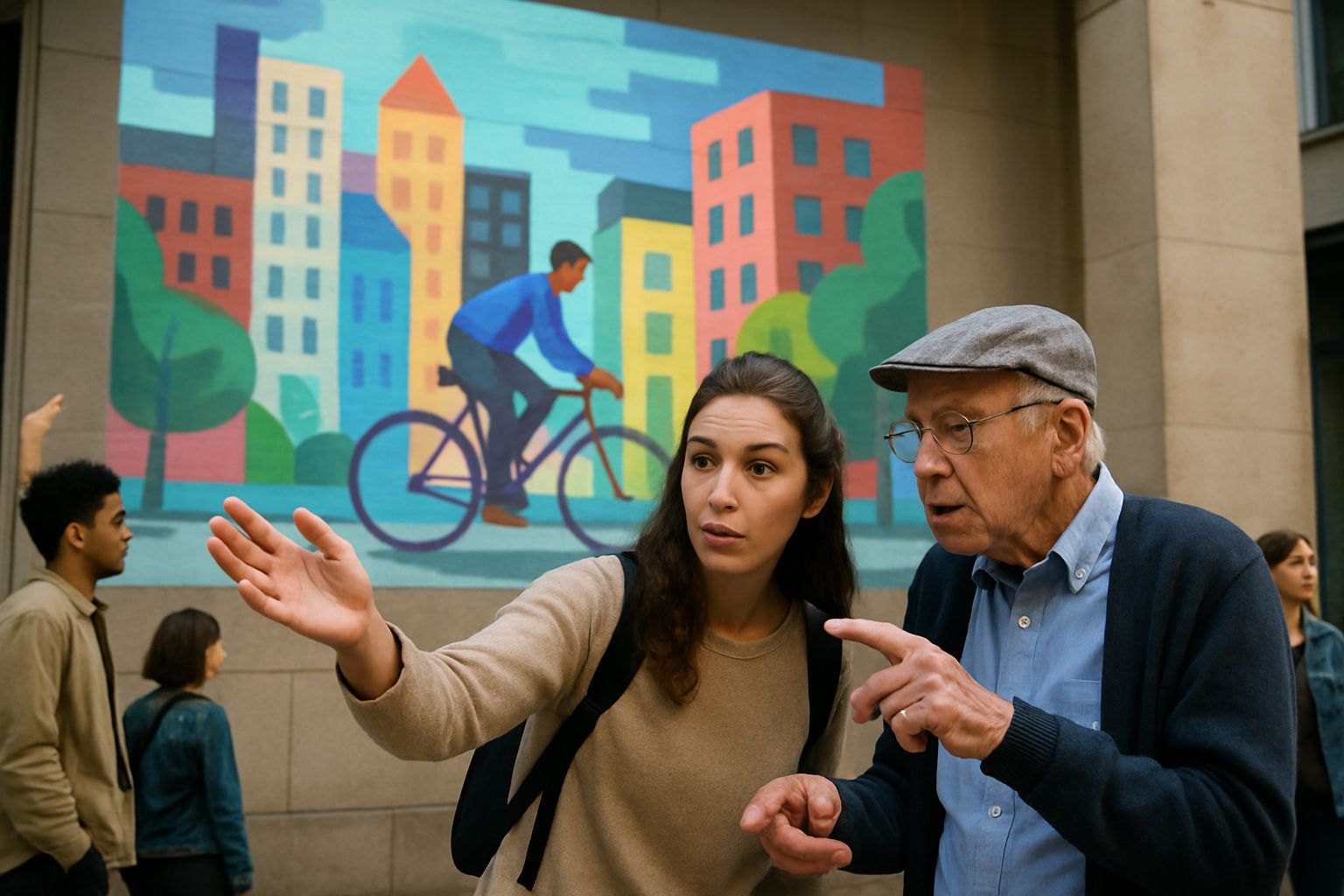
Visitors became co-creators through hackathons, guided tours, and fully generated video screenings.
Moreover, curators framed the activity as "civic performance" powered by machine learning rather than passive exhibition.
This report dissects ambitions, outcomes, and implications for professionals tracking the expanding AI Civic Arts landscape.
However, independent voices still question authorship, data ethics, and job security inside creative studios.
Meanwhile, sector data from ArchDaily reveal 60% of practitioners are teaching themselves AI while demanding guidelines.
The following sections unpack programme context, highlight opportunities, and map risks that require governance.
Consequently, decision-makers gain concrete evidence to frame investment, certification, and research strategies for 2026 projects.
In contrast, creatives obtain a roadmap to engage future audiences through participatory urban media.
TECHFORMANCE Context And Scope
Initially, UABBHK 2025 opened on 27 November 2025 and closed on 24 January 2026 across two harbourfront venues.
Oil Street Art Space hosted conceptual pieces, while East Kowloon Cultural Centre supported large immersive works.
Furthermore, the theme “TECHFORMANCE” merged technology, platform, and performance to prototype civic futures.
Lead curators Dr. Jimmy Ho and Ar. Aron Tsang described the biennale as a rehearsed Civic performance with AI collaboration.
Consequently, architecture students, planners, and technologists were invited to test generative strategies in public view.
These contextual details ground the discussion ahead.
Therefore, attention now shifts to standout exhibits.
Key Exhibits On Display
Several installations illustrated how AI Civic Arts can transform spatial dialogue through responsive media.
- Prompt[Pond]ering: an interactive pool generating poetry and light from audience prompts.
- Sentient Mirror: real-time facial analysis projecting speculative avatars onto a curved screen.
- Collaborative Ephemeral Pavilion: generative design scaffold evolved by crowd votes every evening.
- LANdLine Project: mixed reality walk linking fragmented harbour histories with AI narratives.
- Flower Market Imaginaries: diffusion models created floral skylines reacting to local weather data.
Moreover, each exhibit treated the city as actor, reinforcing the Civic performance stance championed by curators.
The pavilion’s algorithm, for instance, evaluated structural stability in 3m 56.32s, mirroring hackathon metrics.
These showcases demonstrated tangible AI pipelines.
Subsequently, public programmes extended experimentation beyond galleries.
Public Programmes Encourage Co-Creation
UABBHK 2025 partnered with Google Developer Group to deliver the ArchiTech Hackathon for 40 cross-disciplinary participants.
Participants built an AI agent achieving 90% accuracy within four hours, reflecting sprint efficiency.
Meanwhile, the Hetao Vision AI Video Competition demanded fully generated audio and visuals from entrants across ten regions.
Additionally, winning clips will screen in Shenzhen, further embedding AI Civic Arts within broader Pearl River Delta dialogues.
Guided tours, panel talks, and youth workshops ensured citizens voiced priorities directly to designers.
These engagements reframed spectators as collaborators.
Consequently, survey data became critical for assessing real impact.
Survey Insights Guide Ethics
ArchDaily questioned 1,200 professionals, uncovering cautious optimism toward generative workflows.
Moreover, 60% are self-teaching AI, while 67% value early-stage visualisation benefits.
However, 52% fear job disruption, and 74% request ethical guidelines.
In contrast, the American Institute of Architects recommends viewing AI as amplification rather than automation.
Therefore, AI Civic Arts initiatives must integrate clear authorship, IP, and bias protocols to build trust.
These figures justify deliberate governance layers.
Subsequently, momentum for professional upskilling intensified.
AI Civic Arts Momentum
Industry organisations now position AI Civic Arts as a catalyst for interdisciplinary training and market expansion.
Additionally, the Cultural and Creative Industries Development Agency backed the biennale to attract regional investors.
Start-ups supplying generative engines reported heightened enquiries during the exhibition period.
Professionals can enhance their expertise with the AI Design Certification™, gaining structured skills beyond ad-hoc experimentation.
Moreover, several universities hinted at new micro-credentials aligned with UABBHK 2025 learnings.
These developments evidence growing institutional buy-in.
Nevertheless, unresolved risks could stall progress.
Risks Demand Strong Governance
Rapid prototyping sometimes obscures dataset provenance, exposing projects to bias and privacy challenges.
Furthermore, generative visuals complicate author attribution, especially when multiple public inputs drive outcomes.
Consequently, curators urged exhibitors to publish model cards and governance checklists, though adoption remained uneven.
In contrast, AIA proposes dedicated task forces to write profession-wide standards during 2026.
Therefore, AI Civic Arts must embed consistent audit trails before public rollout.
These risks highlight governance urgency.
Subsequently, stakeholders are outlining next steps.
Future Directions And Actions
Organisers plan a digital living archive to document exhibit evolution and user feedback.
Moreover, the forthcoming Shenzhen leg aims to scale Civic performance experiments across the border.
Meanwhile, data on visitor demographics remain unpublished, presenting a gap for future research.
Consequently, analysts will monitor whether AI Civic Arts sustains public interest beyond biennales.
Professionals should contact the HKIA Biennale Foundation for attendance figures and technical details to inform evidence-based policy.
Additionally, commissioning independent reviews from outlets like Dezeen could strengthen critical discourse.
These actions will mature the ecosystem.
Therefore, the conversation circles back to collective responsibility.
AI Civic Arts demonstrated tangible creative, economic, and educational dividends during UABBHK 2025.
Furthermore, programme data show that public co-creation can coexist with rigorous performance metrics.
Nevertheless, unanswered questions on authorship, bias, and privacy require urgent governance and clearer certification pathways.
Consequently, professionals should pursue structured learning, such as the linked AI Design Certification™, while engaging in policy dialogue.
Join the movement, adopt responsible tools, and help shape the next chapter of technologically empowered Civic performance.


