

AI CERTS
2 months ago
Agentic AI Powers Faster Signal Analysis in Finance
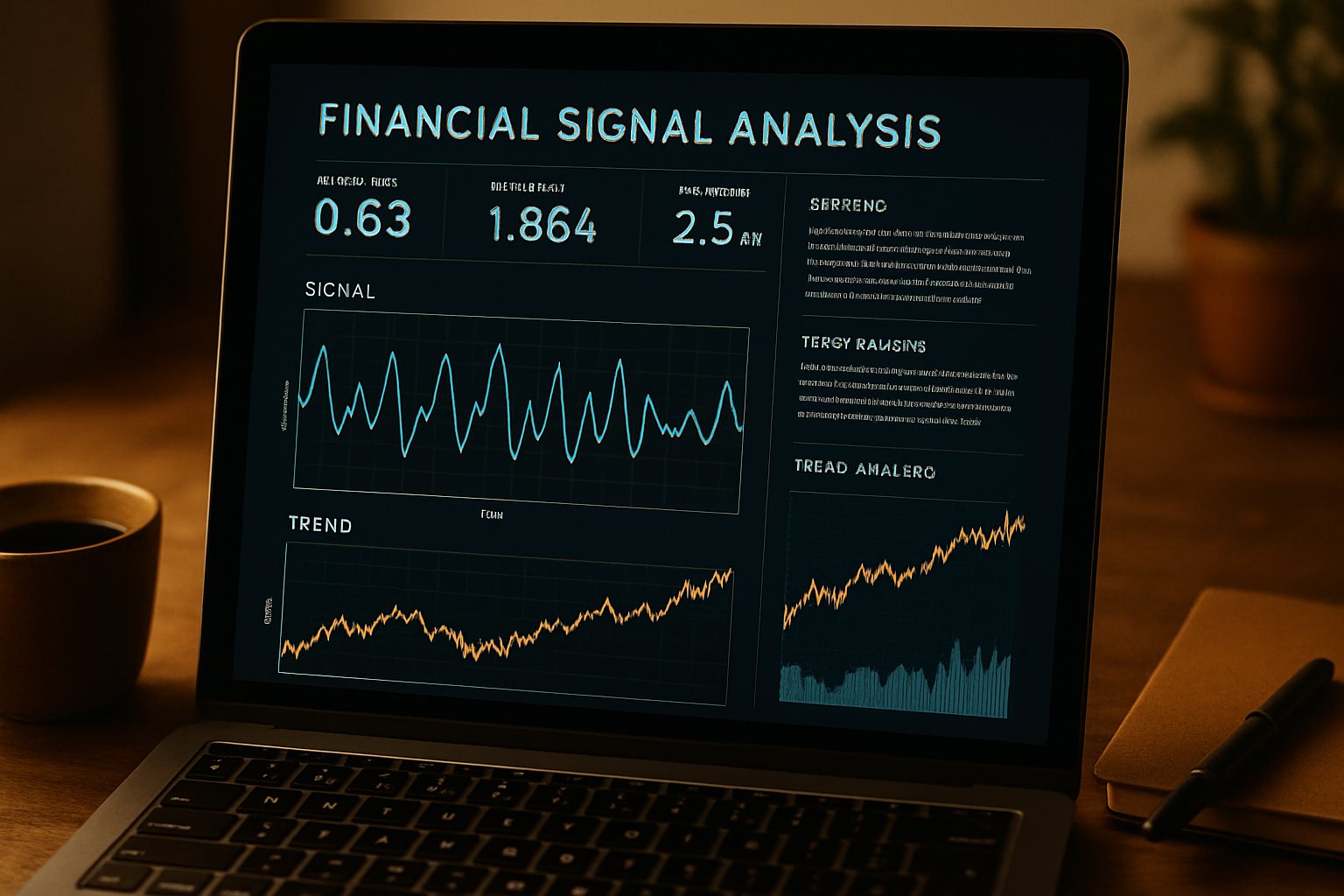
Many quants still watch a Bloomberg terminal while evaluating agent outputs. Overall, agentic autonomy is rewriting core finance workflows. This feature examines how agentic AI reshapes financial signal processing, where value is already visible, and where cracks remain. Furthermore, we review adoption data, security lessons, and market forecasts through early 2026. We also map skills pathways so professionals stay ahead. Finally, we link authoritative certification options that validate emerging competencies.
Agentic Shift Explained Clearly
Agentic AI describes software agents that perceive, plan, act, and learn within defined goals. Moreover, the agents iterate through observe–decide–execute loops without constant human nudges. This closed loop marks the break from passive models.
Financial institutions began large agentic pilots during 2025. Furthermore, trading desks supplied dense streaming data and low-latency APIs ideal for testing autonomy. Early results showed reduced research latency and faster hypothesis promotion.
The transformation hinges on rapid Signal Analysis that links raw feeds to executable actions. Consequently, agents now generate, backtest, and promote candidate features in hours rather than weeks.
These dynamics underline a structural shift. However, understanding pipeline specifics is essential before scaling further.
Agents clearly compress research loops and energize innovation. Therefore, the next concern is pipeline impact areas.
Pipeline Impact Areas Detailed
Signal pipelines once required many manual steps across research, validation, and execution. Additionally, each step carried hand-off latency that dulled alpha. Autonomous agents now stitch those steps into a single adaptive workflow.
Quant groups feed agents market feeds, alternative data, and Bloomberg terminal streams. Consequently, the software cleans, aligns, and labels features on the fly. Continuous Signal Analysis drives real-time strategy tuning.
The Dynatrace 2026 survey shows where benefits appear fastest:
- 52% report faster anomaly detection in IT operations
- 49% cite improved trade execution quality
- 46% note reduced model deployment time
Moreover, JPMorgan disclosed over 400 AI use cases, many involving risk scoring and trade automation. Similar momentum surrounds agentic pilots at European banks.
These gains excite boardrooms. Nevertheless, operational frictions still slow full production rollout.
The following section dissects those frictions and their causes.
Key Operational Frictions Today
Half of enterprise agent projects remain stuck in pilot, according to Dynatrace. Furthermore, 52% cite security and compliance blockers. Observability gaps limit trust in autonomous decision loops. Robust Signal Analysis still requires transparent logs.
Data quality poses another hurdle. In contrast, traditional pipelines allowed manual sanity checks before deployment. Agents can amplify bad data instantly, producing flawed positions or risk scores.
Identity management also lags. CrowdStrike and Okta warn that agent credentials often outrank human ones, increasing breach impact. Consequently, securing each agent identity becomes vital for finance teams.
Finally, Gartner predicts 40% of agent projects will be canceled by 2027. Moreover, analysts label hype without governance as "agent washing."
These obstacles highlight the fragility beneath rapid gains. Therefore, we must explore security and governance gaps.
Security And Governance Gaps
Regulators now scrutinize agent deployments. Jessica Rusu from the UK FCA warns that rapid autonomous action magnifies consumer harm potential. Additionally, systemic risks grow when many agents chase the same signals simultaneously. Regulators track downstream Signal Analysis errors.
Cyber teams spot new attack surfaces. Prompt injection, permission escalation, and model hijacking threaten live trading agents. Moreover, verifiable audit trails remain rare outside crypto experiments. Secure Signal Analysis pipelines remain a moving target.
Web3 projects like B2 Network embed agent logic on chain. Consequently, zero-knowledge proofs offer traceable yet private transaction evidence. Felix Xu argues this architecture increases trust for regulated finance workflows.
Enterprise vendors answer with agent telemetry and real-time policy engines. Nevertheless, adoption hinges on measurable reliability, a point stressed by Dynatrace CTO Alois Reitbauer.
Governance failures could erode hard-won confidence. Subsequently, investors watch market forecasts to gauge sustainability.
Market Outlook And Projections
Mordor Intelligence values agentic AI in financial services at $7.8 billion for 2026. Moreover, the firm projects 41% CAGR, reaching $43.5 billion by 2031.
Consultancies echo that bullish view. KPMG forecasts deep productivity gains if governance keeps pace. Conversely, Gartner expects high abandonment without new data architectures.
Stakeholders monitor live benchmarks like AI-Trader. Furthermore, academic results show promising returns yet weak risk control. Consequently, real portfolio managers still keep tight guardrails around autonomous positions. Scalable Signal Analysis underpins credible returns that attract institutional capital.
Investor sentiment also follows infrastructure spend. Dell CTO John Roese notes hardware and observability demand rising alongside agentic pilots. Analysts still glance at a Bloomberg terminal to cross-validate agent suggestions.
Growth appears likely, yet uneven. Therefore, upskilling remains a pragmatic hedge for professionals.
Critical Skills Pathways Forward
Engineers and quants need blended talent stacks. Additionally, demand rises for expertise in reinforcement learning, streaming architectures, and secure API design.
Risk managers must understand autonomous loops and embed continual assurance tests. Moreover, operational staff require tooling familiarity, such as the Bloomberg terminal, Python notebooks, and new agent dashboards. Mastering Signal Analysis tools accelerates onboarding.
Professionals can enhance their expertise with the AI+ Researcher™ certification. Consequently, formal credentials validate cross-disciplinary mastery and support career mobility within finance.
The skills race mirrors technology acceleration. Nevertheless, structured learning curves can prevent dangerous knowledge gaps.
Capability building finishes the readiness picture. Subsequently, organisations can approach production with greater confidence.
Final Thoughts Ahead Now
Agentic AI is rapidly redrawing financial signal processing. Moreover, continuous Signal Analysis supports faster discovery and adaptive execution. However, data quality, observability, and cyber controls remain decisive.
Stakeholders must balance ambition with guardrails. Consequently, governance frameworks, verifiable audits, and skilled talent will separate winners from laggards.
Readers should monitor regulatory guidance, live benchmarks, and evolving best practices. Additionally, secure your role by pursuing credible certifications and hands-on experimentation.
Advance your Signal Analysis skills through structured learning. Explore the linked credential to deepen expertise and join the conversation shaping autonomous finance futures.


