

AI CERTs
2 months ago
Nvidia Synthesia funding amplifies AI video market
The generative video race just accelerated. On January 26, 2026, London-based Synthesia closed a $200 million Series E that pushed its valuation to $4 billion. GV led the round, yet Nvidia’s venture arm, NVentures, again joined the cap table. This latest Nvidia Synthesia funding underscores a widening bet on compute-intensive video models. Furthermore, analysts view the move as a strategic lever to boost GPU demand. Meanwhile, enterprise buyers keep flocking to synthetic media. Consequently, the story matters for every procurement leader tracking AI video startup investment trends.
Synthesia already powers training videos for more than sixty-thousand businesses. Moreover, the company claims over ninety Fortune 100 customers. However, competition and regulation continue tightening. Therefore, executives must weigh opportunity against risk. The sections below unpack the deal, strategic motivations, market metrics, and practical next steps.
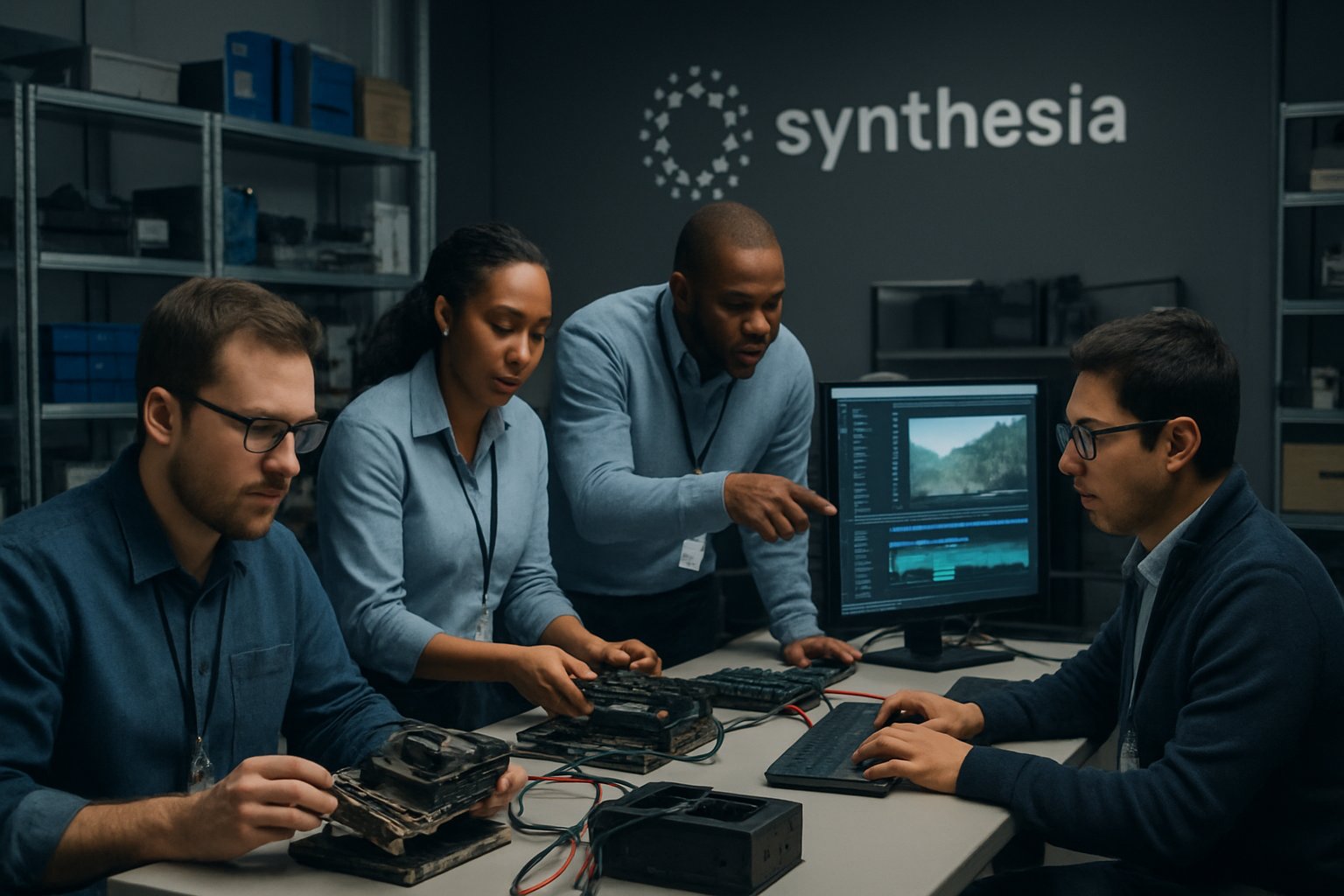
Latest Funding Round Overview
Synthesia’s Series E lifted total disclosed funding above $500 million, depending on secondary calculations. Accel, Kleiner Perkins, NEA, and other prior backers returned. Additionally, new investors Evantic and Hedosophia entered the syndicate. GV supplied the lead cheque, while NVentures kept its pro-rata stake undisclosed. Nevertheless, deal insiders confirm a meaningful allocation from Nvidia. That allocation marks the third consecutive follow-on by NVentures since 2023.
Several factors drove the generous valuation. First, Synthesia exceeded $100 million in annual recurring revenue by April 2025. Second, the firm showcased interactive avatar prototypes that promise conversational learning. Finally, liquidity via Nasdaq’s secondary window reassured early employees. Consequently, the market rewarded traction with a premium multiple.
These highlights capture headline details. However, deeper forces explain why Nvidia Synthesia funding keeps flowing. The next section explores Nvidia’s calculus.
Drivers Behind Nvidia Stake
Nvidia sells the infrastructure that generative video consumes. Therefore, investing in application leaders stimulates GPU demand and cements platform lock-in. Moreover, NVentures offers portfolio firms credits, engineering support, and marketing access. In contrast, conventional financial investors mainly deliver capital. Consequently, founders often view a strategic round as discounted cloud spend.
Video generation models require dense matrix compute for both training and inference. While alternative accelerators exist, industry benchmarks still favor Nvidia’s CUDA ecosystem for production reliability. Furthermore, Synthesia experiments with agentic avatars that run reinforcement learning loops. Those loops multiply inference cycles, hence magnifying GPU consumption.
Two sentences summarize the logic: Strategic capital fosters software that sells hardware. Meanwhile, deeper collaboration increases switching costs for startups dependent on Nvidia’s stack. The following heading offers granular insights into the partnership mechanics.
Nvidia Synthesia Funding Insights
Historical filings show NVentures first surfaced in Synthesia’s Series C during June 2023. Subsequently, the fund joined the Series D and now the Series E. Each appearance reinforced board relationships and optionality for joint GTM programs. Additionally, Nvidia representatives periodically demo new GPU architectures to Synthesia’s research unit. Consequently, feature roadmaps align with upcoming silicon releases.
Industry observers note another benefit. Synthesia gains early access to microservices like Nvidia Audio2Face, accelerating avatar lip-sync accuracy. Meanwhile, Nvidia secures a marquee customer case that showcases low-latency generative video at enterprise scale.
In short, iterative backing compounds mutual advantages. However, market adoption depends on Synthesia’s own momentum, which the next section details.
Synthesia Market Traction Metrics
Synthesia emphasizes enterprise usage over consumer virality. As a result, customer metrics focus on corporate penetration and revenue predictability. Key numbers include:
- $100 million ARR reported April 2025
- 1 million individual users across 60,000 businesses
- More than 90% of Fortune 100 engaged
- Average video production time under 15 minutes
Moreover, localization features support 120 languages, reducing translation budgets. Additionally, customers integrate the API into LMS platforms, further reducing churn. These factors build a defensible moat against emerging rivals.
These traction signals strengthen investor confidence. Consequently, Nvidia Synthesia funding appears rational despite broader venture pullbacks. Still, competitive and regulatory risks warrant attention, as addressed next.
Risks And Competitive Landscape
Generative video attracts scrutiny. Misuse through deepfakes threatens brand safety. Nevertheless, Synthesia instituted watermarking, user verification, and a 2024 public red-team exercise. Furthermore, the company pursues ISO certifications to reassure auditors.
Competition intensifies. Adobe, Pika, Colossyan, and open-source stacks chase the same wallet share. In contrast, Synthesia differentiates through enterprise security and early mover scale. Moreover, Google’s involvement via GV foreshadows possible product overlaps with YouTube’s AI experiments.
Economic variables also loom. GPU supply constraints could inflate cloud costs. Consequently, margin pressure may rise if licensing prices stay fixed. Investors therefore monitor gross profit closely.
These headwinds remind leaders to balance optimism with caution. However, proactive governance can mitigate many pitfalls, leading to strategic benefits outlined below.
GPU Strategy And Implications
For Nvidia, each successful application adds to a virtuous cycle. Firstly, higher model fidelity demands newer GPUs like H200. Secondly, enterprises adopting Synthesia indirectly standardize on Nvidia instances provided by hyperscalers. Moreover, reference deployments influence procurement roadmaps for parallel AI initiatives.
For CIOs, alignment with Nvidia’s roadmap simplifies support and talent hiring. Nevertheless, platform concentration risk remains. Consequently, multi-cloud strategies and negotiation leverage become essential.
Two sentences recap this lens: Nvidia Synthesia funding exemplifies hardware-driving software synergy. Meanwhile, prudent buyers will hedge against single-vendor lock-in before scaling avatars globally.
Practical Takeaways For Leaders
Executives assessing AI video startup investment opportunities should consider three actions:
- Run a limited pilot to verify engagement uplift versus traditional video.
- Review security controls, watermarking, and compliance certifications.
- Model GPU cost scenarios under different usage tiers.
Additionally, teams can upskill through executive programs. Professionals can enhance their expertise with the Chief AI Officer™ certification. Consequently, organizations build internal capacity to evaluate vendor claims.
Practical frameworks reduce integration surprises. Therefore, leaders can harness value while safeguarding brand integrity.
This guidance distills operational priorities. However, broader strategic context ensures sustainable advantage, which the conclusion now summarizes.
Conclusion And Next Steps
Nvidia’s repeated participation underscores confidence in Synthesia’s enterprise moat and its GPU-hungry roadmap. Moreover, the $4 billion valuation reflects significant revenue traction and market leadership. Nevertheless, deepfake risks, competitive pressure, and hardware costs demand vigilant oversight.
The latest Nvidia Synthesia funding wave illustrates how application capital can reinforce infrastructure dominance. Meanwhile, savvy executives use frameworks, pilots, and certifications to navigate adoption. Consequently, now is the time to explore synthetic video opportunities.
Ready to lead the transformation? Enroll in the Chief AI Officer™ program and position your organization for AI-powered communication success.


