

AI CERTs
5 months ago
Clawdbot AI assistant exposes security gaps
Thousands of hobbyists just installed the Clawdbot AI assistant on spare machines.
The viral open-source agent promises hands-free messaging, automation, and local control.
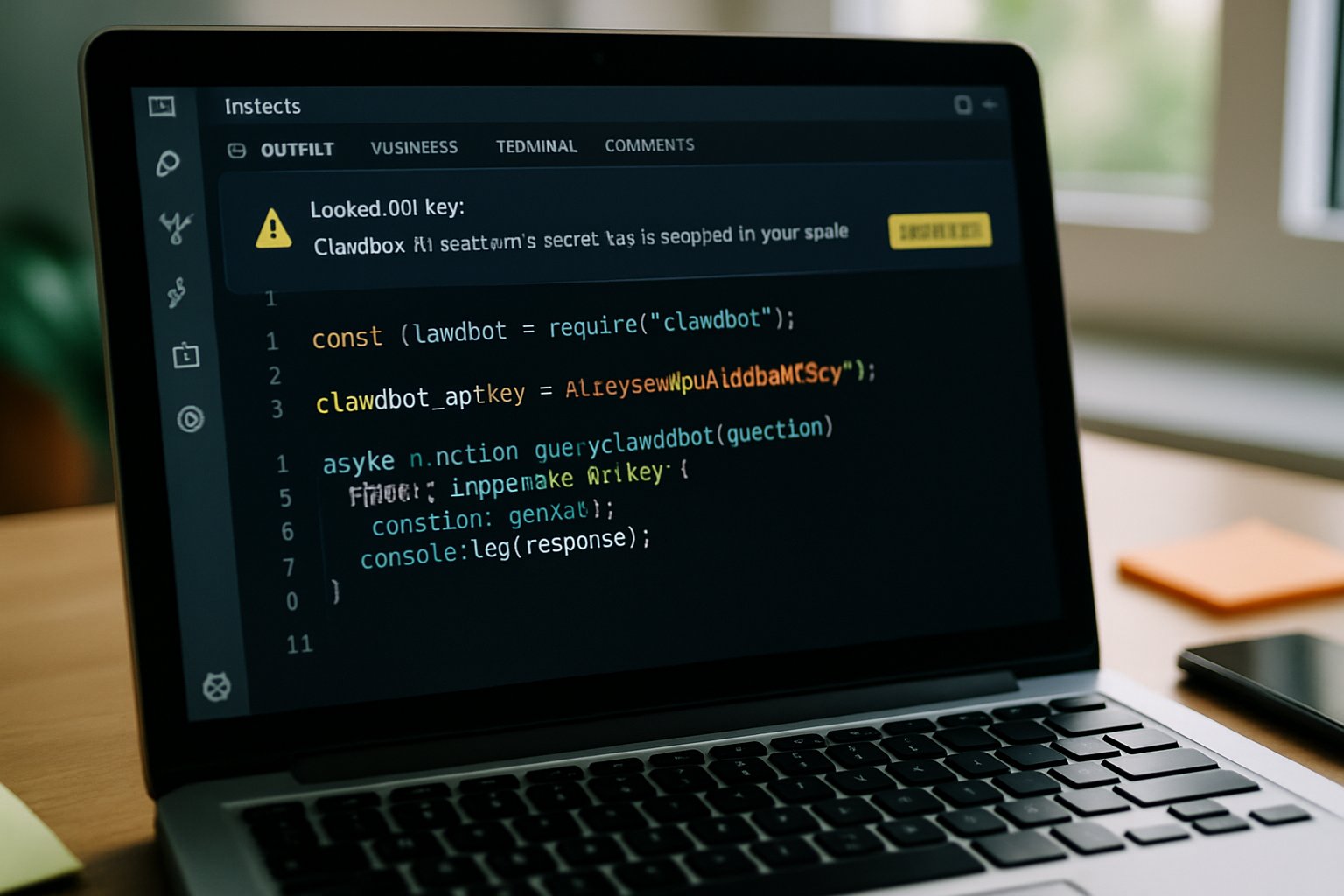
However, researchers now warn that this convenience hides serious attack paths.
Vendors saw 900 to 1,900 unsecured control dashboards exposed within days.
Consequently, leaked API keys, conversation histories, and even shell access appeared on public forums.
This article unpacks what happened, why it matters, and how professionals can react.
Furthermore, we track the conflicting community narratives and share immediate mitigation guidance.
Readers will also learn where certification programs can strengthen secure agent deployments.
In contrast with cloud chatbots, Clawdbot runs locally yet integrates with real system tools.
Therefore, misconfiguration creates an unusually dangerous mix of autonomy and privilege.
Viral Growth Explained Quickly
Media outlets highlighted weekend buyers stacking Mac Minis to host the Clawdbot AI assistant locally.
Business Insider quoted founder Peter Steinberger, who celebrated 53,000 GitHub stars in one week.
Early adopters praised the Clawdbot AI assistant for keeping data local.
Moreover, Discord membership ballooned into the thousands, driven by promised privacy and hackable skills.
Consequently, social algorithms amplified tutorials showing instant messaging automation and voice assistants.
Early adoption proved breathtakingly fast.
However, rapid growth set the stage for the next security shock.
Security Scans Reveal Exposures
Security researchers Luis Catacora and Jamieson O’Reilly scanned Shodan on 25 January 2026.
They found roughly 1,009 accessible dashboards labelled "Clawdbot Control" without any password prompt.
Knostic’s follow-up sweep raised the estimate to about 1,862 exposed instances the following day.
In contrast, SocRadar counted 900 hosts, underscoring fluctuating snapshots across scanners.
- Shodan, 25 Jan: ~1,009 dashboards
- Knostic, 26 Jan: ~1,862 dashboards
- SocRadar, 25 Jan: ~900 dashboards
Moreover, screenshots displayed extracted Anthropic, Slack, and Telegram API keys within minutes.
Researchers stressed that the Clawdbot AI assistant could execute shell commands once hijacked.
Catacora warned that an exposed Clawdbot AI assistant could become a botnet drone overnight.
The numbers varied, yet every scan confirmed a systemic exposure.
Therefore, attention shifted toward configuration mistakes powering the leaks.
Misconfiguration Root Cause Details
Unlike cloud SaaS chatbots, Clawdbot’s Gateway assumes traffic originates from the local loopback interface.
Developers often deploy behind Nginx or Cloudflare but forget to set trustedProxies and authentication.
Consequently, forwarded headers trick the agent into treating external requests as local, auto-approving WebSocket sessions.
Any publicly reachable Clawdbot AI assistant effectively offers attackers privileged remote desktop.
Prompt injection then finishes the job by exposing secrets or commanding system tools.
Meanwhile, default developer settings keep port 18789 open, intensifying Open-source AI security concerns for home labs.
Misconfiguration, not malicious code, sits at the center of current breaches.
Nevertheless, privilege level means simple mistakes become critical failures, leading to defensive checklists.
Immediate Hardening Checklist Steps
Operators needed actionable guidance, so maintainers published a concise checklist.
Additionally, we consolidate that advice below.
- Verify external reachability; block public access to port 18789 instantly.
- Bind Gateway to loopback using gateway.bind setting.
- Enable token or password mode via gateway.auth.mode.
- Configure gateway.trustedProxies when using any reverse proxy.
- Run untrusted channels inside Docker sandboxes.
- Rotate leaked keys and audit session logs.
A locked-down Clawdbot AI assistant survives casual internet scans.
Professionals can deepen secure-cloud skills through the AI Cloud Security™ certification.
Consequently, hardened instances avoid remote takeover and limit fallout from prompt injections.
These measures close the biggest doors exploited last week.
Subsequently, community eyes turned toward project governance and patch velocity.
Community Response And Fixes
Maintainer Peter Steinberger merged pull requests tightening default auth and updating documentation within hours.
Moreover, volunteers translated security notes into eight languages to reach global users quickly.
SlowMist and other firms issued advisories, echoing Open-source AI security concerns voiced by researchers.
In contrast, privacy advocates argued that transparent code and local data still outweigh SaaS risks.
Meanwhile, the Clawdbot AI assistant community drafted a security SIG to monitor future releases.
The quick collaboration showcases open-source resilience.
However, lingering exposures keep industry watchful, fueling broader risk discussions.
Long Term Risk Outlook
Experts foresee agents becoming commonplace across enterprises, from customer support to DevOps.
Therefore, Open-source AI security concerns will only intensify as toolchains gain more autonomy.
Future releases of the Clawdbot AI assistant will likely ship stricter defaults and automated audits.
Nevertheless, individual operators remain the final security perimeter.
Regulators may also push baseline protections, yet enforcement timelines stay uncertain.
Consequently, skill development and repeatable runbooks remain the safest bet for organizations.
Long-term, secure agent patterns must mature alongside model capabilities.
Therefore, readers should prepare by institutionalizing training and rigorous deployment pipelines.
Clawdbot’s meteoric rise underscores agent power and peril in equal measure.
Researchers documented hundreds of unprotected dashboards bleeding secrets within hours.
However, the Clawdbot AI assistant can remain safe when operators follow hardened runbooks.
Misconfiguration, not code, caused the crisis, offering actionable lessons for every open-source project.
Furthermore, repeated audits and token rotation reduce blast radius if mistakes recur.
Professionals pursuing resilient deployments should formalize training.
Consequently, enrolling in the AI Cloud Security™ program strengthens credentials and safeguards future agent rollouts.
Act now, secure every port, and turn innovation into sustainable advantage.
Disclaimer: Some content may be AI-generated or assisted and is provided ‘as is’ for informational purposes only, without warranties of accuracy or completeness, and does not imply endorsement or affiliation.


