

AI CERTs
6 months ago
AI memory chip demand ignites global memory supercycle
Memory prices rarely dominate boardroom agendas. However, the AI spending spree has changed that reality quickly. Hyperscalers are locking long-term supply, and chipmakers are retooling fabs. Consequently, costs for every gigabyte of DRAM and NAND have spiked. Analysts now describe the phenomenon as a “memory supercycle” driven by surging AI memory chip demand.
TrendForce forecasts contract DRAM prices will jump 55-60% in Q1 2026. Meanwhile, enterprise NAND could rise 38%. Inventory has sunk below four weeks, giving suppliers rare leverage. Therefore, OEMs from Dell to Apple face difficult bill-of-materials decisions. Many smaller system builders fear a looming PC supply shortage if allocations tighten further.
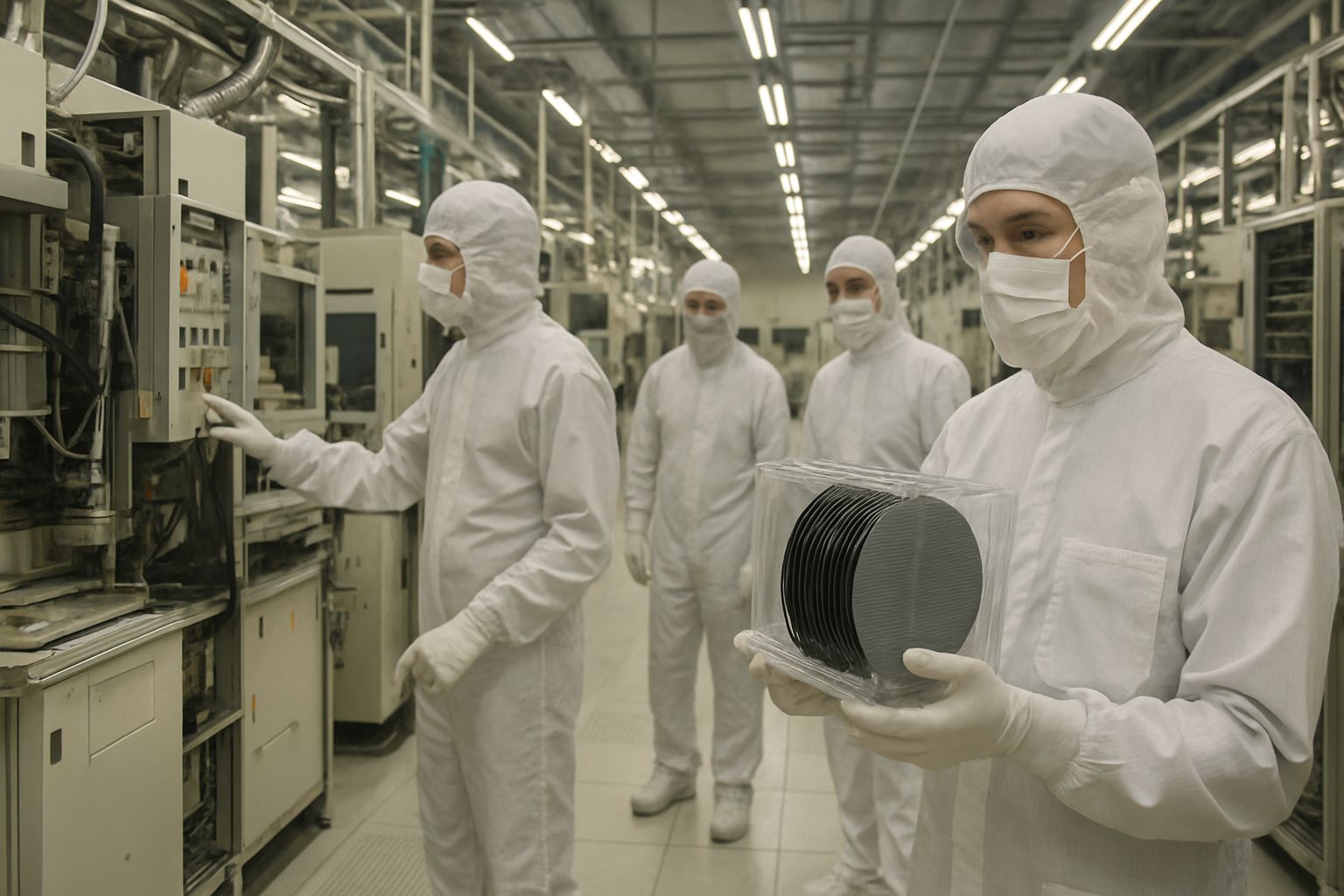
In contrast, memory producers celebrate record earnings. SK hynix posted ₩11.4 trillion operating profit by leaning into HBM. Micron says its entire 2026 HBM output is already sold. Such statements underline an industry tilted toward high-margin AI workloads. Accordingly, the downstream market must adapt swiftly or risk lost share.
AI Fueled Memory Boom
AI model training demands enormous bandwidth. Moreover, accelerators like Nvidia’s H100 pair each GPU with up to 120GB HBM. That configuration alone consumes several standard DRAM wafers per package because of the die penalty. Consequently, manufacturers diverted advanced lines toward HBM and server DDR5. This diversion tightened supply for conventional parts, escalating AI memory chip demand across adjacent categories.
Prices reacted quickly to the structural imbalance. Consequently, contract negotiations reset at much higher baselines.
The next section examines how those negotiations translate into headline numbers.
Contract Prices Soar Upwards
Market trackers provide stark figures. TrendForce expects conventional DRAM contracts to rise as much as 60% in the first quarter. Additionally, NAND could climb 38% during the same period. Spot markets mirror the contracts, yet volatility remains higher. Nevertheless, buyers with shorter horizons pay steep premiums to secure immediate lots. Therefore, AI memory chip demand now influences every quarterly pricing table published by analysts.
- 55-60% QoQ DRAM contract jump forecast for Q1 2026
- 33-38% QoQ NAND contract increase over the same period
- Sub-four-week DRAM inventory levels across major suppliers
- HBM wafer usage roughly 3× standard DRAM per bit
Such metrics highlight severe upward pressure. In contrast, OEM revenues often lag these cost escalations.
The downstream impact becomes clearer when examining device makers.
Ripple Across Device Makers
OEMs walk a tightrope between cost and competitiveness. Dell’s Jeff Clarke admitted component costs are rising faster than expected. Moreover, laptop vendors debate whether to reduce memory capacities or raise retail prices. Smartphone makers confront similar choices, especially in flagship tiers. A widening PC supply shortage could intensify if consumer refresh cycles rebound. Consequently, AI memory chip demand cascades into every bill-of-materials discussion at these companies. Manufacturers warn that a deeper PC supply shortage would pressure launch schedules for 2026 platforms.
Component scarcity reshapes product strategy across segments. Consequently, margins remain fragile until memory availability improves.
Understanding allocation mechanics explains why relief appears distant.
Wafer Allocation Crunch Emerges
Producing HBM consumes triple the wafer surface per bit. Therefore, each shift toward HBM removes capacity from standard DRAM or NAND lines. Suppliers prioritize lucrative AI contracts, leaving fewer bits for mainstream customers. Meanwhile, foundry lead times exceed 18 months for advanced nodes. Consequently, allocation remains the dominant lever controlling output. This structural squeeze amplifies AI memory chip demand and sustains elevated pricing.
Capacity cannot materialize overnight. Furthermore, capital expenditure plans still face multi-year ramp schedules.
Those schedules bring both opportunities and risks.
Capex Plans And Risks
Samsung, SK hynix, and Micron announced aggressive fabrication projects. Micron even bought land in New York for a mega-fab. Additionally, SK hynix will expand Korean and U.S. sites focused on HBM4. However, industry history teaches that rapid capacity expansion can flip shortages into gluts. Investors therefore debate whether current spending assures or endangers future margins. Nevertheless, executives justify budgets by projecting unrelenting AI memory chip demand through 2028.
Capital decisions lock billions for years. Consequently, miscalculations could trigger another painful downturn.
External factors may further complicate the outlook.
Geopolitical Wildcard Factors Loom
Trade tensions threaten component flows. The United States restricts advanced AI shipments to China. In response, Chinese fabs accelerate domestic memory programs. Moreover, export controls on extreme-ultraviolet tools tighten build timelines elsewhere. Consequently, regional mismatches may deepen and spawn price differentials. Nevertheless, multinational OEMs cannot redesign global supply chains overnight. Therefore, unpredictable sanctions could suddenly amplify AI memory chip demand inside friendlier jurisdictions. Any new export barrier could worsen the PC supply shortage across budget markets.
Geopolitics adds volatility beyond market fundamentals. Furthermore, procurement officers must monitor policy headlines daily.
Many now respond with longer contracts and skills upgrades.
Strategic Procurement Responses Rise
Enterprises increasingly sign multi-year agreements with memory suppliers. Meanwhile, hyperscalers leverage scale to lock preferential volumes until 2028. Additionally, some OEMs negotiate index-linked clauses to soften spot spikes. Procurement leaders also bolster internal expertise through specialized training. Professionals can enhance their expertise with the AI Ethics Strategist™ certification. Such preparation aligns purchasing roadmaps with evolving AI memory chip demand realities.
Structured contracts and talent development build resilience. Consequently, companies reduce exposure to sudden memory shocks.
The final section synthesizes the broader market outlook.
Memory has become the battlefield where AI economics and consumer expectations collide. HBM’s wafer appetite shrinks conventional supply, while inventories remain razor thin. Consequently, DRAM and NAND prices keep climbing, and forecasts signal little relief before 2027. However, disciplined capex, diversified sourcing, and skill development can blunt the impact. Organisations should track policy moves, negotiate flexible contracts, and upskill staff. Therefore, staying ahead of AI memory chip demand is now a strategic imperative. Moreover, certified professionals gain insight to forecast AI memory chip demand trends and advise leadership. Teams confronting a potential PC supply shortage can start by deepening ethics and governance knowledge. Explore advanced credentials and turn volatility into competitive advantage today.
Disclaimer: Some content may be AI-generated or assisted and is provided ‘as is’ for informational purposes only, without warranties of accuracy or completeness, and does not imply endorsement or affiliation.


