

AI CERTS
2 months ago
AI Mineral Extraction Transforms Gold Exploration Strategies
Consequently, companies report shorter timelines from idea to drill collar. Majors and juniors alike are betting big on the shift. Importantly, early wins in the Abitibi belt validate the approach. Meanwhile, Emperor Metals has joined the trend with dedicated data science hires. In contrast, traditional exploration still relies on expert intuition and sparse datasets. The following analysis dissects market growth, technology, benefits, and risks. Furthermore, it offers skills guidance for professionals entering this fast-moving field. Readers will finish ready to benchmark vendors and plan their next moves.
AI Mining Market Momentum
Global spending on exploration technology is soaring. Moreover, Grand View Research pegs the 2024 AI in mining market near $30 billion. The firm forecasts compound annual growth exceeding 40 percent through 2033. Consequently, investors are pouring capital into AI Mineral Extraction startups. KoBold Metals alone secured $537 million in Series C financing this January. Meanwhile, Emperor Metals highlighted similar digital priorities in its recent corporate update. Regional governments also back the shift, particularly within the Abitibi belt across Ontario and Quebec. In contrast, venture funding for traditional exploration methods is stagnating. These financial signals underscore accelerating momentum; subsequently, competition for skilled talent continues rising.
Technology Under The Hood
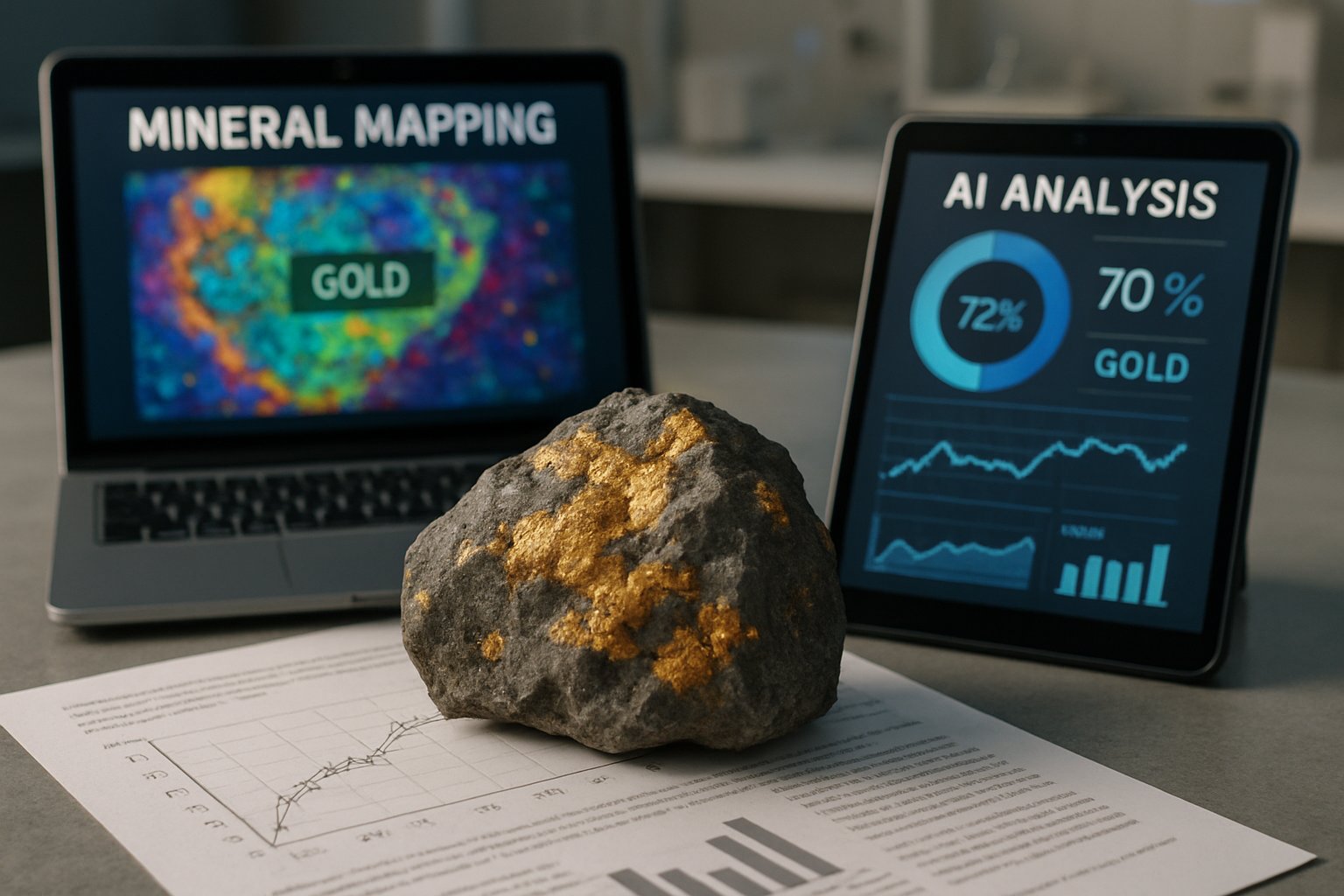
Modern prospectivity mapping blends multiple noisy datasets into unified models. First, geoscientists construct a regional data cube covering lithology, magnetics, and geochemistry. Subsequently, machine learning algorithms classify each pixel according to deposit potential. Graph neural networks now capture structural relationships better than older random forest workflows. Moreover, deep generative models synthesize synthetic anomalies, addressing positive sample scarcity.
Many vendors bundle these techniques within cloud platforms marketed under AI Mineral Extraction suites. On-site sensors such as hyperspectral scanners feed near-real-time predictions to field crews. However, models require ongoing calibration against ground truth, especially when transitioning from traditional exploration datasets. Therefore, successful deployments pair data scientists with experienced mapping geologists at every iteration.
Key Players Shaping Landscape
Several specialized firms now dominate mineral data science. KoBold Metals markets itself as an AI-first explorer tackling copper and lithium supply gaps. Furthermore, ALS rebranded its GoldSpot unit as Geoanalytics, integrating laboratory assays with cloud analytics. SensOre partners with Australian juniors, licensing a proprietary DPT workflow. Meanwhile, Emperor Metals collaborates with consultants to refine drill priorities at its Duquesne West project.
Major producers including BHP and Barrick test internal platforms alongside external vendors. In the Abitibi belt, provincial surveys now share open geophysics that fuels community models. Consequently, competition among service providers remains fierce, driving rapid feature releases. These dynamics create a crowded marketplace where AI Mineral Extraction claims proliferate.
Benefits For Modern Explorers
Adoption delivers tangible economic and environmental gains. Moreover, vendors report faster insights and higher drill success rates. Field teams appreciate streamlined logistics and reduced ground disturbance.
- Average targeting cycle shortened from months to days
- Hit rates improved up to 40 percent in pilot programs
- Drill pad footprints cut by one-third, easing ESG compliance
- Legacy data repurposed, extending value of sunk costs
Consequently, CFOs can reallocate capital toward additional metres rather than data cleaning. Emperor Metals estimates savings of 15 percent during its recent sampling campaign. In contrast, traditional exploration budgets often devote 30 percent to manual compilation. Furthermore, communities gain from smaller surface footprints and fewer helicopter flights. These benefits reinforce corporate narratives about responsible discovery. Subsequently, boardrooms push wider AI Mineral Extraction adoption across global portfolios.
Challenges And Ongoing Caveats
Despite hype, significant technical hurdles persist. Data quality issues top the list for most exploration teams. Moreover, historic drilling in the Abitibi belt contains inconsistent coordinate systems and assay protocols. Consequently, models can overfit to spurious patterns if preprocessing falters. Interpretability also matters because geologists must justify each proposed collar. Nevertheless, vendors sometimes provide black-box scores without geological context. In comparison, traditional exploration workflows allow line-by-line data scrutiny during mapping. Therefore, governance frameworks and independent audits are essential before budgeting major programs. These challenges highlight critical gaps; however, robust validation routines are steadily improving.
Regional Case Study Insights
Case studies provide practical evidence beyond vendor marketing decks. Earlier this year, Emperor Metals deployed predictive mapping on its Quebec tenure. Subsequently, the team drilled three holes and intersected visible gold in two. The company credits the workflow for narrowing search corridors from five kilometres to one. Meanwhile, provincial geologists published an open dataset covering the Abitibi belt magnetic inversion.
Independent researchers applied AI Mineral Extraction models and replicated historical discovery clusters. Moreover, they predicted several untested targets that will see drilling next season. In contrast, earlier legacy programs required extensive outcrop mapping before similar confidence emerged. These results suggest replicable gains, yet rigorous peer-reviewed follow-ups remain necessary.
Future Outlook And Skills
Market analysts expect adoption curves to steepen over the next decade. Grand View Research even projects valuations approaching $685 billion by 2033. Consequently, demand for hybrid geoscience-data roles will surge. Coding fluency and spatial reasoning already appear together in most job listings. Professionals can enhance their expertise with the AI Researcher™ certification. Moreover, universities are launching micro-credentials focused on algorithm governance and data ethics. Field geologists should still maintain rigorous mapping skills to validate AI outputs. Nevertheless, the unique efficiency delivered by AI Mineral Extraction will likely reshape exploration business models. These talent trends create opportunities; consequently, proactive upskilling offers clear competitive advantages.
Conclusion And Next Steps
AI Mineral Extraction has moved beyond buzzwords into measurable corporate strategies. Major financiers, agile startups, and governments are aligning incentives around algorithmic target generation. Moreover, benefits such as faster cycles and smaller footprints already lift project economics. Nevertheless, data quality, interpretability, and independent audits remain non-negotiable prerequisites. Explorers that blend domain expertise with transparent models will outperform peers tied to legacy workflows. Consequently, professionals who master both coding and mapping will command premium compensation. AI Mineral Extraction therefore represents both a technological toolkit and a career catalyst. Act now by evaluating suitable certifications and pilot projects that can de-risk your next discovery phase.


