

AI CERTS
6 months ago
AI Power Analysis: Gas Projects Race to Meet Data-Center Surge
This report offers an AI Power Analysis of how developers plan to keep servers lit. Industry giants increasingly bank on natural gas turbines sited beside hyperscale campuses. However, critics question emissions claims and community burdens. Texas Royalty Brokers even pitches firm baseload contracts to cloud buyers seeking shielded pricing. Meanwhile, policymakers juggle grid stability with decarbonization mandates.
The stakes include billions in capital and regional competitiveness. Therefore, executives need clear numbers, risks, and options. Moreover, investors track fuel supply as closely as chip supply. Subsequently, contracting models evolve toward on-site generation backed by carbon capture. Nevertheless, rapid efficiency gains could yet moderate the trajectory. In contrast, supply-chain delays might exacerbate local shortages.
AI Load Demand Curve
IEA numbers anchor the debate with 415 TWh consumed in 2024. Moreover, the base case shows 945 TWh by 2030, a 128% leap. Our AI Power Analysis places half that growth inside North America alone.
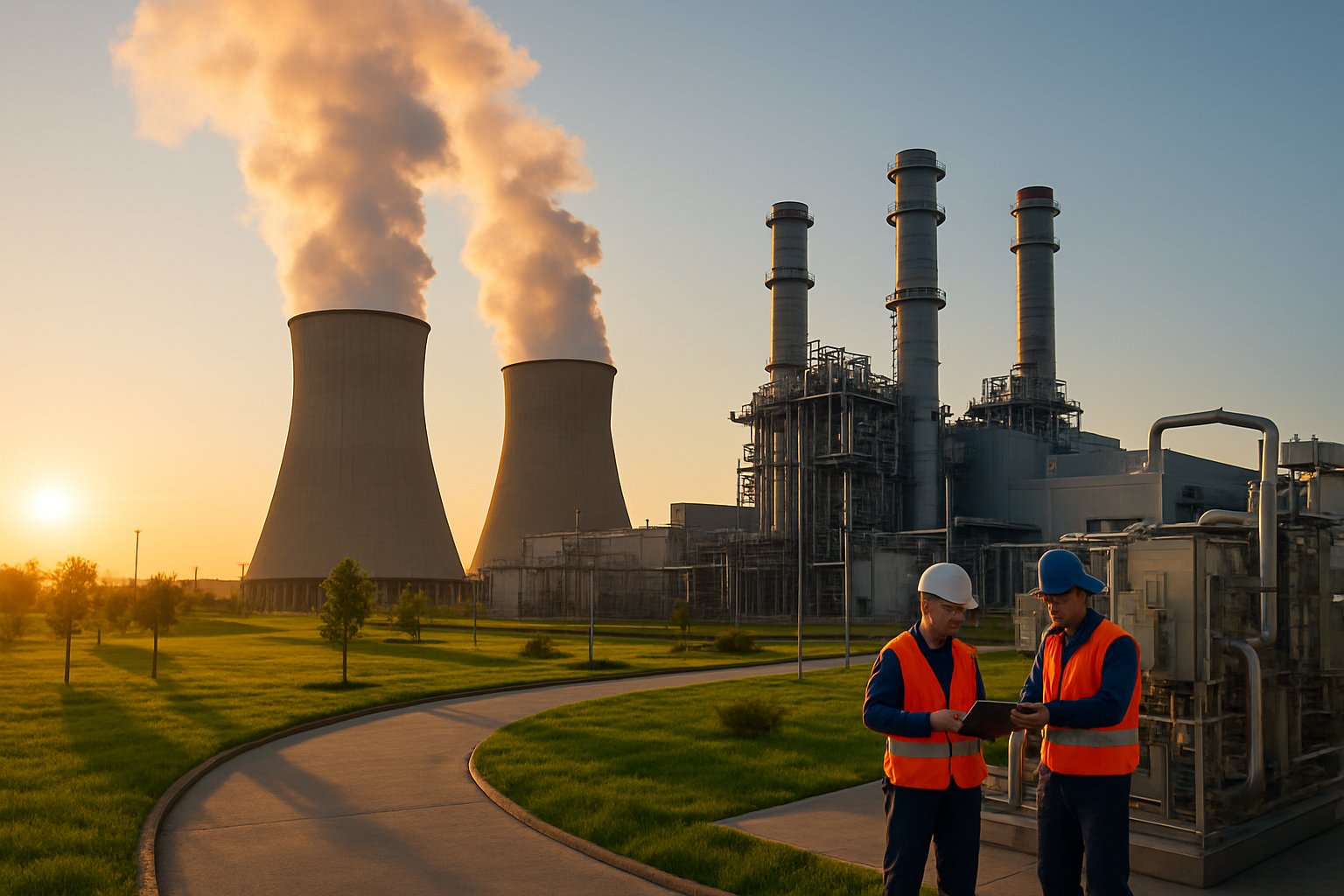
Goldman Sachs expects U.S. hyperscalers to require 47 GW of fresh capacity. Consequently, demand could pull an extra 3.3 bcf per day of fuel. This AI Power Analysis also flags emerging European clusters adding pressure on LNG flows.
Meanwhile, Deloitte scenarios outline up to 123 GW by 2035 if compute intensity rises. However, model efficiency improvements could shave as much as 30% off projections. Therefore, planners now run sensitivity cases for silicon, cooling, and algorithm shifts.
Peak demand looks set to surge even under cautious assumptions. However, supply plans are already racing to catch up.
Gas Projects Accelerate Rapidly
Chevron, Engine No.1, and GE Vernova propose up to 4 GW of dedicated gas turbines. Furthermore, ExxonMobil is negotiating natural gas plants with integrated carbon capture for hyperscale buyers. Homer City in Pennsylvania plans a 4.5 GW brownfield conversion targeting AI workloads.
Consequently, this AI Power Analysis sees a pipeline exceeding 20 GW now in permitting. Moreover, developers prefer behind-the-meter sites that bypass congested transmission corridors. Many designs specify gas-fired combined cycles prepared for future hydrogen blending.
GE Vernova warns turbine backlogs could delay first-power dates beyond investor expectations. Nevertheless, equipment orders keep flowing as hyperscalers lock supply chains early. Some projects bundle long-term fuel contracts to hedge price swings.
Capacity additions are moving from concept to concrete quickly. Meanwhile, financiers monitor cash flows and risk allocation.
Finance Eyes New Capacity
Investors view hyperscale energy as a durable infrastructure play with tech-style growth. Goldman Sachs expects $65 billion in capital toward gas and storage before 2030. This AI Power Analysis notes that private equity funds now chase midstream spin-offs for stable returns.
Texas Royalty Brokers has started marketing acreage linked to future on-site generation royalties. Moreover, banks bundle baseload contracts with environmental credits to sweeten loan covenants. Structured deals often resemble power purchase agreements yet shift fuel risk to operators.
Key finance questions include:
- Revenue certainty under volatile load profiles
- Carbon capture performance and tax credit eligibility
- Exit options if efficiency gains cut demand
Consequently, many term sheets feature performance step-ups tied to utilization. In contrast, community benefit agreements now appear in several prospectuses.
Capital is available yet disciplined about technology and policy risk. Therefore, regulators and activists have become critical deal variables.
Policy Community Tension Points
Regulators face petitions over air permits for temporary generators at data-center sites. However, developers argue they relieve grids by delivering behind-the-meter capacity. Some states now require life-cycle methane studies before approving natural gas turbines with CCS.
Community groups protest water consumption and noise from multi-gigawatt campuses. Nevertheless, local officials highlight tax revenue and job creation benefits. Our AI Power Analysis indicates hotspots in Virginia, Ohio, and Texas where clashes intensify.
Permitting timelines are elongating even as corporate timelines compress. Consequently, technology choices now examine emissions and reliability in equal measure.
Technology Risks And Mitigation
Carbon capture remains the biggest technical uncertainty for decarbonized gas power. Gorgon and other projects captured less CO₂ than promised, fueling skepticism. Therefore, this AI Power Analysis advises verifying capture guarantees and third-party monitoring.
Efficiency gains in chips and cooling also affect long-term baseload sizing. Moreover, future hydrogen blending could cut natural gas use per megawatt produced. Subsequently, turbine vendors now offer upgrade pathways for combustion chambers.
Professionals can enhance due-diligence skills with the AI Supply Chain™ certification. The course adds procurement insights that complement rigorous AI Power Analysis for energy assets.
Mitigation playbooks now include:
- Modular CCS to match phased baseload growth
- Real-time methane monitoring along supply chains
- Renewable PPAs paired with long-duration storage
Technical solutions exist but require performance transparency and aligned incentives. Meanwhile, strategic lessons emerge for executives shaping portfolio strategy.
Strategic Industry Takeaways Ahead
Consequently, five strategic insights rise above the noise. This AI Power Analysis synthesizes them for boardroom action. First, natural gas remains essential through the decade but must decarbonize credibly.
- Secure turbine slots before supply tightens
- Link baseload hedges to efficiency milestones
- Integrate CCS verification into financing covenants
- Engage Texas Royalty Brokers for royalty optimization
- Track policy shifts that affect permit timelines
Implementing these steps can balance reliability, emissions, and cost. Consequently, companies can turn power risk into competitive advantage.
Nevertheless, uncertainty will persist as algorithms and regulations evolve. Therefore, constant scenario planning should accompany every infrastructure decision. Moreover, collaboration among utilities, developers, and communities can accelerate responsible deployments. Subsequently, leadership teams should revisit assumptions quarterly against changing load forecasts.
Explore the cited certification to deepen supply-chain skills and future-proof energy strategies. In contrast, peers who delay may confront capital scarcity and regulatory backlash. Meanwhile, the AI wave shows no sign of cresting soon. Consequently, decisive action today will shape corporate relevance tomorrow. However, stakeholders must align on transparent metrics to maintain public trust. Therefore, integrate robust analytics, resilient contracts, and certified expertise to thrive. Our final AI Power Analysis suggests monitoring capture rates quarterly.
Disclaimer: Some content may be AI-generated or assisted and is provided ‘as is’ for informational purposes only, without warranties of accuracy or completeness, and does not imply endorsement or affiliation.


