

AI CERTs
5 months ago
Pinterest Turns to Chinese AI Models for Cost-Savvy Accuracy
Pinterest has surprised industry watchers with a strategic pivot that could reshape enterprise AI economics. The image sharing giant is actively testing Chinese AI models for its recommendation and visual search pipelines. Executives claim these open-weight alternatives deliver comparable or better accuracy while slashing infrastructure bills. Therefore, the move highlights a broader market trend toward open, self-hosted models over proprietary API access. Furthermore, rivals like Airbnb publicly praise the same technology family for speed and affordability benefits. This article unpacks the context, metrics, risks, and upskilling routes surrounding Chinese AI models. By the end, readers will grasp why cost pressure and customization needs drive fresh procurement decisions. Consequently, leaders can benchmark their own roadmaps against Pinterest’s emerging playbook.
Market Shift Signals Rise
Moreover, the pivot did not happen in isolation. Open-weight releases from DeepSeek, Alibaba’s Qwen, and other Chinese labs appeared throughout 2024 and 2025. Consequently, Western developers downloaded these models by the million, accelerating experimentation across consumer platforms. Stanford HAI researchers labeled the DeepSeek release “disruptive” because it lowered technical barriers for advanced language capabilities. Pinterest is among the first firms to confirm production intent for Chinese AI models, citing pragmatic reasons. In contrast, several Fortune 500 firms quietly prototype Chinese AI models to future-proof personalization initiatives.
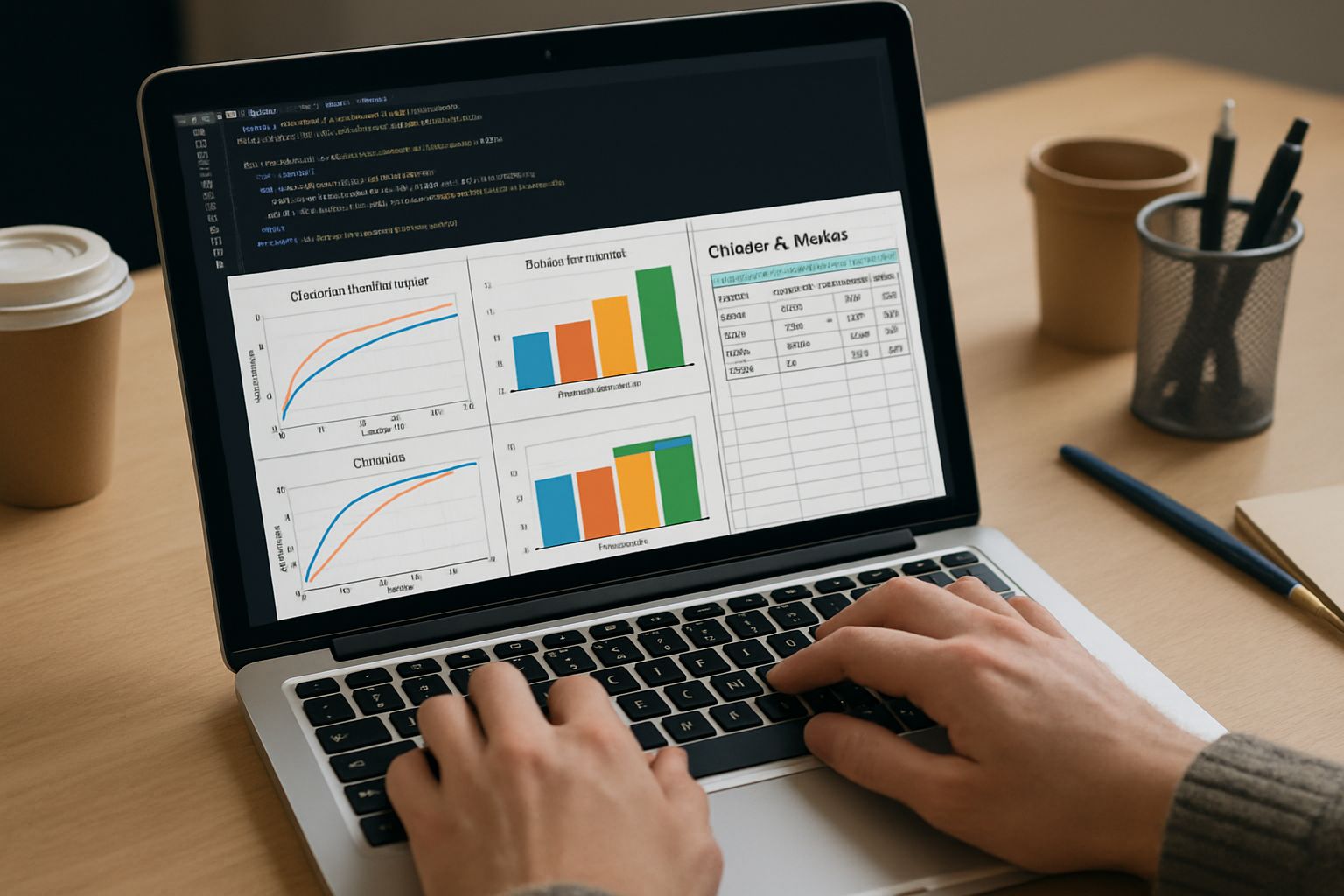
Download Trend Evidence Rise
- Alibaba Qwen ranked among top five downloads on Hugging Face by Oct 2025.
- DeepSeek R-1 crossed one million pulls within six weeks of launch.
- Moonshot’s Kimi model trended for three consecutive months on the platform.
These metrics confirm a clear momentum shift toward open alternatives. However, executives still care about tangible accuracy and cost outcomes, which the next section dissects.
Performance And Savings Data
Pinterest CEO Bill Ready told investors that fine-tuned open weights delivered “tremendous performance” on image understanding tasks. He emphasized orders-of-magnitude cost reductions compared with leading proprietary APIs. Meanwhile, CTO Matt Madrigal reportedly cited 30 percent higher accuracy and up to 90 percent lower operating costs. Such claims position Chinese AI models as credible replacements for expensive vendor contracts at scale. Independent analysts agree that open-weight benchmarks vary by task, yet early Pinterest results look credible. Moreover, academic observers urge public release of evaluation scripts to aid replication. Subsequently, Mistral engineers expressed interest in running their weights on the same dataset.
Reported Company Metric Highlights
- 600 million monthly active users create large inference volumes, amplifying even small per-token savings.
- Pinterest’s second $1 billion revenue quarter added urgency to margin protection efforts.
- Internal tests showed open models equal proprietary baselines on visual ranking benchmarks.
- Some workloads realized 90 percent total cost of ownership savings after quantization and hardware tuning.
Collectively, these numbers illustrate that cost and performance advantages are not hypothetical. Consequently, finance teams now treat model selection as a profit lever, not just a technical decision. The discussion now turns directly to AI cost efficiency levers available to practitioners.
Driving AI Cost Efficiency
Self-hosting open weights allows companies to trade API fees for predictable infrastructure budgets. Moreover, parameter-efficient fine-tuning such as LoRA means only small adapter layers require retraining. Therefore, organizations can refresh models weekly without massive GPU bills, improving AI cost efficiency. Such open releases often ship quantization recipes and sparse checkpoints that reduce memory footprints even further. In contrast, many proprietary vendors restrict weight access, limiting optimization possibilities. These efficiencies explain why Chinese AI models appeal to finance teams chasing slimmer unit economics.
- Quantize to 4-bit weights to cut RAM by 75 percent.
- Prune seldom-used neurons for faster inference without quality loss.
- Batch requests aggressively to amortize kernel launch overhead on GPUs.
- Place lightweight servers near edge caches to minimize network latency costs.
Collectively, these tactics enhance AI cost efficiency, especially at consumer internet scale. Nevertheless, governance and policy issues demand equal attention, which the next section explores. Meanwhile, hardware advances like NVIDIA’s Hopper architecture and AMD’s MI300A chips further compress serving costs. In contrast, locked cloud APIs often hide these improvements behind static per-token prices.
Risks And Governance Gaps
Stanford HAI warns that many open releases lack rigorous alignment safeguards. Consequently, deployers must monitor outputs for disallowed content and potential brand harm. Data-residency questions also linger when Chinese AI models underpin Western user experiences. Regulators may scrutinize supply-chain provenance, even if hosting stays entirely onshore. Nevertheless, companies can mitigate exposures through internal red teaming and strict access controls. Professionals can adopt emerging governance frameworks while upgrading their technical fluency simultaneously. Furthermore, some policymakers worry that training data from Chinese sources could embed unvetted cultural biases. Consequently, corporate counsel teams now request detailed model origin documentation before approving launches. Nevertheless, hosting models inside sovereign cloud regions eases several residency concerns.
Risk mitigation does not negate financial upside. However, balanced strategies require skilled talent, which our next section addresses.
Enterprise Adoption Key Lessons
Several lessons emerge from Pinterest and Airbnb experiences. First, domain data remains king for extracting value from Chinese AI models. Second, small platform teams can now fine-tune competitive systems without nine-figure budgets. Third, early transparency with compliance teams reduces approval cycles when cross-border origins raise flags. Moreover, sharing benchmark methodology builds trust with leadership and investors. Finally, integrating performance dashboards clarifies whether AI cost efficiency targets are actually achieved. Deep consumer datasets, for example product catalogs and click graphs, unlock rapid incremental gains after just hours of fine-tuning. Therefore, leadership teams increasingly green-light pilot budgets measured in thousands rather than millions.
These lessons help enterprises replicate success while avoiding common pitfalls. Meanwhile, professionals must update skills to exploit the opportunity fully. Certification paths offer a structured solution.
Skills And Certification Paths
Engineers and product owners increasingly seek credentials that validate modern open-model workflows. Professionals can enhance their expertise with the AI Robotics™ certification. The program covers fine-tuning, quantization, governance, and rollout patterns central to Chinese AI models. Additionally, learners practice cost modeling exercises that sharpen AI cost efficiency judgment.
Continuous learning keeps teams ahead of rapid open-source progress. Subsequently, certified staff implement changes faster and with higher confidence. We close with a concise recap and action plan.
Conclusion Actions And CTA
Chinese AI models have moved from curiosity to credible production option for revenue-scale platforms. Pinterest’s early numbers show accuracy gains up to 30 percent and cost drops approaching 90 percent. Moreover, developer metrics indicate wide community momentum, while cost levers promise sustained AI cost efficiency. Nevertheless, governance, safety, and policy questions require disciplined oversight. Enterprises that balance both dimensions will capture competitive gains sooner. Therefore, now is the time to audit existing model spend, benchmark open-weight alternatives, and invest in talent. Start by enrolling key staff in the linked AI Robotics™ certification and share this analysis with leaders today.
Disclaimer: Some content may be AI-generated or assisted and is provided ‘as is’ for informational purposes only, without warranties of accuracy or completeness, and does not imply endorsement or affiliation.


