

AI CERTs
5 months ago
Hedge funds soar on AI chip demand boom
Investors expected GPUs to dominate 2025. However, a different component stole the spotlight. Surging AI chip demand for high-bandwidth memory (HBM) and DRAM ignited an unprecedented run-up in storage names. Consequently, fund managers who anticipated the shift collected outsized rewards. This article unpacks the market mechanics, the windfall for hedge funds, and the road ahead.
Memory Rally Overview Now
Memory stocks had languished for years. Nevertheless, they roared back after Micron posted record quarterly results and Nvidia’s Jensen Huang called working memory “the world’s largest storage market.” Prices responded immediately. Micron rose 239% during 2025, while SanDisk shocked traders with an 1,100% surge. Western Digital and Seagate delivered multi-fold rebounds, reflecting relentless AI chip demand. Consequently, the Philadelphia Semiconductor Index notched fresh highs despite volatility elsewhere.
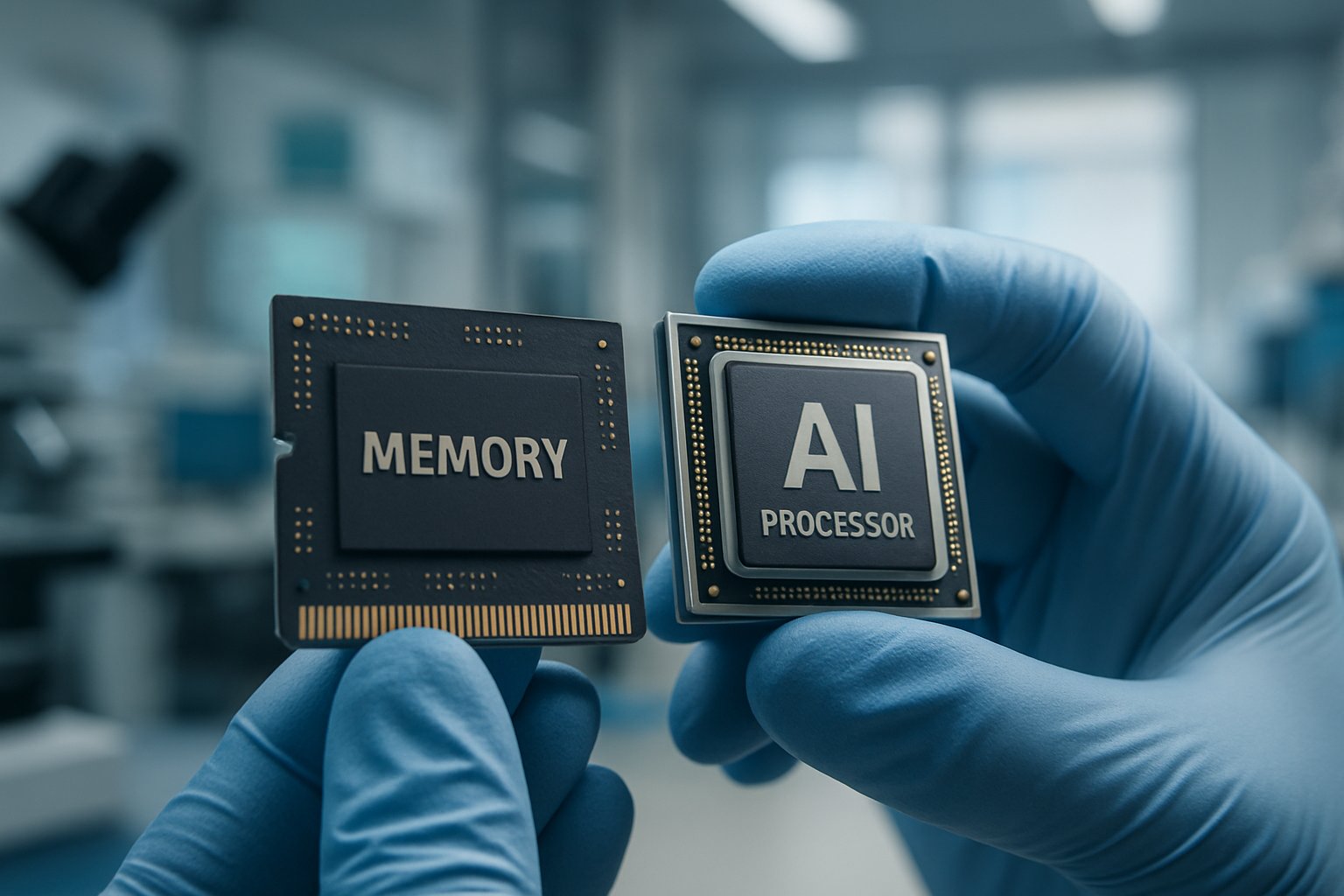
These figures underscore a structural pivot. Moreover, analyst upgrades from Wells Fargo and Bernstein reinforced momentum, citing a 40% CAGR for HBM through 2028. The re-rating reframed memory as a growth engine, not a cyclical laggard. This perception change set the stage for spectacular returns. However, understanding who captured them requires a closer look at fund positioning.
Sector momentum accelerated through January 2026. Therefore, traders now monitor every capacity announcement, fearing shortages could persist well into 2027.
Hedge Funds Cash In
Quiet accumulation paid handsomely. FT calculations reveal enormous hedge fund gains. DE Shaw’s memory basket potentially earned $3.9 billion, Arrowstreet added $1.3 billion, and Renaissance reaped $435 million. Furthermore, Reuters reported fresh inflows into South Korean chipmakers as quant strategies chased liquidity pockets. Consequently, positions built in mid-2025 turned into headline victories.
Not every manager shared details. Nevertheless, 13F filings confirm overweight exposure across leading memory names. Meanwhile, momentum-driven algorithms amplified flows, lifting valuations faster than fundamentals alone would dictate. Observers caution that concentrated bets could reverse quickly. However, for now, hedge fund gains remain the trade of the cycle.
The profits illustrate a broader truth: data-center architecture shifts can unlock unexpected equity winners. Subsequently, allocators scramble to replicate early movers’ playbooks.
Supply Tightness Key Drivers
Why is availability so strained? First, HBM production requires advanced stacking and through-silicon via techniques, limiting usable wafer starts. Additionally, fabs take years to build, preserving scarcity. Second, hyperscalers double memory per accelerator each generation. Consequently, aggregate AI chip demand overwhelms planned output. Third, geopolitical export controls restrict Chinese entrants, concentrating supply among Micron, SK Hynix, and Samsung.
The combined forces produced a textbook squeeze. Micron told investors its entire 2026 HBM supply is sold. Moreover, the firm projects HBM TAM will hit $100 billion by 2028. TrendForce offers comparable numbers, validating management confidence.
These conditions underpin pricing power. Therefore, margin expansion appears durable, barring an unexpected capacity overshoot.
Critical Memory Performance Metrics
Investors tracking fundamentals watch a specific dashboard:
- HBM contract prices: Counterpoint forecasts 30-70% quarter-over-quarter jumps.
- DRAM spot trends: TrendForce shows rising server blends since Q3 2025.
- Micron gross margin: expanded to 51% last quarter, a seven-year high.
- Accelerator attach rate: Nvidia’s Hopper modules ship with 96 GB HBM3e.
- Capex announcements: Samsung pledged $20 billion for a new Pyeongtaek line.
Furthermore, Jensen Huang’s CES remarks boosted sentiment overnight.
Jensen Huang Catalyst Statement
Huang’s phrase “context memory” crystallized the thesis. Consequently, traders re-priced suppliers within hours. Media coverage repeated the quote, embedding the narrative across Wall Street. Meanwhile, sell-side desks raised targets, citing relentless AI chip demand and improving yields.
Key metrics thus confirm tight supply, robust pricing, and enterprise urgency. Therefore, many analysts label the current phase a “memory supercycle.”
Bullish Case Explained Clearly
Bulls argue three main points. Firstly, structural AI chip demand increases memory content per server. Secondly, fab lead times insulate prices for years. Thirdly, AI inference workloads proliferate beyond hyperscalers, broadening the buyer base.
Additionally, Micron’s contracted backlog provides revenue visibility. Moreover, Samsung and SK Hynix maintain supply discipline, resisting overbuild temptations. Consequently, expected cash flows support elevated multiples.
Investors can deepen expertise through the AI Architect™ certification, which details data-center memory planning strategies.
Bullish analysts concede valuation risk. Nevertheless, they highlight historic underinvestment after the 2022 downturn. Therefore, they project continued tightness until at least 2028.
Risks And Reality Check
Bears counter with caution. In contrast, memory remains cyclical by tradition. If suppliers accelerate nodes, oversupply could re-emerge. Furthermore, CXMT or other Chinese players might secure advanced tools through grey channels, diluting pricing power. Geopolitical policy shifts amplify uncertainty.
Meanwhile, crowded positioning raises volatility. Sharp pullbacks could erase recent hedge fund gains. Additionally, lofty valuations assume smooth execution; yield hiccups would compress margins swiftly. Consequently, traders maintain tight stop-loss levels.
These warnings temper enthusiasm. However, disciplined monitoring of capacity timelines can mitigate downside surprises.
Market Outlook And Actions
Consensus expects revenue acceleration through 2026. Moreover, AI chip demand headlines should persist as hyperscalers add gigantic clusters. Wells Fargo now models a 50% revenue CAGR for HBM suppliers through 2027.
Therefore, investors weigh incremental entries carefully. Dollar-cost averaging may smooth volatility while preserving upside. Additionally, thematic ETFs broaden exposure without single-stock risk, shielding portfolios from abrupt reversals that could reduce hedge fund gains.
Professionals seeking differentiated insight can pursue the previously mentioned certification, which covers workload sizing, memory hierarchy design, and procurement strategy. Consequently, they position themselves for the next infrastructure evolution.
The outlook remains constructive yet fragile. Nevertheless, vigilant tracking of fab announcements, policy rhetoric, and real AI adoption rates will guide allocation decisions.
These next steps conclude our examination. Ultimately, AI chip demand continues to dictate memory fortunes, while discipline differentiates long-term winners.
Disclaimer: Some content may be AI-generated or assisted and is provided ‘as is’ for informational purposes only, without warranties of accuracy or completeness, and does not imply endorsement or affiliation.


