

AI CERTs
5 hours ago
Odisha bets big on AI education India initiative
The eastern state of Odisha is preparing a decisive leap in AI education India. During a high-level meeting on 24-25 January 2026, Chief Minister Mohan Charan Majhi invited startup Sarvam to build a state-controlled computing stack and an AI school. Consequently, observers see an MoU announcement at the Black Swan Summit on 5-6 February. Moreover, officials believe the combined effort will speed up digital inclusion through voice and vernacular interfaces.
Industry leaders note that AI education India still depends on large language models that understand local dialects. However, Odisha wants to host those models inside its borders. The state hopes the new school will train graduates who can manage and improve the stack. Meanwhile, Sarvam brings technical depth and 4,096 Nvidia H100 GPUs already subsidised under the national IndiaAI Mission.
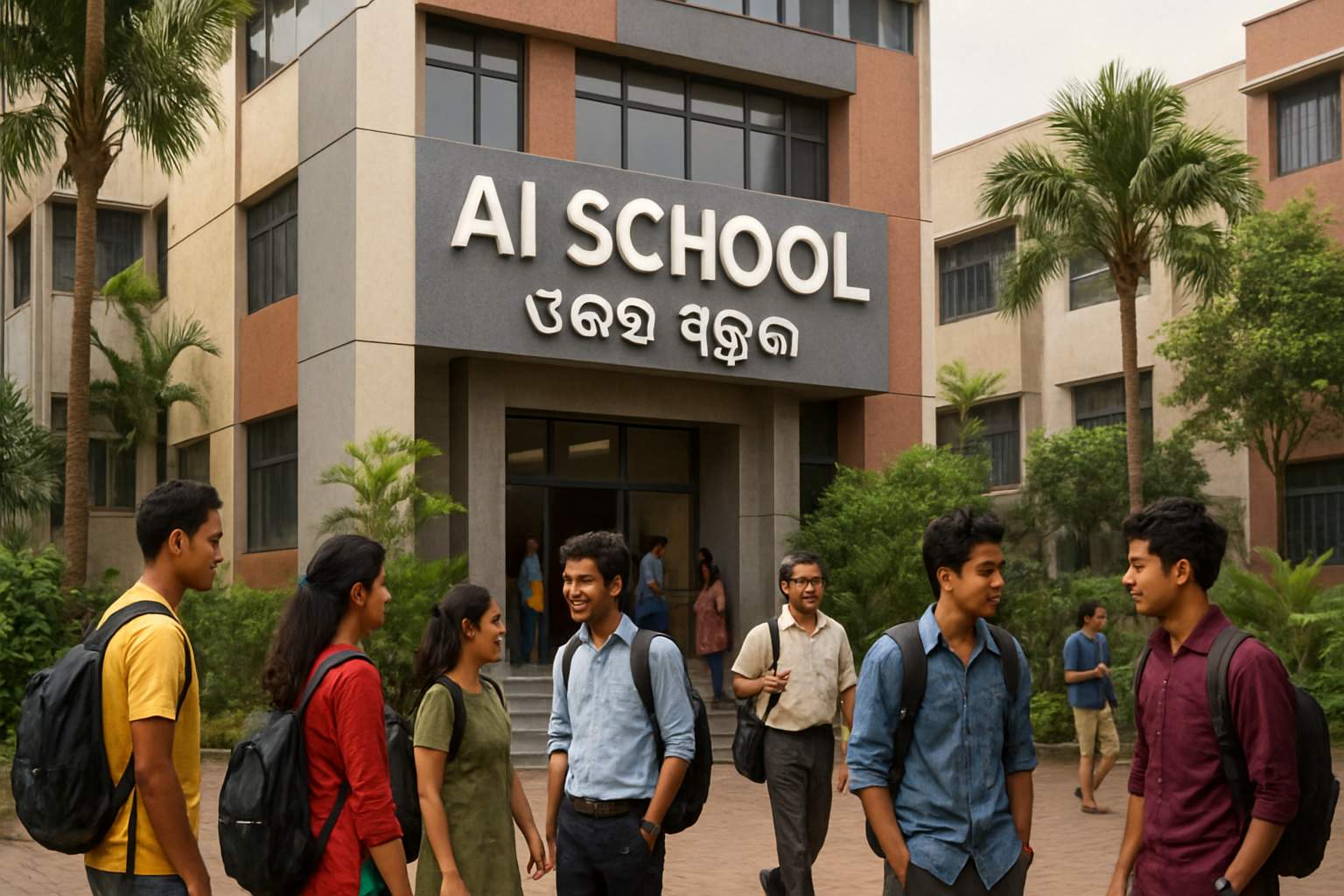
Odisha's Bold AI Vision
Odisha officials publicly framed the partnership as a showcase for responsible AI governance. Furthermore, Chief Minister Majhi stated that the state should “become a harbinger of technology for others to follow.” Sarvam co-founder Dr Pratyush Kumar echoed the ambition, stressing population-scale impact. In contrast, analysts warn that early promises must translate into working services before public trust grows.
The primary goals are threefold: safeguard sensitive data, expand vernacular services, and strengthen talent pipelines. Consequently, the project aligns with India’s wider digital sovereignty drive. Additionally, the plan could inspire other states evaluating sovereign AI infrastructure.
These strategic aims clarify why Odisha moved quickly. Nevertheless, execution details will decide ultimate success.
Building Sovereign AI Infrastructure
State leaders prioritise sovereign AI infrastructure so that public data never leaves local control. Therefore, Sarvam will supply its GPU allocation and foundational Indic models. Officials must still decide whether hardware sits in a state datacentre or a trusted co-location site.
Key technical elements include secure compute clusters, audited data lakes, and model governance workflows. Moreover, the partnership must meet budget guidelines while delivering uptime guarantees. Odisha finance teams are modelling long-term operating expenses now.
Advantages cited by proponents include reduced latency, higher privacy, and easier legal compliance. However, hardware supply chains remain dominated by Nvidia, creating external dependencies. Furthermore, operating thousands of GPUs requires specialised engineers that India currently lacks in sufficient numbers.
• 4,096 Nvidia H100 GPUs already allocated to Sarvam
• Rs 98.68 crore subsidy granted under IndiaAI Mission
• Black Swan Summit scheduled 5-6 February for MoU signing
These numbers highlight massive resource needs. Consequently, sceptics question whether sovereign AI infrastructure can stay current as technology cycles shorten.
Thus, infrastructure plans will shape the school’s curriculum. The next section investigates that educational pillar.
Launching State AI School
Education leaders argue that sustainable AI education India must blend theory and hands-on practice. Odisha’s proposed AI school intends to do both. Additionally, the institute will partner with local universities to award advanced degrees.
Curriculum designers are mapping five tracks: data governance, model engineering, ethics, operations, and public-service design. Moreover, training modules will rely on live clusters, giving students operational exposure. Professionals can enhance their expertise with the AI+ Government™ certification, which aligns closely with expected learning outcomes.
Admissions will target 500 students annually, including mid-career civil servants. Meanwhile, industry mentors from Sarvam will supervise capstone projects on vernacular chatbots. Consequently, graduates should help departments deploy solutions without external consultants.
The school therefore becomes the talent engine. Nevertheless, academic accreditation, faculty hiring, and budgeting must finalise before classes begin.
These steps require deft coordination. However, expected governance benefits justify the effort, as the next section explains.
Governance And Service Benefits
Officials project three immediate gains. First, voice assistants in Odia could cut form-filling time for rural citizens. Second, predictive analytics may flag welfare leaks early. Third, localised models can translate policy updates into tribal languages quickly.
Moreover, sovereign AI infrastructure keeps citizen data behind state-approved firewalls, supporting compliance with forthcoming national privacy law. In contrast, foreign cloud reliance raises jurisdictional issues. Additionally, an in-house talent pool reduces vendor lock-in over time.
Consequently, analysts forecast faster scheme delivery and higher user satisfaction. Nevertheless, true impact depends on inclusive design workshops and continuous model audits.
These prospective benefits energise policymakers. Yet cost and technical debt also loom, as the following examination shows.
Technical Risks And Costs
Project critics cite three vulnerabilities. Firstly, GPU supply shortages could delay expansion. Secondly, power and cooling requirements inflate operational budgets. Thirdly, model performance may lag global best-in-class systems, reducing utility.
Furthermore, the developer community previously questioned Sarvam-M benchmarks. Nevertheless, Sarvam pledged to open-source training code, inviting peer review. Additionally, oversight boards must verify data security claims through independent audits.
Budget discussions reveal significant recurring expenses for electricity, staffing, and hardware refresh cycles. Consequently, sustainable financing models, possibly involving central grants, will be crucial.
These challenges illustrate that ambition alone is insufficient. Therefore, a phased roadmap becomes essential, as outlined next.
Roadmap And Next Steps
Odisha’s draft roadmap spans twelve months. Months 1-3 focus on MoU finalisation and infrastructure procurement. Subsequently, departments will catalogue datasets and prioritise ten pilot use cases. Moreover, Sarvam engineers plan to deploy baseline models by Month 6.
Meanwhile, the AI school aims to admit its first cohort in September 2026. Consequently, coursework will align with ongoing pilot projects, ensuring direct knowledge transfer. By Month 12, officials expect at least three vernacular services in production.
Key milestones will be publicly tracked to maintain transparency. Therefore, success metrics include latency targets, user adoption rates, and operational savings.
• February 2026: MoU and summit showcase
• June 2026: Secure cluster live
• September 2026: AI school inaugural batch
• January 2027: Pilot evaluations completed
These deadlines give stakeholders clear checkpoints. Nevertheless, iterative reviews must adjust scope in light of technological evolution.
Each timeline element reinforces the integrated vision of AI education India. Consequently, sustained collaboration will determine lasting value.
Overall, Odisha’s partnership with Sarvam merges capacity building and sovereign AI infrastructure into a single strategic bet. Moreover, abundant GPUs and a specialised school could set new standards for state-level AI deployment. Nevertheless, budgetary discipline, transparent audits, and community engagement will be decisive.
Therefore, technology professionals should monitor Black Swan Summit outcomes closely. For those seeking to contribute, pursuing the AI+ Government™ certification can position them for emerging public-sector roles.
Ambitious visions require informed talent. Consequently, now is the moment to prepare and participate in this pivotal experiment.


