

AI CERTs
4 months ago
OpenAI’s ChatGPT ecommerce leap reshapes checkout
Consumers chat daily with ChatGPT for answers, drafts, and code. Consequently, OpenAI now wants those chats to end in purchases. The new ChatGPT ecommerce feature, Instant Checkout, lets users complete orders without leaving the interface. Moreover, OpenAI reports more than 700 million weekly users, a reach traditional storefronts crave. As an AI shopping assistant becomes transactional, merchants, payment firms, and regulators race to understand the stakes.
Key Market Drivers Emerge
E-commerce tops six trillion dollars globally, according to multiple 2025 estimates. Therefore, any channel that trims friction can unlock vast revenue. ChatGPT ecommerce appeals because discovery, comparison, and purchase converge in a single conversation. Additionally, smartphone shoppers benefit from reduced page loads and fewer redirects. OpenAI’s partnership roster—Etsy, Shopify, Walmart, Instacart, Stripe, and PayPal—signals broad industry momentum. Meanwhile, merchants anticipate higher conversion rates and new customer acquisition.
These economic tailwinds validate OpenAI’s pivot. Nevertheless, success requires robust trust and seamless fulfillment. The next section explores how Instant Checkout promises that experience.
Inside Instant Checkout Flow
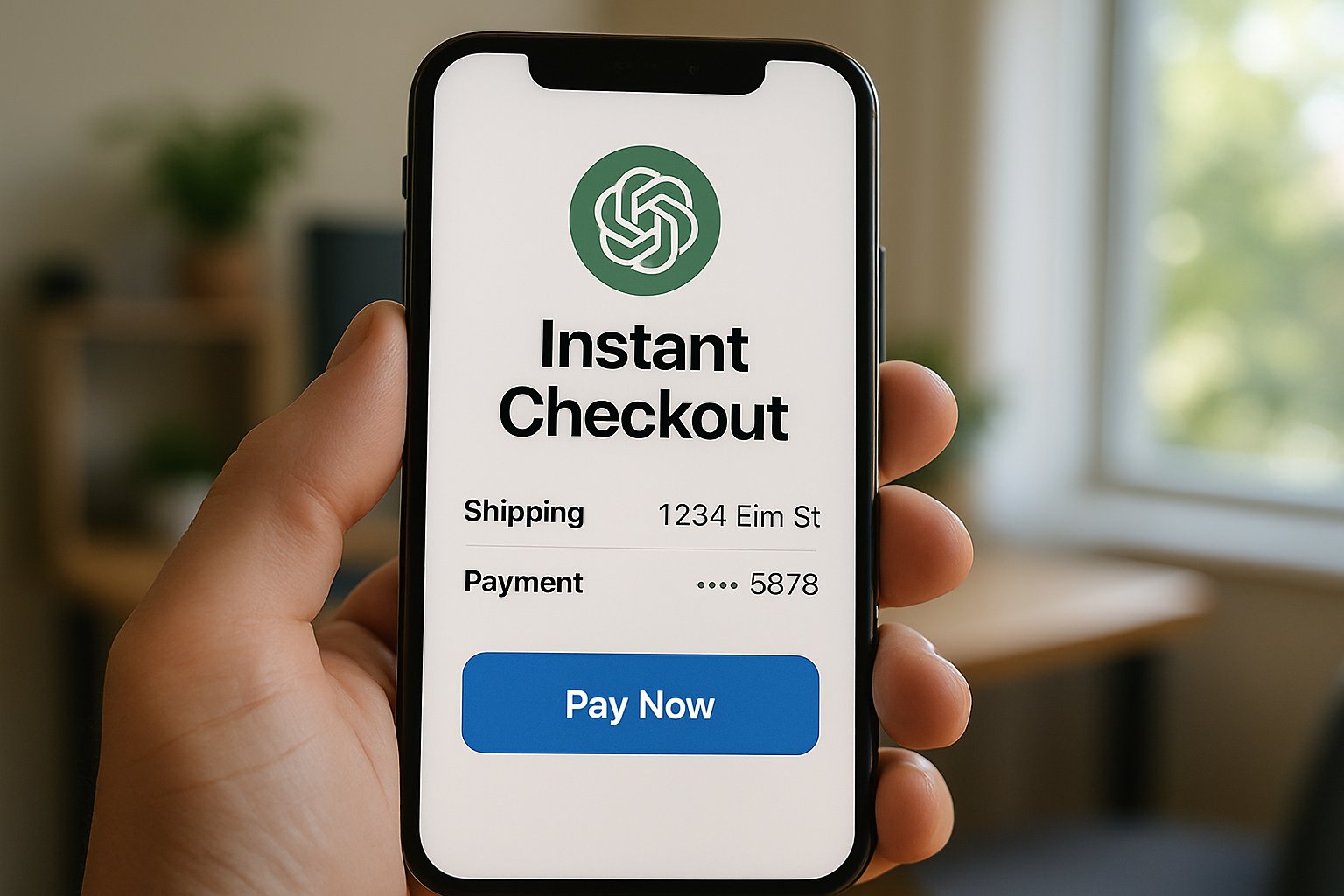
Instant Checkout surfaces a purchase button whenever a listed item supports the new protocol. Users tap, confirm shipping, and approve the saved payment token. Subsequently, the order posts directly to the merchant’s system, making the seller the merchant of record. OpenAI passes only minimal customer data, citing security safeguards. Initially, the feature supports single-item buys; multi-item carts enter pilot later this year.
- Confirmation screens prevent accidental orders.
- Tokenized payments reduce PCI exposure.
- Refunds route through existing merchant workflows.
Consumer steps mirror typical e-commerce flows yet feel faster. In contrast, legacy chatbots usually redirect users to external sites, adding latency. ChatGPT ecommerce thus removes those final clicks. Consequently, user patience improves, and merchants enjoy lower abandonment. The technical foundation enabling this speed is the Agentic Commerce Protocol.
Agentic Protocol Explained Clearly
The Agentic Commerce Protocol (ACP) standardizes data exchange between AI agents and merchant backends. Stripe co-developed ACP under Apache 2.0, though the spec remains processor-agnostic. Merchants expose inventory, pricing, and fulfillment endpoints. Meanwhile, ChatGPT sends structured order objects and receives real-time confirmations.
Security sits at ACP’s core. Encrypted payment tokens flow through Stripe, PayPal, or other processors. Therefore, merchants need not store sensitive card details. Furthermore, ACP preserves merchant of record status, ensuring existing tax, shipping, and return policies stay intact.
Developers praise the concise schema but note early SDK instability. Nevertheless, open-sourcing should accelerate fixes. Professionals can enhance their expertise with the AI Writer™ certification. Mastery of standards like ACP could soon become table stakes.
ACP addresses technical barriers. However, merchant adoption and user trust determine commercial impact, as the next section shows.
Merchant Adoption And Impact
OpenAI began with U.S. Etsy sellers and promises access for over one million Shopify stores. Moreover, brands such as Glossier and Spanx prepare catalog feeds. Early anecdotal data suggests conversion lifts of 8-12 percent, though formal studies remain pending. Small sellers particularly value traffic from an AI shopping assistant that surfaces niche items during casual chats.
Integration complexity varies. Some Shopify merchants activate Instant Checkout via a simple app. Conversely, large retailers must map custom inventory APIs to ACP. Nevertheless, Stripe and PayPal tools streamline payment onboarding, which lowers engineering overhead.
In summary, adoption momentum looks strong yet uneven across segments. The following section examines risks that could slow progress.
Risks Critics Spotlight Now
Privacy advocates question how conversation context shapes product ranking. Furthermore, skeptics worry shared devices may enable unauthorized purchases. OpenAI counters with mandatory confirmations and minimal data transfer. Additionally, merchant observers fear opaque ranking algorithms might favor partners using Instant Checkout, disadvantaging holdouts.
Operational glitches also loom. Inventory mismatches could trigger canceled orders, eroding trust. Developers in beta forums cite occasional timeout errors within the AI shopping assistant flow. Regulatory scrutiny remains another wildcard, especially around antitrust and GDPR compliance.
These challenges highlight critical gaps. However, proactive governance and transparent metrics could mitigate many concerns.
Competitive Landscape And Outlook
Amazon, Google, and Microsoft pursue conversational commerce, yet OpenAI enjoys first-mover mindshare. Consequently, rivals may accelerate acquisitions or partnerships with payment platforms. Moreover, startups plan ACP-compatible agents, betting on an ecosystem play. Industry analysts predict conversational transactions could reach five percent of online sales within three years.
Success metrics will include basket size, repeat usage, and cross-sell efficacy. Therefore, product ranking integrity and fraud prevention will shape market share. ChatGPT ecommerce benefits from OpenAI’s brand, but loyalty can shift quickly in retail. Meanwhile, international expansion offers additional upside once regional regulations align.
Competitive forces intensify experimentation. Subsequently, executives need concrete playbooks, detailed next.
Strategic Takeaways For Leaders
Executives evaluating ChatGPT ecommerce should consider several actions:
- Audit catalog readiness for conversational discovery.
- Prototype ACP integration with limited SKUs first.
- Train support teams on in-chat refund workflows.
- Monitor ranking analytics for bias signals.
- Engage privacy counsel early for compliance.
Moreover, continuous user testing uncovers friction before scale amplifies issues. Industry associations may soon publish benchmarks for agentic conversion rates. Consequently, early movers can capture mindshare while shaping standards.
These steps position retailers for agile adaptation. The conclusion distills broader implications and calls readers to act.
Conclusion
OpenAI’s Instant Checkout transforms chat from consultation to conversion. Moreover, the Agentic Commerce Protocol offers an open foundation attractive to diverse merchants. Nevertheless, privacy, ranking fairness, and operational reliability require vigilance. Executives who pilot now gain data to refine strategy before competitors flood the channel.
Therefore, staying informed about evolving specs and certifications remains vital. Explore advanced learning paths and bolster your commerce innovation toolkit today.
Disclaimer: Some content may be AI-generated or assisted and is provided ‘as is’ for informational purposes only, without warranties of accuracy or completeness, and does not imply endorsement or affiliation.


