

AI CERTs
5 months ago
Inside Apple AI strategy pivot toward Siri overhaul
Apple's latest internal reshuffle has sparked intense industry debate.
Multiple reports show the company pausing an ambitious Safari revamp to prioritize Siri.
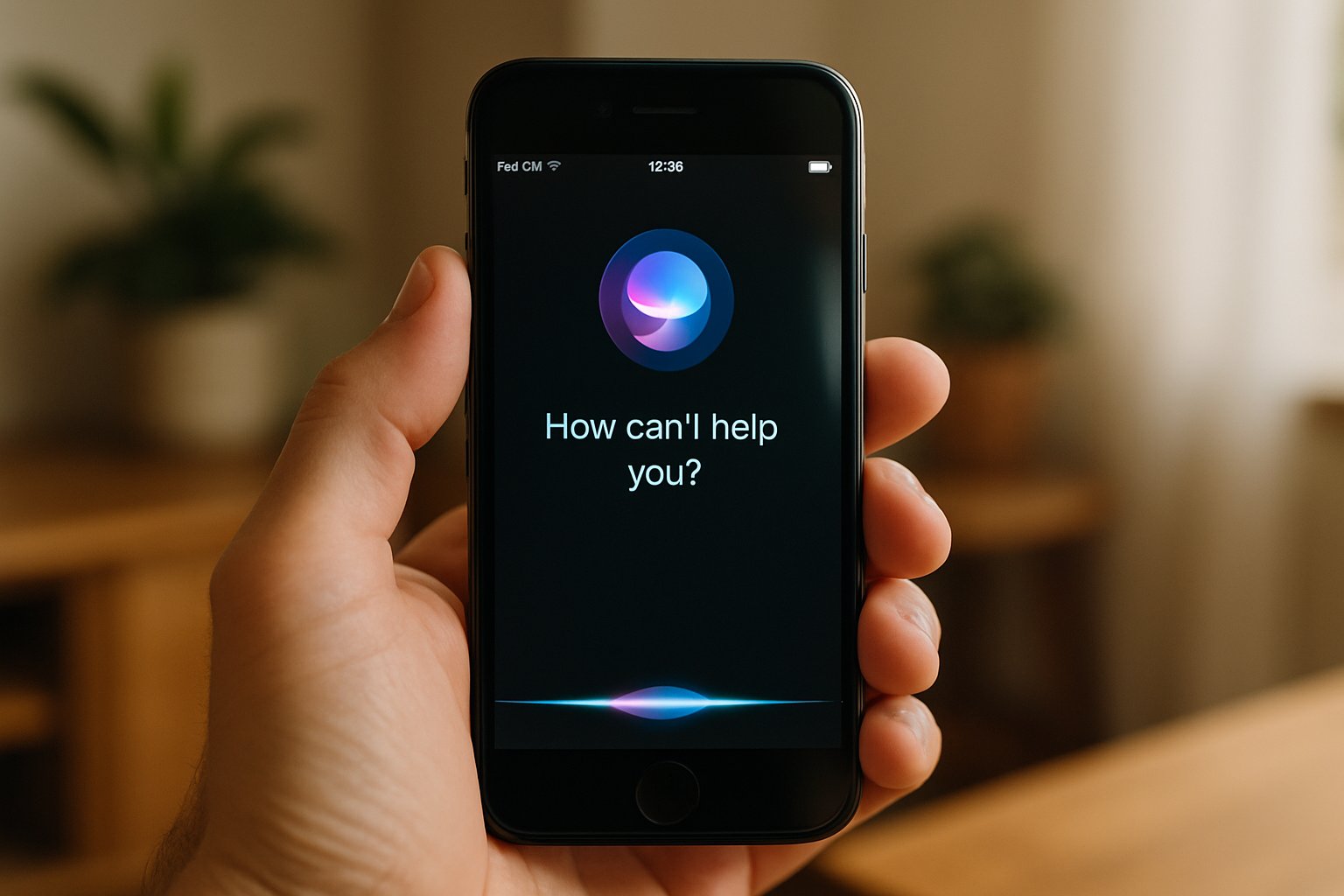
The shift underscores a bolder Apple AI strategy aimed at unifying experiences across devices.
However, the move also postpones anticipated browser innovations for millions of Safari users.
Consequently, executives, developers, and investors question how quickly Apple can match rival assistants.
Furthermore, a multiyear Gemini partnership adds fresh complexity around control, privacy, and cost.
This article unpacks timelines, leadership changes, technical decisions, and the business stakes behind the pivot.
It also examines what the coming Siri AI upgrade may deliver for enterprise leaders.
Finally, actionable insights and certification resources appear for professionals steering corporate AI roadmaps.
Prepare for a concise yet comprehensive briefing on how Cupertino's next moves could reshape platform competition.
Apple AI Strategy Pivot
Bloomberg’s Mark Gurman revealed the pivot on 25 January 2026.
According to his sources, Apple executives froze separate answer-engine projects inside Safari.
Instead, resources shifted toward rebuilding Siri on large language models.
Moreover, leadership believed a fragmented approach risked inconsistent user experiences.
Craig Federighi had previously argued that unreliability was unacceptable.
Therefore, the organization decided to focus on one assistant that touches every interface.
The updated assistant now anchors the broader Apple AI strategy.
Meanwhile, Safari enhancements may later resurface as Siri-powered capabilities rather than standalone chatbots.
Analysts view the consolidation as pragmatic given limited engineering bandwidth.
Nevertheless, the decision delays browser innovation while competitors ship AI browsing aides.
In short, Apple consolidated AI efforts to rescue quality.
Speed suffers, yet concentrated investment could deliver stronger impact.
Next, the Google Gemini alliance defines how that focus materializes.
Gemini Partnership Details Unfold
Google confirmed in January 2026 that its Gemini models will underpin several Siri capabilities.
Subsequently, reports pegged the annual outlay near one billion dollars, though neither firm published terms.
Furthermore, Apple insists personal data will remain shielded by Private Cloud Compute and on-device processing.
In contrast, critics warn that deep reliance on Google risks vendor lock and potential antitrust scrutiny.
Mike Rockwell, recently appointed Siri chief, must balance speed with sovereignty.
Therefore, engineers are blending in-house models for sensitive tasks with Gemini for expansive world knowledge.
The hybrid design supports the planned Siri AI upgrade while preserving parts of Apple's privacy narrative.
Consequently, the partnership accelerates timelines central to the Apple AI strategy and to stakeholder confidence.
Analyst Dan Ives called the deal "validation for both companies" during a CNBC interview.
- Estimated annual cost: ~US$1 billion
- Scope: knowledge retrieval, language generation, planning
- Privacy layer: Private Cloud Compute gateway
- Timeline: first features target iOS 26.4
Nevertheless, economics remain uncertain until actual usage numbers emerge after public launch.
Briefly, the Gemini alliance trades independence for rapid capability gains.
Stakeholders should watch cost trends and privacy audits closely.
Attention now shifts to Safari, the project most affected by this resource shuffle.
Safari Overhaul Put Aside
Safari commands about 14.8 percent of global browser share, per StatCounter December 2025 data.
Originally, Apple planned an AI-native browsing assistant to summarize pages, vet sources, and answer questions.
However, those features are paused as teams migrate to Siri workstreams.
Gurman reported that some engineers were reassigned, while others merged code into internal Siri modules.
Consequently, the browser may still gain AI functions, but only when driven by the new assistant.
That roadmap aligns with the wider Apple AI strategy.
Meanwhile, competitors like Microsoft Edge already surface AI overviews directly in the address bar.
Nevertheless, unified engineering could reduce duplicated infrastructure and long-term maintenance costs.
Briefly, pausing the overhaul frees manpower for priorities deemed higher.
Browser innovation, however, remains unresolved on the public roadmap.
The next section explores how those freed engineers are being redeployed.
Engineering Resources Realigned Smartly
Apple spent roughly 34.55 billion dollars on research and development during 2025.
Yet, investment alone cannot guarantee breakthrough products without focused management.
Mike Rockwell restructured Siri engineering, reducing overlapping subteams and installing clearer ownership boundaries.
Furthermore, John Giannandrea moved away from day-to-day assistant oversight, freeing executive cycles.
Subsequently, project charters now map directly to user journeys instead of legacy component silos.
In contrast, the paused Safari group contributes data-preparation pipelines and evaluation harnesses to the Siri initiative.
Rockwell told staff that shared tooling accelerates iteration while cutting compute waste.
Therefore, the streamlined organization should deliver the promised Siri AI upgrade faster than earlier timelines suggested.
The approach also supports the overarching Apple AI strategy by harmonizing talent under one mission.
Briefly, leaner structures often boost delivery speed and morale.
Unified tooling likewise reduces hidden coordination tax.
Risks and unresolved questions nonetheless persist, as the following section explains.
Risks And Open Questions
Every strategic consolidation introduces new exposure points.
Privacy advocates fear data may leave devices despite Apple’s Private Cloud Compute assurances.
Moreover, regulators could probe the deepening Apple-Google tie for competition concerns.
Economic risks also loom because LLM usage costs scale unpredictably with user queries.
Consequently, the reported one-billion-dollar estimate may balloon once public adoption widens.
Federighi’s quality comments still resonate; releasing premature features would harm brand trust further.
Additionally, the Siri AI upgrade timeline remains vague beyond the targeted iOS 26.4 window.
Investors therefore watch WWDC 2026 for concrete demonstrations of progress.
Meanwhile, Safari fans question when the browser regains strategic attention.
Consequently, unanswered questions could cloud the Apple AI strategy if communication lapses.
In short, financial, regulatory, and technical uncertainties must still be mitigated.
Transparent milestones and open metrics would reassure stakeholders.
Enterprise decision-makers now consider how to react, a topic the following section addresses.
Implications For Enterprise Leaders
CIOs and product leaders should assess dependency risks when building atop any proprietary assistant.
Furthermore, integration testing will be crucial because Siri’s behaviors may change rapidly during iterative rollouts.
Organizations embedding Siri shortcuts must track API changes linked to the Siri AI upgrade.
In contrast, early adopters could gain productivity advantages by leveraging system-level summarization and planning features.
Therefore, keeping pace with the evolving Apple AI strategy becomes a competitive necessity.
Professionals can expand expertise via the Chief AI Officer™ certification.
Additionally, the course covers governance, vendor management, and strategic alignment with corporate objectives.
Enterprises should also monitor Apple’s documentation for model-specific privacy commitments.
Briefly, informed leaders can balance opportunity and risk effectively.
Staying educated ensures alignment with fast-moving platform roadmaps.
Finally, the conclusion distills overall lessons and forecasts next milestones.
Conclusion And Future Outlook
Apple’s course correction places conversational excellence above browser experimentation.
Meanwhile, Gemini collaboration supplies scale and knowledge the firm previously lacked.
However, privacy, cost, and regulatory shadows still hang over the Apple AI strategy.
Success depends on shipping a reliable Siri AI upgrade that meets lofty marketing claims.
Consequently, WWDC 2026 will serve as the next credibility checkpoint.
Enterprises should prepare contingency plans while tracking Apple documentation updates.
Moreover, ongoing education, including executive certifications, strengthens internal readiness.
Adopt a watchful yet optimistic stance, and revisit your Apple AI strategy quarterly to stay competitive.
Continual monitoring ensures teams capitalize the moment Apple AI strategy matures into stable services.
Disclaimer: Some content may be AI-generated or assisted and is provided ‘as is’ for informational purposes only, without warranties of accuracy or completeness, and does not imply endorsement or affiliation.


