

AI CERTs
5 months ago
Fidelity’s Secret Sauce: Japan AI Stocks Propel Fund
Global fund managers continue chasing structural growth themes. Consequently, one portfolio stands out for its disciplined approach.
The $944 million Fidelity Funds – Pacific Fund has beaten 96% of peers over twelve months.
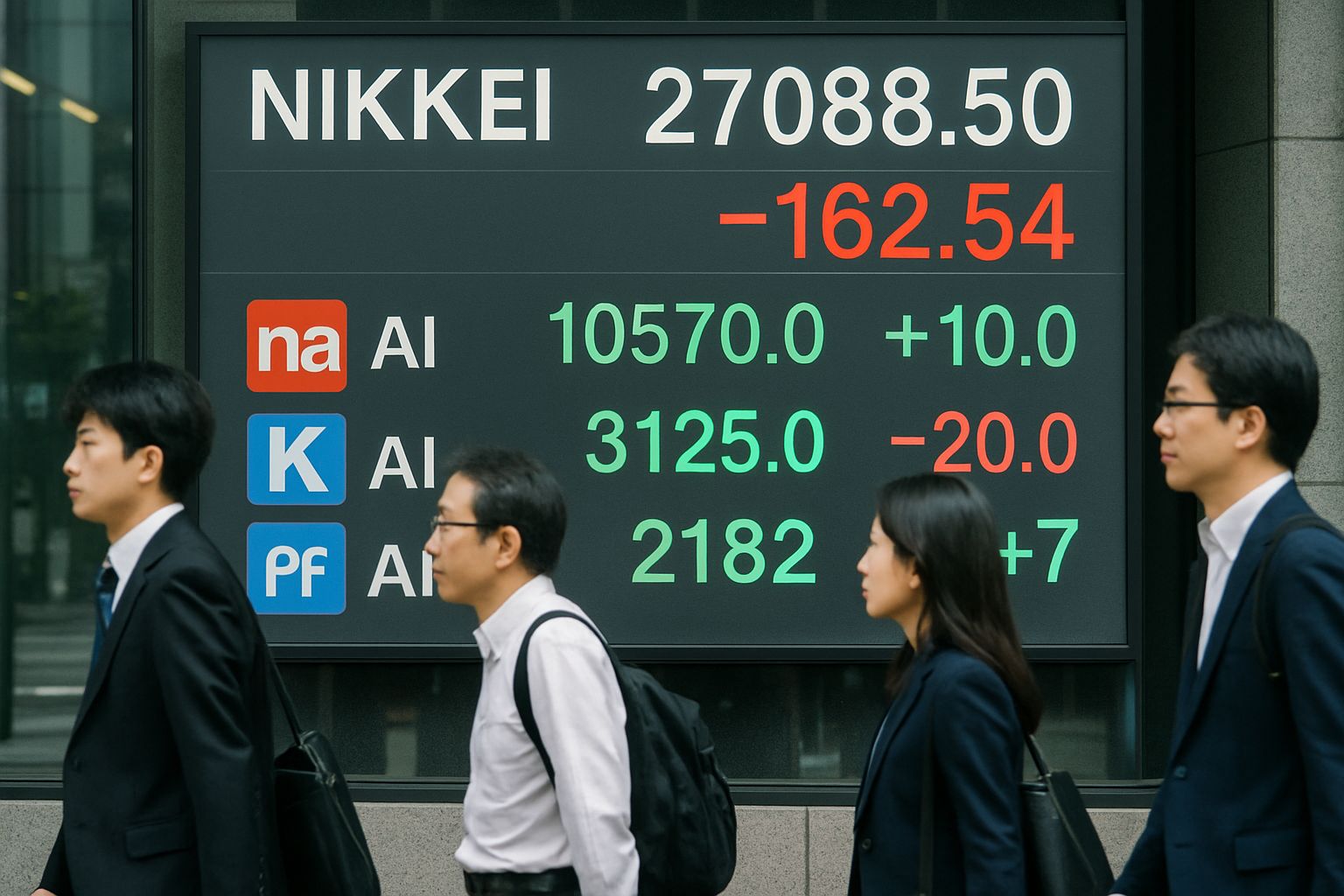
Manager Dale Nicholls achieved that feat by tilting toward Japan AI stocks, especially niche suppliers overlooked by benchmarks.
Moreover, Bloomberg data show the fund’s one-year return topped many Asia-Pacific rivals across several share classes.
This article examines the strategy, numbers, and implications for investors evaluating regional allocations.
Additionally, we connect the narrative to governance reforms and the wider AI supply chain driving corporate earnings.
Finally, actionable insights and certification resources will help professionals sharpen due-diligence frameworks in an evolving market.
Therefore, keep reading to understand how active bets in Japan can complement broader exposure to semiconductor giants.
The discussion also clarifies whether recent outperformance is sustainable or merely a cyclical blip.
Nevertheless, recognizing both opportunity and concentration risk remains critical when AI narratives dominate headlines.
AI Tilt Drives Gains
Bloomberg’s January report attributes the fund's success to stock selection aligned with infrastructure powering generative models.
Furthermore, small Japanese component makers such as Fujibo supply essential materials for advanced cooling systems.
In contrast, many large benchmarks remain skewed toward telecom incumbents, ignoring several Japan AI stocks still trading cheaply.
Consequently, incremental gains from these niche holdings compounded, boosting risk-adjusted returns.
Morningstar data confirm that exposure, showing multiple smaller positions clustering around the 1% weight mark.
These observations illustrate how targeted thematic bets influence absolute and relative numbers.
Selective bets on suppliers powered the recent surge. Therefore, investors should dissect underlying holdings, not just aggregate metrics.
With this context, we explore why Nicholls expanded the country allocation.
Japan Allocation Strategic Rationale
Corporate reforms have improved payout ratios and board independence across Tokyo listings.
Moreover, a weaker yen magnifies export competitiveness and earnings translations into U.S. dollars.
Professionals watching Japan AI stocks also note domestic utility upgrades supporting data-center growth.
Fidelity research from December highlights rising demand for power equipment, servo motors, and precision components.
Subsequently, Nicholls lifted Japanese holdings to roughly 23%, the portfolio’s largest single-country weight.
Nevertheless, individual positions remain spread across many issuers, limiting idiosyncratic risk while retaining thematic exposure.
AI Supply Chain Beneficiaries
Key beneficiaries include semiconductor glass substrate vendors, fan motor specialists, and high thermal conductivity material producers.
These firms sit lower in the stack, yet Japan AI stocks like Fujibo capture outsized margins when orders accelerate.
Therefore, diversity across subsectors helps buffer volatility linked to single technology nodes.
Strategic overweighting leverages governance momentum and currency tailwinds. Subsequently, we turn to peer ranking details.
Peer Ranking Methodology Explained
Bloomberg compared the Pacific Fund against an Asia-Pacific peer universe sourced from proprietary data feeds.
Consequently, the fund ranked in the 96th percentile on a one-year total return basis.
- One-year total return: 19-33% range, share class dependent.
- Japan weight: approximately 23-28% during 2025 snapshots.
- AUM: about $944 million as of January 2026.
- Peer percentile: 96th over prior 12 months.
Fidelity fund performance within this dataset benefited from currency hedged share classes during yen weakness.
However, percentile leadership may shrink if Japan AI stocks suffer a mean-reversion phase.
Therefore, analysts reviewing Fidelity fund performance should examine rolling windows rather than isolated snapshots.
Percentile data clarify context behind headlines. In contrast, risk factors demand equal attention before allocating capital.
Let us now analyse those risks alongside broader market signals.
Risks And Market Context
Valuations for small industrial suppliers have expanded swiftly during the AI hardware spending cycle.
Nevertheless, recent Fidelity fund performance does not immunize investors against potential multiple compression.
If sentiment reverses, Japan AI stocks with limited float could experience sharp price gaps.
Currency risk also persists because yen strength reduces translated earnings.
Moreover, geopolitical tensions in East Asia could disrupt semiconductor supply chains, hurting downstream revenues.
Governance Reforms Boost Valuations
On the upside, Tokyo Stock Exchange reforms encourage higher returns on equity through share buybacks.
Consequently, several Japan AI stocks now pledge progressive dividends alongside reinvestment in capacity.
Such governance catalysts may offset some macro volatility, though careful monitoring remains essential.
Risks and mitigants coexist within the portfolio. Subsequently, investors should weigh opportunity costs and skill requirements.
The next section highlights practical steps for due diligence.
Opportunities For Savvy Investors
Active managers seeking differentiated alpha can study supplier maps across data-center, cooling, and power subsystems.
Professionals can enhance their expertise with the AI for Everyone™ certification.
Understanding component demand drivers helps assess whether Japan AI stocks still trade below intrinsic value.
Additionally, tracking Fidelity fund performance over multiple cycles teaches lessons about manager discipline during drawdowns.
Investors may build watchlists, back-test factor exposures, and set valuation thresholds before initiating positions.
Practical tools convert macro stories into repeatable processes. Therefore, we conclude with final observations and outlook.
Key Takeaways And Outlook
The Pacific Fund showcases how precise thematics can lift diversified vehicles above median peers.
However, long-term success depends on continuous validation that Japan AI stocks maintain earnings momentum and competitive moats.
Meanwhile, observers should benchmark Fidelity fund performance against style-neutral indices to isolate true alpha.
Nevertheless, disciplined exposure to Japan AI stocks may continue rewarding investors while foundational AI infrastructure expands globally.
In summary, watch country weights, scrutinize holdings, and prepare exit plans.
Consequently, decisive research paired with targeted certifications can sharpen competitive edge.
Furthermore, sharing insights across teams enhances collective conviction and prevents headline driven errors.
Explore the certification linked above to deepen AI supply chain knowledge and refine professional judgment today.
Disclaimer: Some content may be AI-generated or assisted and is provided ‘as is’ for informational purposes only, without warranties of accuracy or completeness, and does not imply endorsement or affiliation.


