

AI CERTs
5 months ago
Why AI agents adoption stalls despite soaring enterprise interest
Boardrooms are buzzing about AI agents adoption, yet production deployments remain elusive.
However, recent surveys paint a nuanced picture of intent, investment, and persistent caution.
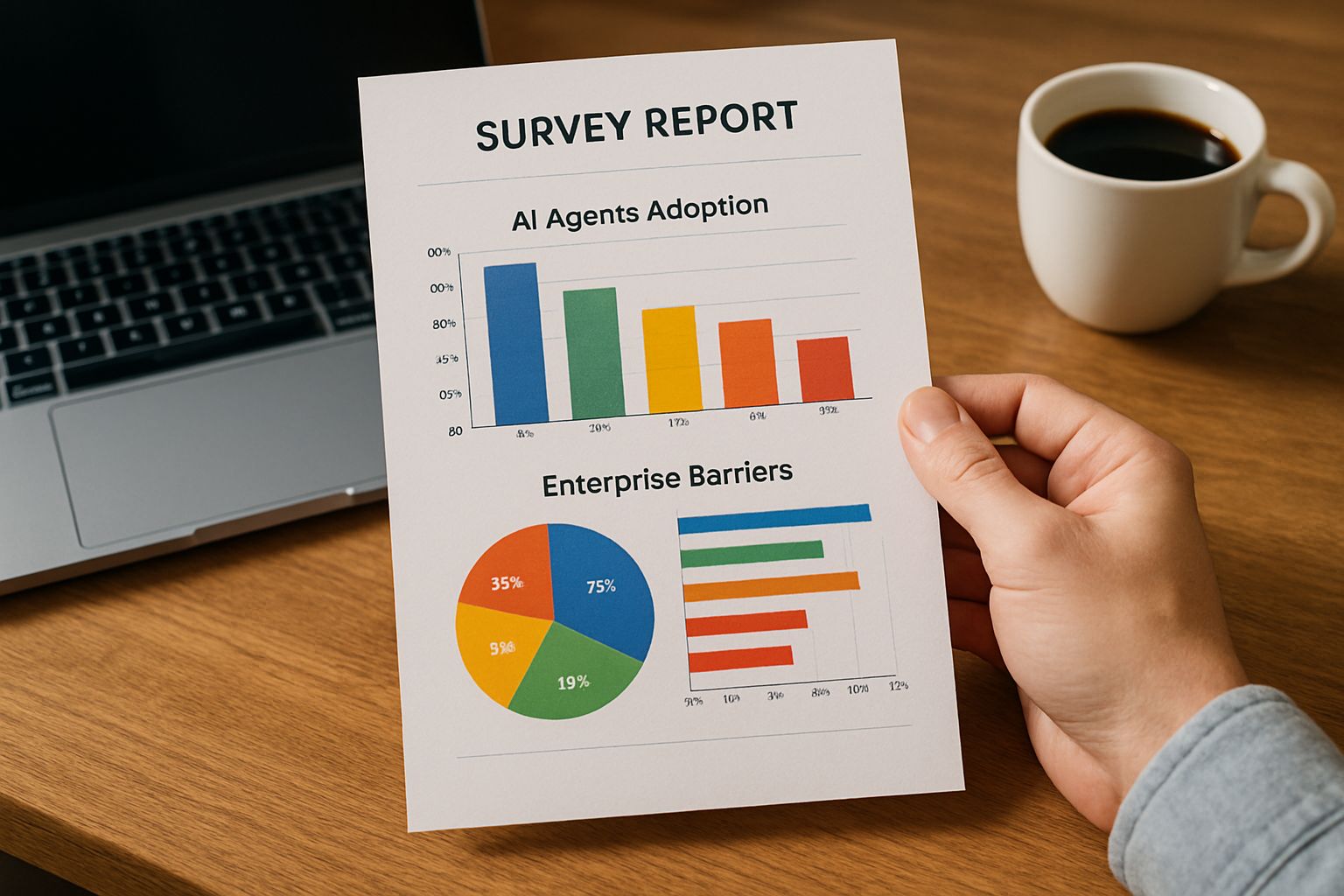
Interest is soaring while risk appetites lag behind, creating what executives call "pilot purgatory."
Consequently, understanding why projects stall has become a strategic priority for CIOs.
This article unpacks the latest data, contrasts survey methodologies, and outlines practical steps to accelerate responsible rollouts.
Meanwhile, regulators sharpen scrutiny of AI agents adoption across sensitive sectors.
Adoption Intent Surges
Cloudera’s April 2025 study surveyed 1,500 IT leaders and found 96% plan to expand agent use within a year.
Moreover, Tray.ai reported 68% of enterprises already allocate over $500,000 annually to agent initiatives.
PwC’s ongoing tracker similarly shows most large firms budgeting aggressively despite enterprise AI hesitation.
Industry enthusiasm pushes AI agents adoption toward mainstream conversations.
Therefore, early momentum appears undeniable, even if true autonomy remains distant.
These investment signals suggest leaders anticipate tangible efficiency gains once technical and governance gaps close.
Adoption intent is strong across industries.
However, intent alone will not guarantee delivery, as the next section explains.
Barriers Slow Rollout
In contrast, Gartner’s September 2025 survey showed only 15% exploring fully autonomous agents without human oversight.
Meanwhile, Dynatrace found half of projects trapped in proof-of-concept loops, with 70% outputs still human-verified.
Consequently, many executives voice enterprise AI hesitation when compliance officers raise red flags.
Gartner warns 74% fear new attack vectors and only 13% feel governance frameworks are ready.
Security Tops Concern List
Security, privacy, and compliance appear in every survey’s top three barriers.
Moreover, 52% of Dynatrace respondents cited these risks as the primary adoption blocker.
Therefore, CISOs often demand robust audit trails, access controls, and prompt hallucination mitigation before green-lighting production.
Nevertheless, cautious boards delay AI agents adoption until zero-trust measures mature.
Security concerns define gatekeeping thresholds.
Consequently, many pilots stall until control gaps close.
The integration challenge adds further friction.
Integration Remains Critically Strained
Legacy data silos hinder real-time orchestration.
Tray.ai learned 42% of firms need eight or more sources connected before agents deliver value.
Additionally, 86% believe their tech stack must upgrade to handle event volume and context windows.
Robust APIs can unblock AI agents adoption across fragmented SaaS estates.
These findings reinforce enterprise AI hesitation rooted in infrastructure debt.
Integration debt magnifies cost and schedule risk.
Therefore, leaders seek modular platforms that isolate change domains.
The surveys themselves offer more nuance.
Mixed Survey Signals Reveal
Different methodologies fuel apparent contradictions between optimism and caution.
For example, Cloudera measured expansion intent, while Gartner tracked fully autonomous deployment counts.
Moreover, sample roles vary; vendor studies often tap innovation champions, whereas analyst panels query application owners.
Therefore, reading across reports requires aligning definitions of pilot, deployment, and autonomy.
- 96% plan expansion within 12 months. (Cloudera)
- 86% need tech-stack upgrades first. (Tray.ai)
- 15% evaluate fully autonomous agents. (Gartner)
- 50% projects stuck in PoC stage. (Dynatrace)
These numbers coexist because each survey asked different questions at different maturity stages.
Survey design matters more than headlines.
Consequently, practitioners must benchmark against peers sharing similar architectures and risk thresholds.
Clear taxonomy would let analysts benchmark AI agents adoption phases consistently.
Opaque metrics perpetuate enterprise AI hesitation over ROI.
With drivers and blockers clear, enterprises need action plans.
Practical Strategies To Progress
Industry veterans recommend starting with narrow, high-value, low-risk agent tasks such as log triage.
Furthermore, teams should embed human-in-the-loop review until observability dashboards mature.
CIOs are also mandating cross-functional governance boards to vet prompts, data scopes, and escalation paths.
Professionals can enhance oversight skills with the AI Human Resources™ certification.
Moreover, vendors now bundle reference architectures that isolate agent execution from sensitive systems.
Template playbooks shorten AI agents adoption cycles for operations teams.
Structured pilots backed by governance accelerate safe learning.
Therefore, disciplined programs convert interest into value faster.
The timeline outlook underscores urgency.
Roadmap For 2026 Deployments
Analysts predict that by late 2026, half of production workflows will embed at least one supervised agent.
However, only 25% may reach partial autonomy without human sign-off.
Meanwhile, regulatory frameworks in the EU and US will likely codify audit and transparency duties.
Consequently, organizations scaling today will shape best practices and vendor roadmaps.
AI agents adoption leaders already negotiate contracts for observability hooks and indemnity clauses.
Regulators will scrutinize AI agents adoption outcomes when drafting rules.
The next 18 months remain pivotal.
Therefore, companies should finalize data modernization plans now.
A concise recap follows.
Conclusion: Organizations want the automation edge but fear the downside risk. However, surveys show consistent patterns linking progress to security readiness, integration maturity, and clear governance. Sustained AI agents adoption will depend on closing governance, security, and integration gaps. Moreover, disciplined pilots, shared taxonomies, and skilled teams can convert experiments into durable value. Consequently, leaders should invest now in observability and trust frameworks. Professionals can upskill through recognized programs, including the previously mentioned certification. Take decisive steps today and turn pilot purgatory into production success. Meanwhile, competitive pressure will intensify as early movers scale agent fleets across finance, HR, and customer service.
Disclaimer: Some content may be AI-generated or assisted and is provided ‘as is’ for informational purposes only, without warranties of accuracy or completeness, and does not imply endorsement or affiliation.


